Caieiras
The Disappearance of Josef MengeleCaieiras was the site of Josef Mengele’s longest shared household in Brazil, but never a secure home in any lasting sense. From early 1969, he lived with Geza Stammer and Gitta Stammer in a large house on a wooded hill, where he tried to build a private defensive perimeter while becoming increasingly isolated from the people around him. When the property was sold in 1975, the place that had briefly offered shelter became the source of his next displacement: he had to pay Geza rent for a far poorer dwelling bought with his share of the sale.
A hillside household
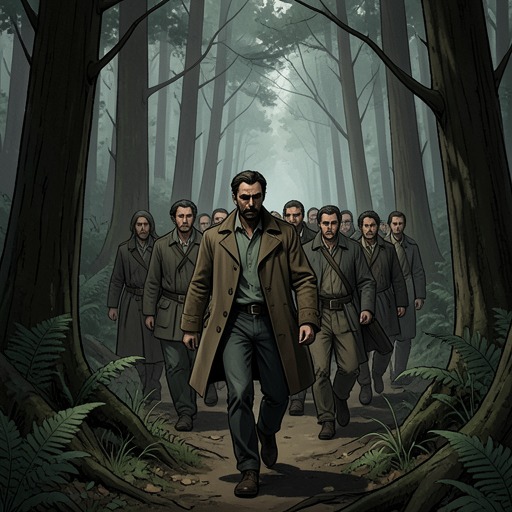
The property that brought Mengele to Caieiras was an imposing house on a forested hill, about thirty kilometres from São Paulo. It had four bedrooms and more than 8,000 square metres of land. Geza and Gitta needed Mengele’s share of the proceeds from the sale of their previous property at Serra Negra to acquire it. He was reluctant to move, but would not live alone; in early 1969 he followed the couple to their new home.
The move placed him in a different kind of refuge from the countryside around Serra Negra. The area was more densely populated, and Mengele had to abandon several of his stray dogs. He could take walks only at dawn and dusk. Though the house stood on a wooded rise, its surroundings offered less solitude than he had known before, and the limits of the new setting shaped his daily habits as much as its size did.
Building a perimeter
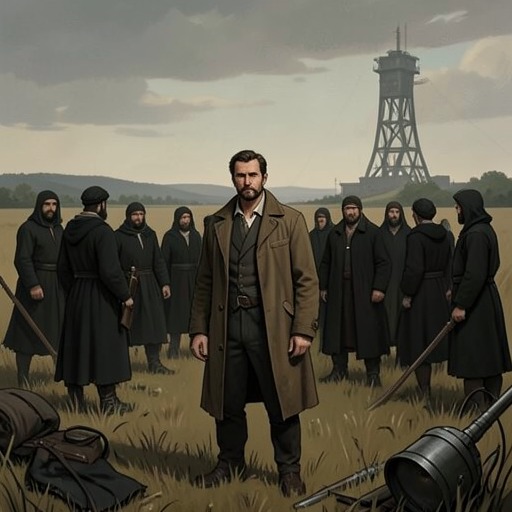
There was no watchtower at Caieiras, only a fence, but Mengele immediately set about turning it into a fortification. He marked out the line with stakes and string, then dug deep holes for posts two metres high. The ground resisted him; he worked it with a pick and an auger, and when the posts stood crooked on the sloping land, he took up a set square and began again. He anchored the posts with gravel, cement and water, added support beams and vertical planks, then finished the barrier with three layers of rot-resistant wood, lacquered and painted white. Shrubs and lemon trees formed a screen behind the palisade.
The weeks of labor produced a boundary that was carefully measured and constructed, not a watchtower from which he could command the landscape. Geza watched the backbreaking work with a smirk. Mengele’s practical occupation at the property thus had an edge of futility: even as he made the fence precise and substantial, the more populated surroundings restricted his movements, and the people sharing the house remained beyond his control.
Domestic routine and isolation
Once the work was done, Mengele had little to occupy him. He tinkered with repairs to doors and floors, built bookshelves, and avoided Geza and Gitta. Geza was away only two or three days a week. Mengele would have taken Gitta back, but she wanted nothing more to do with him, disgusted by his volatile mood swings. He often ate alone in the kitchen or in front of the television. The household’s ordinary disputes—over entrance-hall wallpaper, menus, electricity bills, and what the boys would study after school—stood beside his anxiety and insomnia, making domestic life both routine and a source of friction.
The property also became the setting for his close observation of wildlife. He continued studying local flora and fauna, watching banana spiders and beetles, and developed a particular interest in cockroaches. He lured them onto the bathroom floor with sugar or meat so he could examine them and sketch their compound eyes in his notebooks. His attention to the insects’ sensory abilities, regeneration, and resilience offered an engrossing pursuit within a life otherwise narrowed by confinement and strained company. He even imagined using powdered cockroach on Gitta’s cut finger or on Roberto’s injured ankle, an odd domestic application of his observations.
That inward routine did not quiet his fears. Mengele worried about what the Israelis might be doing and about Simon Wiesenthal’s reports that his quarry was hiding in Paraguay. He wondered whether the reports were a diversion, recalled that the media had placed Adolf Eichmann in Kuwait while Mossad planned his abduction in Argentina, and fretted over two men he had seen in the forest. He also feared betrayal by Geza, Hans-Ulrich Rudel, or Klaus Barbie. In letters to Günzburg he pressed for more money for Geza and Gitta, calculating that the 50,000-mark bounty on his head exceeded the value of his share in the new house. In 1969 Hans Sedlmeier visited Caieiras with money for the couple and managed to pacify Mengele.
Sale and displacement
Caieiras did not remain a refuge. Geza and Gitta sold the property and moved into a sumptuous villa of 1,000 square metres in São Paulo. Mengele and his dog Cigano had two months to leave, with the deadline set for the end of January 1975. With no escape route available, he faced living alone for the first time since leaving Buenos Aires. Geza also made him pay for his affair with Gitta: although Mengele had bought a bungalow with his share of the Caieiras sale, he now had to pay Geza rent to live in it.
The change exposed how conditional Mengele’s place in the household had been. The house whose fence he had labored to build belonged to a shared arrangement that could end when its owners chose to sell. Caieiras had given him a large property, room for his private pursuits, and the company he was unwilling to relinquish; it did not give him independence or lasting security. Its sale turned his share of a substantial hillside estate into the means of renting a cramped home elsewhere, marking the collapse of the domestic refuge he had tried to defend.