Eichmann’s Jerusalem Trial
The Disappearance of Josef MengeleEichmann’s Jerusalem Trial made the capture of Adolf Eichmann visible to a worldwide audience and changed the climate surrounding Nazi fugitives in South America. The evidence here offers little detail about the trial’s proceedings; its significance lies chiefly in the public spectacle of Eichmann’s appearance, the fear that followed among exiles, and the broader pressure for postwar accountability.
From capture to public trial
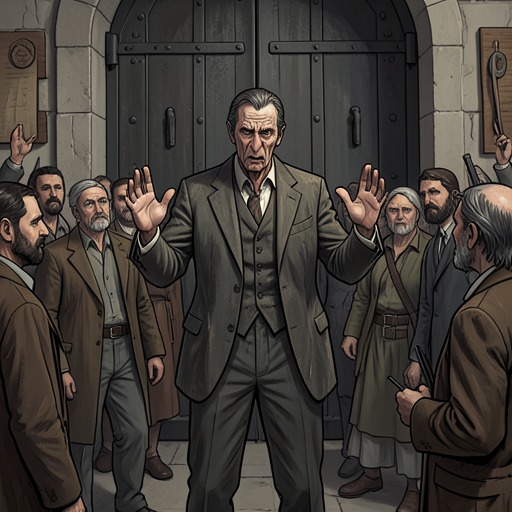
After Mossad abducted Adolf Eichmann in Buenos Aires, he was taken to Israel. The book places his Jerusalem trial in the following year, 1961, and evokes its public character through the image of Eichmann displayed in a glass enclosure before spectators and world opinion. The account gives no verdict, examination of evidence, or procedural chronology, so the trial’s course cannot be reconstructed further from this evidence. What it does establish is the sharp contrast between a fugitive who had lived under an assumed identity and a defendant now made publicly identifiable.
A warning to Nazi fugitives
The prospect of Eichmann’s appearance in court unsettled Nazi exiles across South America. His capture made them fear that they too could be seized, exposed, and brought before an international audience. The trial’s glass enclosure became an image of public disgrace: not simply a legal proceeding, but a demonstration that flight and concealment might end in forced visibility. The book connects that fear to the wider manhunt, while distinguishing Eichmann’s actual trial from the capture operations and extradition efforts directed at other fugitives.
The consequences extended beyond the exiles’ private anxiety. Eichmann’s kidnapping and trial humiliated Argentina and put pressure on West Germany to demonstrate that it was no longer a refuge for Nazi criminals and was prepared to judge them. In June 1960, a warrant was issued for Josef Mengele; the book presents this as part of the new era of pursuit that Eichmann’s capture had heralded, not as an outcome of Eichmann’s trial itself. The separate legal efforts against Mengele also expose the obstacles to accountability: requests moved through multiple offices, while jurisdiction, diplomatic delay, and Paraguay’s refusal to cooperate impeded the pursuit.
Afterlife and historical resonance
Eichmann’s trial remained a point of reference in later efforts to secure testimony and demand justice. At the 1985 mock trial of Josef Mengele at Yad Vashem, the tribunal included the chief prosecutor from Eichmann’s Jerusalem trial. Survivors gave testimony there about their treatment at Auschwitz, and the proceedings were broadcast internationally. This was a distinct mock trial, not a continuation of Eichmann’s case, but its personnel and public purpose linked the two events within the book’s account of belated efforts to confront Nazi crimes.
The narrative also places Eichmann’s later execution after the Jerusalem trial. When Josef Mengele heard in 1962 that Eichmann had been hanged, he filled notebooks with self-pitying reflections and portrayed Eichmann as a man abandoned by Germany. That response reveals the trial’s continuing importance in the fugitive’s imagination: Eichmann’s public prosecution and death stood as a possible fate that Mengele feared, even as he recast the perpetrator as a victim. The trial’s significance in this account therefore rests not on a detailed legal record, but on its visibility, its impact on the pursuit of other fugitives, and the defensive stories it provoked.