Genoa
The Disappearance of Josef MengeleGenoa was the port from which Josef Mengele, traveling as Helmut Gregor, embarked for Argentina in 1949. It was both a practical staging point in his escape and a node in the Nazi Ratlines: a place where forged identities, intermediaries, and promises of protection carried a fugitive from Europe toward sanctuary overseas. The departure did not bring the security Gregor expected; the promised help at either end of the journey proved unreliable, and his arrival began with uncertainty rather than welcome.
Final European Stop
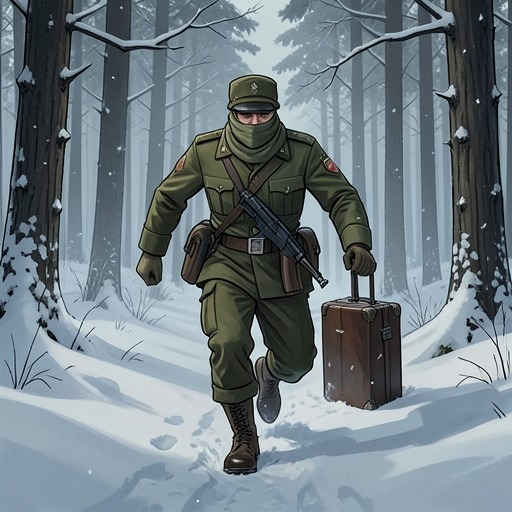
After fleeing Poland in January 1945 in the uniform of a Wehrmacht soldier, Mengele spent several weeks in an American prisoner-of-war camp and was released using false papers in the name of Fritz Ullmann. He then hid for three years on a farm near Günzburg, working under the name Fritz Hollmann. At Easter 1949, he crossed the Dolomites by forest paths into South Tyrol, adopted the identity Helmut Gregor, and made his way to Genoa. The city was the last named European stage of this sequence of concealments before he boarded a ship for Argentina.
Passage Arranged Through Intermediaries
In Genoa, Gregor sought help from Kurt, a smuggler who had connections to clandestine emigration. Gregor presented himself as a scientist and high-level geneticist and offered money in return for a senior secret-police official to meet him in Buenos Aires and spare him the difficulties of customs. Kurt declined: such favors, he explained, were reserved for high-ranking figures of the old regime, not a former SS captain. He nevertheless promised to send a telegram to Buenos Aires. The official did not appear, leaving Gregor to wait with other refugees in the customs hall, clutching his two suitcases.
Kurt also promised that a German doctor would meet Gregor at the quayside in Buenos Aires and take him to the home of Malbranc. No doctor arrived. Gregor waited in the rain, unsure whether to go to Malbranc’s address and reluctant to set out alone in a city where he knew no one. Eventually, with few passengers left on the quay, he shared a taxi with two Calabrians and spent his first night in South America in a modest hotel room. These failed arrangements make Genoa significant not as a place of assured protection, but as the point from which Gregor entered a system built on uncertain promises and personal connections.
Genoa and the Nazi Ratlines
The departure belonged to a larger postwar escape network. Juan Perón’s government opened Argentina to thousands of Nazis, Fascists, and collaborators. An Information Office in Buenos Aires, headed by Rudi Freude, and Carlos Fuldner helped organize escape routes through chains of diplomats, corrupt officials, intelligence contacts, and clergymen. Fuldner was sent through Spain and Switzerland before continuing to Rome and Genoa, where Gregor embarked. The account places Genoa within this coordinated system without suggesting that every part of Gregor’s passage was secure or that the city itself guaranteed his admission.
On 22 June 1949, after a three-week crossing, Gregor reached Buenos Aires. Genoa thus serves as the hinge between his European evasion—built on successive names, routes, and intermediaries—and his attempt to establish himself in Argentina. Its role in the narrative is concrete and limited, but consequential: it is where the landward flight ended and the ocean passage, facilitated by the postwar escape network, began.