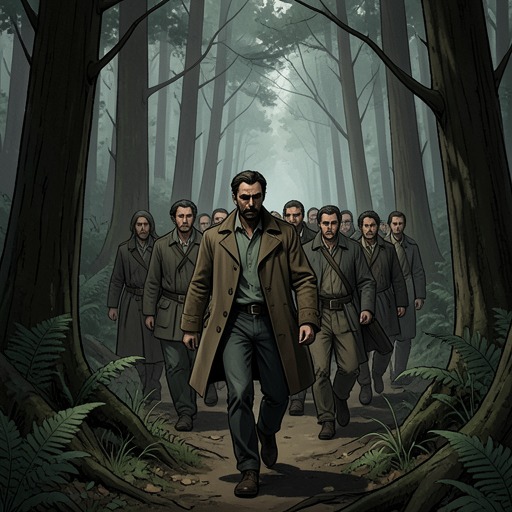
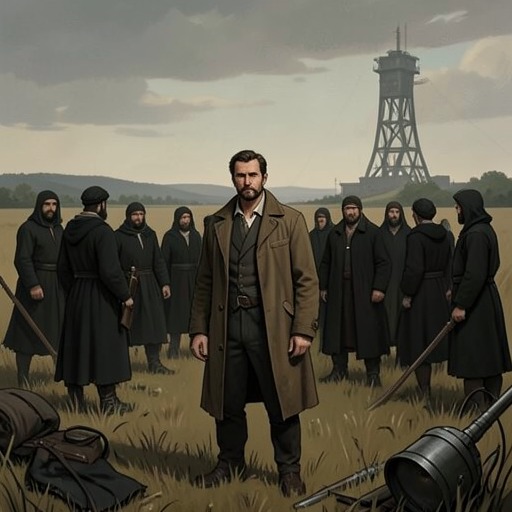
Geza Stammer, the Brazilian host
The Disappearance of Josef MengeleGeza Stammer, the Brazilian host, was a Hungarian surveyor and rural property owner whose household was drawn into Josef Mengele’s flight through Brazil. He accepted a mysterious lodger under a false identity, but the arrangement became a test of fear, political indifference, and financial need when he learned whom he was sheltering. The account leaves Geza caught between wanting the fugitive gone and the possibility that hosting him might improve his family’s precarious circumstances.
Background and the farm
Geza and Gitta Stammer, Geza’s wife, had left Hungary after the Soviet invasion and settled on a farm near Nova Europa. Their circumstances were modest, and the property was remote enough to offer concealment. Geza worked as a surveyor and was often away for long stretches, a practical detail that made the farm seem suitable for a lodger who could manage it in his absence. The household included their two sons, whose safety would become central to Geza’s response.
The account gives their past in a deliberately unsettled light. Their parents in Transylvania had lost land after the defeat of 1918, and a sister of Gitta Stammer, Geza’s wife, had been killed by Red Army soldiers during the invasion of Hungary. Yet their own suffering did not make them attentive to the suffering of others: they had not been troubled by the deportation of Hungarian Jews or by the late-1944 massacres carried out by Arrow Cross militiamen, whose political cause they supported. When Josef Mengele’s past became known, the Stammers’ experience of displacement and loss did not translate into concern for his victims.
The lodger under an assumed name
The arrangement came through Gerhard, who had met the Stammers at a gathering of Central European expatriates. He presented the proposed guest as Peter Hochbichler, a Swiss livestock-breeding specialist around fifty who had recently faced health problems and did not want to live alone. The supposed specialist had inherited money and wanted to invest in land; while Geza was away surveying, he could help manage the farm. The Stammers would provide food, housing, and concealment, but would not pay him.
The description made an unusual proposal sound like a practical exchange. A car eventually reached the old farm by a deteriorating track, and the couple and their two sons came to meet their mysterious benefactor. The narrative’s contrast is sharp: the guest arrives as a potential investor and useful farm manager, while the readers know that the Swiss identity is a disguise for one of the world’s most wanted war criminals. Geza’s decision to accept the lodger is presented not as an ideological declaration but as an agreement made under conditions of limited means and incomplete knowledge.
Recognition, fear, and the threat to the family
After a meal the guest had barely touched, Josef Mengele confessed that he was the person newspapers accused of crimes at Auschwitz, while denying the accusations. Geza and Gitta Stammer, Geza’s wife, had not cared about the reports or the history of Auschwitz; their immediate concern was that the household should be left in peace. But a newspaper account of a possible Israeli operation changed the scale of the danger. The Stammers could not sleep, and Geza paced with the paper, frightened that Mossad might raid the farm and put their sons at risk.
Geza concluded that the lodger had to leave. He intended to delay a planned journey to São Paulo and contact Gerhard, then take Hochbichler there by force if necessary the following week. He also considered telling a local journalist what he knew if Nazi supporters threatened the family. The plan shows his fear turning into a direct intention to end the arrangement, though the evidence does not establish that he carried it out. Gerhard, by contrast, tried to reassure him that the family was not in danger and urged them to continue sheltering a man he described as a distinguished scientist and an important cause.
Money and the unresolved choice
Gitta Stammer, Geza’s wife, opposed Geza’s plan to remove the guest immediately. She argued that their wealthy Bavarian protectors might provide what the family needed, and that they should seek a substantial payment or a larger farm in a less harsh region before ending the arrangement. Her reasoning was tied to the future of their sons: money was needed for their education, and she saw the unexpected arrival as a rare opportunity to improve their lives. Geza objected that she had lost her judgment; she answered that their poverty and the life they had been promised had left them in a trap.
Their quarrel makes the refuge more than a question of whether the Stammers believed Josef Mengele’s denials. They wanted quiet and feared for their children, but they also discussed making a material gain from their connection to the fugitive. Geza’s resolve to expel him therefore met both his wife’s practical counterargument and the pressure exerted by Gerhard. The account ends this part of their story with the household divided and the decision still unsettled: the farm has become a shelter, a source of danger, and a possible means of escape from poverty at once.