Hans Sedlmeier
The Disappearance of Josef MengeleHans Sedlmeier is a childhood friend and long-standing confidant of Josef Mengele whose assistance repeatedly helps Mengele preserve his freedom. Their relationship operates through practical acts rather than grand declarations: safeguarding research materials, arranging a discreet return to Europe, intervening after a police inquiry, and transmitting warnings when the search for Mengele tightens. Across these episodes, Sedlmeier is both a personal ally and a working link between Mengele, his family, and a wider network of former Nazis and sympathetic contacts.
Identity and Early Role
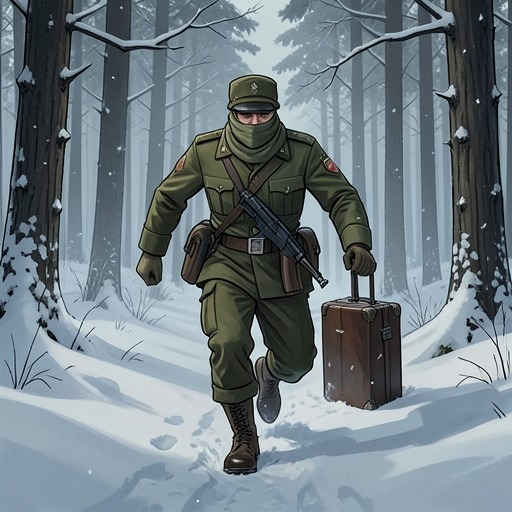
Sedlmeier’s first defining role in the account is that of a trusted custodian. After Mengele escaped the German collapse in 1945, he retrieved a briefcase containing the results of his research, which he had entrusted to a sympathetic nurse in the Soviet zone. He later passed the case to Sedlmeier, his childhood friend and confidant of his industrialist father, Karl Mengele. During the three years Mengele hid near the family farm, the two men met regularly in the surrounding woods. The briefcase was not merely luggage: it held notebooks, anatomical drawings, samples, and other materials that could have exposed Mengele’s identity and past.
Before Mengele left Europe, Sedlmeier returned the case to him in Italy, with a large envelope of cash inside. The episode establishes the pattern that persists throughout their relationship: Sedlmeier could be trusted with sensitive property, money, and information, and he was prepared to support Mengele’s movement across borders. When Mengele reached Argentina under the name Helmut Gregor in June 1949, he carried the case whose preservation and return had depended on Sedlmeier.
A Place in the Argentine Network
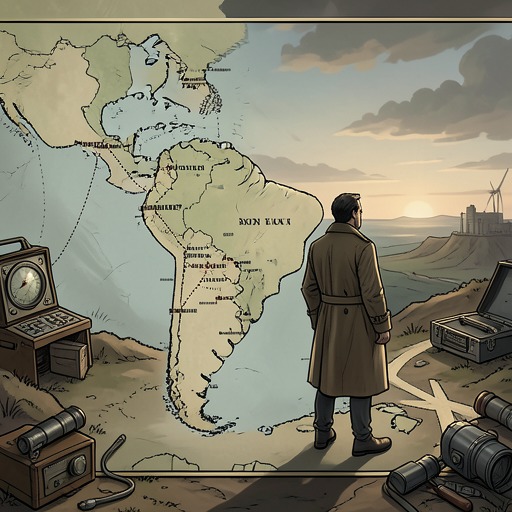
Mengele’s refuge in Argentina formed part of a broader postwar influx. Juan Perón’s government welcomed large numbers of Nazi, Fascist, and collaborationist fugitives, while officials and intermediaries organized escape routes through Europe and South America. Buenos Aires became a gathering place for remnants of the defeated Nazi order and other authoritarian movements. Sedlmeier’s later assistance to Mengele belongs to this setting, though the account distinguishes the organized ratlines from the personal relationships that sustained fugitives after arrival.
Mengele also developed a social circle among prominent Nazi expatriates. After meeting Willem Sassen aboard the Falken, he attended a gathering on the vessel where Sassen introduced him to figures including Ante Pavelić and other European Fascists. He later became a frequent presence at the residence of Gerard Malbranc, a former Nazi spy and arms dealer. Eberhard Fritsch and Sassen visited to play poker, accompanied by Frederico Haase. These connections help explain the social world in which Sedlmeier’s private loyalty functioned: Mengele was not isolated from other former Nazis, but depended on trusted individuals to make that wider milieu useful to his continued concealment.
Travel, Family, and Intervention
On 22 March 1956, Mengele left South America on a three-month passport and flew to Geneva by way of New York. Sedlmeier was waiting at the airport. He drove Mengele to Engelberg and Hotel Engel, where Mengele met Martha Mengele, her son Karl-Heinz, and his own son, Rolf. Sedlmeier’s presence at this reunion placed him at the junction of Mengele’s concealed life and his family relationships, helping make a meeting in Europe possible after years of separation.
A more urgent intervention followed in Munich. After Mengele’s car collided with another vehicle, the other driver insisted on following the law, and police became suspicious of his Argentine papers and heavy Bavarian accent. An officer ordered him not to leave the city until his identity had been verified. Trembling, Mengele telephoned Karl Mengele. Two hours later, Karl arrived at police headquarters with a lawyer, the Günzburg chief of police, and Sedlmeier, who carried a black briefcase. They met the reporting officer, went for a beer, and negotiated until they reached a deal. Mengele flew back to South America the following day. Sedlmeier’s role in this episode was direct and practical: he joined the family delegation at the moment an ordinary traffic incident threatened to expose Mengele.
Warning and the Renewed Hunt
The danger became more formal in 1959. Hermann Langbein, a former prisoner of Auschwitz and co-founder of the International Auschwitz Committee, patiently gathered evidence against Mengele. Although the German federal justice ministry said the case belonged before a regional court and most judges declined to act, a prosecutor in Freiburg im Breisgau issued an arrest warrant on 25 February for multiple cases of premeditated murder and attempted murder. Langbein pressed for an extradition request to Argentina.
Sedlmeier learned of the warrant through one of his police informants and sent Mengele a telegram. The warning made delay untenable: Mengele had to sell his villa and shares in Fadro Farm, close his bank accounts, and flee to Paraguay. He left Argentina amid uncertainty about whether the new government would continue the leniency shown by earlier Peronist and military administrations. Sedlmeier’s access to a police contact thus gave him a crucial place in the chain of warning that preceded Mengele’s flight.
In Paraguay, the legal and diplomatic pursuit crossed several jurisdictions. The extradition request moved through Argentine institutions, while the Paraguayan authorities learned of the approaching request and Hans-Ulrich Rudel intervened on Mengele’s behalf. The process culminated in November 1959, when Paraguay granted Mengele citizenship and official documents. Sedlmeier was not the sponsor of that naturalization, but his telegram had helped force the relocation that made Paraguayan protection urgent.
Loyalty Under Pressure
The relationship also appears in quieter, more strained circumstances. During a short walk with Mengele at the Stammers’ farm, Sedlmeier was shocked by his friend’s altered appearance and distress. Mengele was exhausted by hiding, increasingly unable to read, and frightened by news of Adolf Eichmann’s trial in Jerusalem. He asked Sedlmeier to get him out of the situation. Sedlmeier, in turn, relayed news of the family: Martha and Karl-Heinz were in Merano, and Rolf was studying law in Freiburg. He said that correspondence had to stop because strangers were watching the factory and family home in Günzburg, Martha felt watched in Merano, and suspicious visitors had come to her house. From then on, Mengele was to communicate only through Gerhard.
That warning captures the cost and limits of Sedlmeier’s assistance. He remained loyal, but surveillance made their usual channels dangerous; he had to restrict contact rather than preserve their earlier pattern of regular communication. The same vulnerability surfaced in 1964, when Fritz Bauer ordered a search of Sedlmeier’s home, suspecting him of acting as the intermediary between Mengele and his family. Police found no letters or compromising evidence. Sedlmeier had been warned that a raid was imminent through a call from his police contact. The episode shows how his network of information could protect him as well as Mengele, while also placing him under direct suspicion.
The broader pursuit remained compromised and uneven. West German authorities delayed sending fingerprints to their South American embassies, relied heavily on procedure, and did not devote special intelligence resources to tracking Mengele. In 1964, public statements identified him as a Paraguayan citizen believed to be in the tri-border region and traveling to Brazil; Paraguay rejected West German pressure and defended its sovereignty. Sedlmeier’s part in this larger history is not that of a state official or a formal organizer of the escape routes. It is the more intimate, persistent role of the trusted intermediary: a keeper of documents and money, a companion at moments of travel, a participant in an emergency negotiation, and a source of warnings as the legal net approached.