International Auschwitz Committee
The Disappearance of Josef MengeleThe International Auschwitz Committee is presented as a survivor-focused organization pursuing two connected aims: seeking compensation for concentration camp survivors and gathering testimony that could help bring their persecutors to court. Its role in the account becomes concrete through the work of its co-founder Hermann Langbein, whose investigation of Josef Mengele turned accumulated information into a criminal case and an extradition demand.
Aims and Founding Context
Co-founded in 1952 by Hermann Langbein, the Committee worked for compensation for concentration camp survivors and sought to assemble testimonies that could be used to prosecute those who had tortured them. These aims joined material redress to legal accountability: testimony was not only a record of what survivors had endured, but a possible means of bringing perpetrators before a court.
Langbein’s own history shaped the force of that work. An Austrian Communist and veteran of the Spanish Civil War, he had been imprisoned in Dachau and Auschwitz, where he was compelled to serve as personal secretary to the camp’s chief doctor, Eduard Wirths. He had not forgotten Josef Mengele, and he did not accept that Mengele had simply disappeared.
Langbein’s Investigation of Mengele
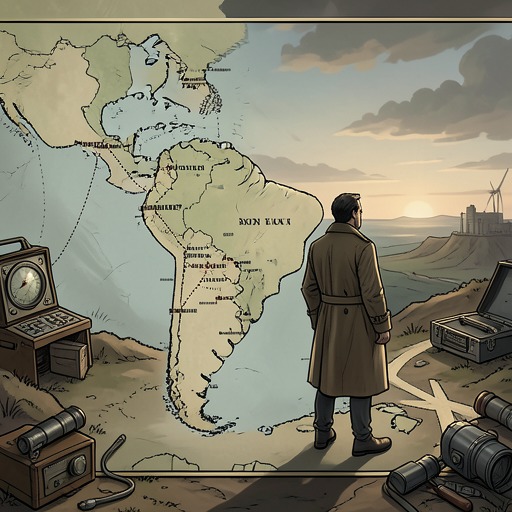
Langbein’s pursuit began with a chance discovery: in 1954 he encountered the legal announcement of Mengele’s divorce. The notice provided a lead, and the involvement of an Argentine lawyer in the proceedings strengthened Langbein’s belief that Mengele was living in Buenos Aires. Rather than treating the clue as proof by itself, he investigated patiently and discreetly, accumulating evidence over time.
The Committee’s work is presented as part of a broader effort to make survivor testimony and investigative findings usable in legal proceedings. Langbein passed his case files to the German federal minister of justice. The minister replied that the matter fell outside his jurisdiction and should be tried by a regional court; most judges declined to act. The sequence reveals the distance between collecting evidence and securing a prosecution: documentation could identify a route toward justice, but still had to pass through hesitant and divided institutions.
From Documentation to Legal Action
A breakthrough came in Freiburg im Breisgau, where Mengele had last been registered after helping his wife settle there at the end of the war. On 25 February 1959, a prosecutor issued an arrest warrant accusing him of multiple cases of premeditated murder and attempted murder. The warrant made the investigation a formal criminal matter, but Langbein’s work did not end with that step. Believing Mengele was in Buenos Aires, he pressed for the German Ministry of Foreign Affairs to seek his extradition from Argentina.
The account distinguishes this investigative and documentary contribution from the powers of arrest and extradition. The Committee could support the gathering of evidence and the pursuit of accountability, while legal authorities and governments controlled the steps needed to bring a suspect into court. Mengele’s escape to Paraguay after receiving warning of the warrant demonstrates how quickly the legal process could be frustrated by delay and cross-border flight.
Significance
The International Auschwitz Committee represents an organized effort to carry survivors’ claims beyond private remembrance: toward compensation, testimony, and possible prosecution. Langbein’s investigation shows how those aims could operate in practice, beginning with a public legal notice and developing through discreet inquiry, case files, a regional arrest warrant, and a demand for extradition.
The account also makes clear that evidence alone did not guarantee accountability. Jurisdictional obstacles, judicial reluctance, and the need for international cooperation intervened between investigation and enforcement. The Committee’s significance lies in the work of building that evidentiary path and keeping the pursuit active, even when the institutions expected to act moved slowly.