Isser Harel
The Disappearance of Josef MengeleIsser Harel’s pursuit of Josef Mengele places the Nazi-hunting campaign at the intersection of intelligence ambition, cross-border obstruction, and competing national priorities. As director of Mossad, Harel prepared to use the operation that captured Adolf Eichmann as a brief opening to seize Mengele too. The opening closed before his agents could find their target. Later, Harel redirected resources to a domestic crisis and then faced pressure to address a perceived military threat to Israel, illustrating how the pursuit depended not only on information and surveillance but on what the state could afford to prioritize.
Director and the widening pursuit
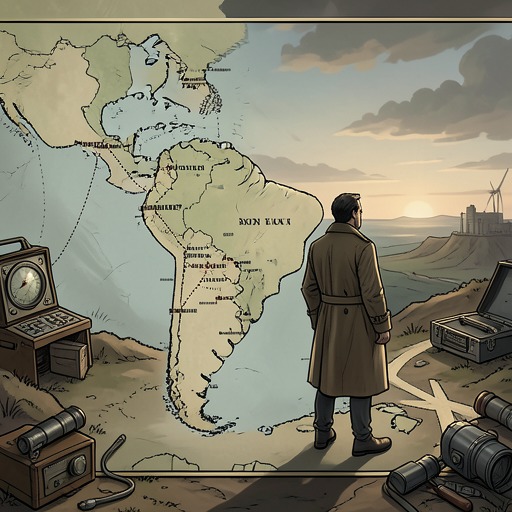
The pursuit took shape against a background of incomplete and delayed efforts to bring Mengele to justice. Hermann Langbein had gathered evidence and, after a regional court in Freiburg im Breisgau issued an arrest warrant on 25 February 1959, pressed for Argentina to be asked for Mengele’s extradition. The request became entangled in official processes, while Mengele’s supporters and shifting locations made his whereabouts difficult to establish. By the time Harel considered acting, his intelligence was scattered and out of date: Mengele was believed to use the name Gregor and to run a furniture factory in central Buenos Aires.
Harel’s plan was tied to the impending capture of Eichmann. The operation was scheduled for 11 May 1960, and Harel intended to use the interval after Eichmann’s seizure to locate Mengele and bring him onto the plane that would carry Eichmann to Israel. The plan relied on an unusually narrow window: agents would have nine days after the capture to identify a fugitive whose trail already crossed borders and whose associates could alert one another. Harel’s file on Mengele was coded and carried with him, a small physical sign of how closely the two operations had been joined in his calculations.
The missed opportunity in Buenos Aires
After Eichmann was seized on 11 May, Israeli agents questioned him about Mengele’s appearance, habits, associates, and whereabouts. Despite their strained relationship and Eichmann’s contempt for Mengele, he initially withheld information; under sustained questioning, he gave the agents the address of a guesthouse in Vicente López. Harel sent two agents to check it. The manageress did not recognize either of the names Gregor or Mengele, while a postman recalled that a Mengele family had lived there and left weeks earlier without a forwarding address. At the furniture factory, nobody knew a German called Gregor.
The search had encountered a trail that pointed backward. Mengele had already left for Paraguay, and Harel’s agents could not recover the lost time by watching the empty guesthouse. Harel nevertheless resisted abandoning the pursuit and considered a raid, but his men warned that an entry could expose the operation and undermine it entirely. On 20 May, Eichmann left Buenos Aires for Tel Aviv; Mengele remained beyond Harel’s reach. The failed parallel hunt showed the difference between having a target’s name and possessing current, actionable information about where he was.
Operation Tiger and competing priorities
The next interruption came from inside Israel. After returning to France, Mossad officer Zvi Aharoni was instructed by Harel to suspend the Mengele hunt and help find Yossele, an eight-year-old child whose disappearance had intensified conflict between religious and secular communities. The child’s grandfather had refused to return him to his parents, and then Yossele vanished. With public anger mounting and the dispute threatening political stability, Prime Minister David Ben-Gurion ordered Mossad to intervene. The search became Operation Tiger, drawing forty of the agency’s best investigators into a mission that extended across several countries.
The diversion demonstrated that Harel’s priorities were not limited to pursuing Nazi fugitives. The search for Yossele lasted eight months and cost Mossad one million dollars; the boy was eventually found living with an ultra-Orthodox family in Brooklyn and brought back to Israel. During that time, Mengele moved again. Harel’s choice addressed an urgent Israeli crisis, but it also left the earlier pursuit without the sustained attention required to keep pace with a fugitive in South America.
Operation Damocles and the limits of the campaign
Harel also faced criticism that Mossad’s publicized actions had drawn resources away from its central responsibility: protecting Israel. Egypt’s missile programme, supported by German scientists and technicians who had worked on Hitler’s V-2 programme, was regarded as a serious threat. In response, Harel launched Operation Damocles, a covert campaign against German specialists involved in the Egyptian rocket effort. Its methods led to arrests in Switzerland and a public scandal, placing strain on relations between West Germany and Israel and threatening their economic and military interests.
The consequences were institutional as well as diplomatic. Harel was forced to resign and was replaced by Meir Amit, whose priorities were intelligence gathering and Israel’s conflict with its Arab adversaries. With the agency refocused and Israel preparing for the Six-Day War, Mengele’s capture receded from the foreground. Harel’s pursuit thus ends not with an arrest but with a succession of narrowed opportunities: the Eichmann operation yielded a clue too late, a domestic emergency displaced the hunt, and a broader security campaign helped bring his tenure to an end. The episode presents Nazi-hunting as an effort constrained by national borders and rival demands, not as a continuous operation that could proceed simply because a fugitive had been identified.