Mengele Flees to Brazil and Hides at Fazenda Santa Lúcia
The Disappearance of Josef MengeleJosef Mengele’s flight from Paraguay to Brazil in 1960 turned an increasingly exposed fugitive into a man hidden behind a new identity and a carefully constructed story. His escape depended not on a single border crossing but on a chain of assistance: advance warnings, forged or false papers, committed Nazi intermediaries, and a Brazilian family willing to provide a home to the stranger they knew as Peter Hochbichler.
From Paraguayan Refuge to Flight
The pressure had been building since February 1959, when a prosecutor in Freiburg im Breisgau issued an arrest warrant for Mengele on charges of multiple premeditated murders and attempted murders. Hermann Langbein, a former Auschwitz prisoner who had investigated Mengele, urged West German authorities to seek his extradition from Argentina. When Mengele’s location in Paraguay became a growing concern, requests for extradition moved between Bonn, Buenos Aires, and Asunción, delayed by legal procedures and diplomatic inertia.
Paraguay offered a temporary legal shield. In November 1959, the country granted Mengele citizenship, a residence permit, a certificate of good behaviour, and an identity card, despite his failure to meet the five-year residency requirement. Uli Rudel intervened with Paraguayan officials on his behalf, presenting him as a politically persecuted German who could serve Paraguay. President Stroessner refused to treat him as someone who could simply be surrendered to a foreign government.
That protection did not remove the threat. Isser Harel, the director of Mossad, planned to pursue Mengele after the scheduled capture of Adolf Eichmann in Buenos Aires in May 1960. His information was dated and incomplete, but the plan gave Mengele reason to fear that the search was closing in. By September, Mossad’s special unit was monitoring the movements of his wife and son and approaching the farm of Alban Krug, where Mengele had taken refuge. The prospect of capture brought his Paraguayan life to an end.
Abandoning His Former Life
In September 1960, at forty-nine, Mengele decided to disappear again. Rudel supplied him with a Mauser pistol and a Brazilian identity card bearing the name Peter Hochbichler. Mengele separated from Martha Mengele and Karl-Heinz, who returned to Europe without saying goodbye to him. Before leaving, he burned his notes and German passport and destroyed his Auschwitz specimens. The preparations severed what remained of his public and family life in Paraguay as he set out to begin again under an assumed name.
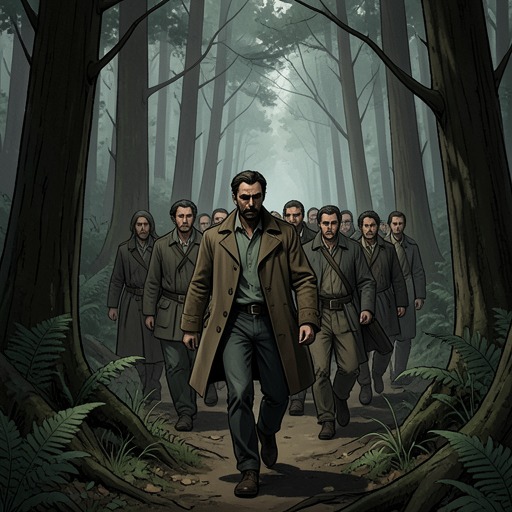
At dawn on a morning in October, Krug and Rudel drove him by jeep to the Brazilian border. Krug urged him on, but Mengele did not turn back. He crossed into Brazil and continued toward the isolated farm that had been arranged for him. The departure was both a practical escape and another rupture: the new refuge required him to leave his wife and son behind, discard personal records, and entrust his safety to a network of intermediaries.
Gerhard’s Arrangements and the Hochbichler Identity
The immediate guide into Brazil was Wolfgang Gerhard, Rudel’s representative in São Paulo for the Kameradenwerk. Rudel had contacted him to arrange Mengele’s exfiltration. The Mengele family in Günzburg initially doubted Gerhard’s reliability and worried that he might charge excessively. Rudel assured them that Gerhard would ask for no payment, regarding the protection of a wanted Nazi as an honour and a commitment in itself.
Gerhard had already employed Mengele in his confectionery shop after Mengele first arrived in Brazil. He devoted much of his time to supporting him, while his own business and family received less attention. His politics were openly Nazi: he printed propaganda and antisemitic publications, and his household displayed Nazi allegiance. This was not simply a paid transport arrangement. Gerhard saw sheltering Mengele as an ideological duty and personally accompanied him on the journey north.
During the drive, Gerhard repeatedly explained the plan. He would introduce Mengele to Geza and Gitta Stammer as Peter Hochbichler, a Swiss specialist in livestock breeding. The invented biography described a fifty-year-old man who had experienced health problems, no longer wanted to live alone, was seeking work and companionship, and had recently inherited money he wished to invest in land. Gerhard added that Hochbichler could manage the farm while Geza, a surveyor, was away on extended assignments.
Fazenda Santa Lúcia and the Stammer Family
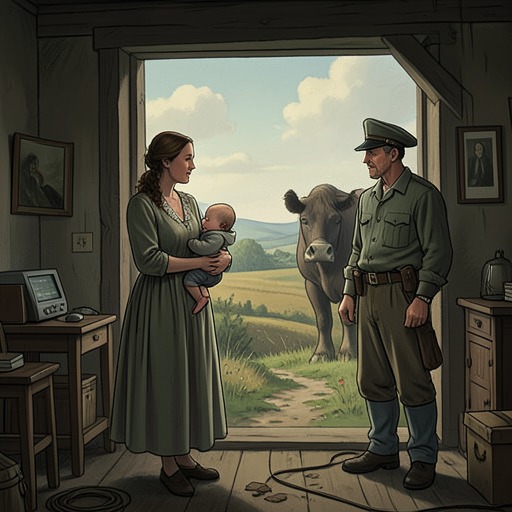
The destination was an old farm near Nova Europa, about 300 kilometres from São Paulo, owned by Geza and Gitta Stammer. They had left Hungary after the Soviet invasion and had met Gerhard at a gathering of Central European expatriates. Gerhard considered them politically dependable and unlikely to cause trouble. The Stammers were not wealthy, but they accepted his proposal: Hochbichler would receive food and lodging and be concealed, without being paid for managing the farm.
The family was expecting a mysterious benefactor, not the Nazi doctor behind the assumed identity. When Gerhard brought Mengele to the wooden house, the Stammers and their two sons were there to meet him. The arrangement converted the alias into a domestic cover: a supposed Swiss livestock specialist with money to invest could live and work at the farm without presenting himself as a fugitive. The concealment depended on the Stammers accepting Gerhard’s account and on the household’s remoteness from the places where investigators were searching.
The Limits of the Refuge
Brazil did not end the pursuit. In March 1961, Mengele was identified in the town of Mato Grosso while travelling with a protective group of Indigenous people, but escaped a police ambush. Later reports that he had been arrested in Minas Gerais proved mistaken: the detained man was another former Waffen-SS member. In February 1962, police raided a hotel near the Paraguayan border after Mengele had already left. Rumours in the Argentine press inflated the fugitive into an armed figure surrounded by a private army, but the repeated near-misses conveyed the instability of his concealment.
West German efforts also continued, though they were slow and constrained by diplomatic calculation. In 1962, Bonn sought Mengele’s extradition from Paraguay, whose authorities refused to cooperate; Stroessner had already been informed that Mengele had gone to Brazil. The following year, Chancellor Konrad Adenauer offered Paraguay ten million US dollars in aid if it delivered him, without changing the refusal. In 1964, while the Frankfurt Auschwitz trials drew attention to the crimes, West Germany publicly described Mengele as a Paraguayan citizen who lived in the tri-border region and travelled to Brazil. Fritz Bauer announced a reward of 50,000 marks for his capture, while Paraguay denied that Mengele remained there and insisted he might be in Brazil or Peru. The flight had put a border between Mengele and his pursuers, but it had not made him safe; it had made his survival depend on continued concealment, intermediaries, and the competing interests of states.