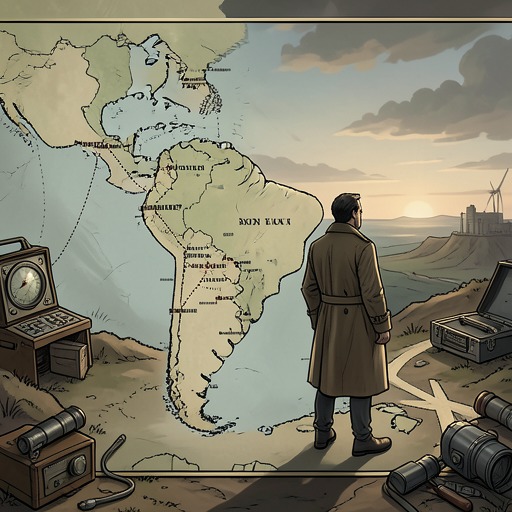
Operation Damocles
The Disappearance of Josef MengeleOperation Damocles was Mossad’s covert campaign against German specialists working on Egypt’s missile program. It began as Israel’s leaders faced a perceived strategic threat, but the campaign’s violent methods and public exposure produced diplomatic costs that reshaped Mossad’s priorities and interrupted its pursuit of Nazi fugitives such as Josef Mengele.
The missile threat and Mossad’s changing priorities
The campaign took shape against the backdrop of Israel’s unresolved search for Nazi war criminals. After the capture of Adolf Eichmann, Isser Harel had also hoped to pursue Josef Mengele, but the agency’s attention and resources were stretched across operations in South America. Harel’s critics argued that Mossad was neglecting its central duty of safeguarding Israel and had become too focused on high-profile Nazi hunts and publicity.
The urgency shifted in July 1962, when Egypt tested a ballistic missile capable of reaching anywhere within Israel. At a military parade in Cairo, Gamal Abdel Nasser displayed rockets with a reported range of 600 kilometres. German scientists and technicians, veterans of Hitler’s V-2 program, were advising Egyptian missile experts, while 900 rockets were reportedly under construction at the secret Factory 333. The most alarming assessments warned that some might carry radioactive waste or nuclear warheads. In this account, Operation Damocles arose not from the Nazi-hunting mission but from a security crisis that Harel could no longer treat as secondary.
Covert campaign and public exposure
Harel launched the campaign to counter the German specialists’ work and answer criticism that Mossad was failing in its core mission. Its methods included sending letter bombs, kidnapping some of the scientists, and killing others. The operation was intended to impede assistance to Egypt’s missile program, but it also exposed the political risks of carrying clandestine violence across borders.
The danger became public when Israeli agents threatened the daughter of a West German expert in electronic guidance. Swiss authorities arrested the agents and charged them with coercion and attempted murder. The case developed into a scandal, jeopardizing relations between West Germany and Israel and putting their economic and military interests at risk. Rather than remain a concealed campaign, Operation Damocles had become an international political liability.
Leadership consequences and the Mengele hunt
The Swiss arrests and the resulting scandal intensified the pressure on Harel. He was forced to resign and was replaced by General Meir Amit. Under Amit, Mossad’s priorities changed: the agency was to concentrate on intelligence gathering and the struggle against Israel’s Arab enemies, rather than treating the capture of Nazi fugitives as its foremost task. The book also places this shift in the context of Israel’s preparations for the Six-Day War, as Mengele’s capture receded further into the background.
That retreat mattered because the pursuit of Josef Mengele had already depended on a narrow, time-sensitive plan. Harel had intended to use the period after Adolf Eichmann’s planned capture in Buenos Aires to locate Mengele, but the search relied on scattered and outdated information. Meanwhile, legal and diplomatic efforts to secure Mengele’s arrest or extradition encountered delays and resistance in South America. Operation Damocles did not resolve those obstacles; the agency’s strategic redirection reduced the attention available to the hunt.
Significance
Operation Damocles illustrates the collision between clandestine pursuit and state security policy. Mossad’s attempt to disrupt Egypt’s missile program addressed a danger regarded as immediate, yet its methods brought arrests and a diplomatic crisis that constrained the agency. The change in leadership and priorities left the search for Josef Mengele subordinate to Israel’s broader intelligence and military concerns, showing how Nazi-hunting could be displaced even while the fugitive remained at large.