Cato of Utica
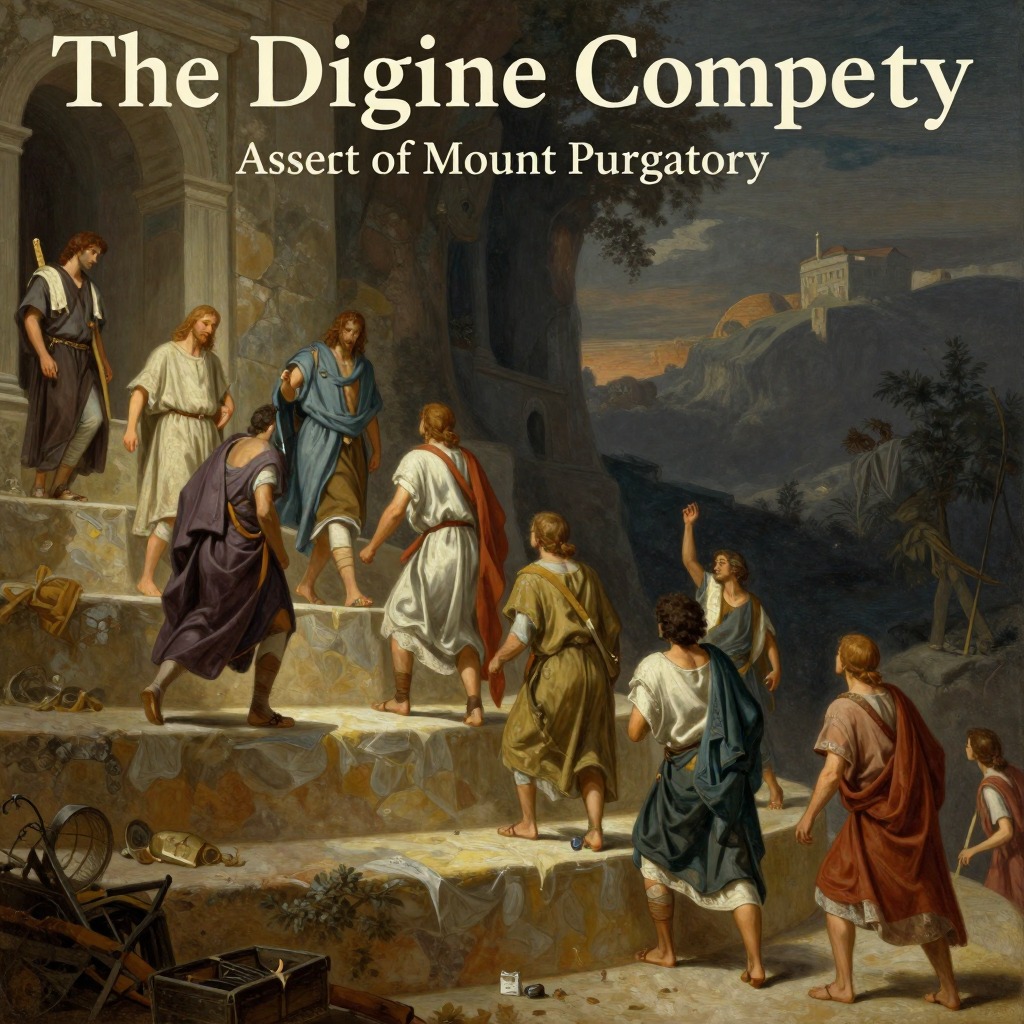
The Divine ComedyCato of Utica (Marcus Porcius Cato Uticensis) is the first figure Dante and Virgil encounter after emerging from Hell, and he serves as the warden of the approach to Mount Purgatory. A Roman statesman and Stoic philosopher who committed suicide in 46 BCE rather than live under Julius Caesar's dictatorship, Cato is presented not as a damned soul but as a venerable elder whose authority derives from his absolute devotion to political and spiritual liberty. His presence at the very beginning of the purgatorial journey establishes the moral and theological framework of the second realm: freedom is the precondition for purification, and the soul that seeks it must first honor the principle for which Cato gave his life.
Identity and Background
Cato appears as "an old man alone" , worthy of so much reverence that "more owes not to father any son" . He wears a long beard mingled with white hair, and his face is illuminated by the four consecrated stars—the four cardinal virtues—so brightly that he seems to have the sun before him . His first words are a challenge: he demands to know who these travelers are who have "fled away from the eternal prison" and come "counter the blind river" , and whether the laws of the abyss have been broken or a new council changed in heaven . This initial suspicion reflects his role as the guardian of a boundary that no damned soul should cross. Virgil responds with deep reverence, making Dante kneel and bow his head, and explains that a Lady from Heaven descended to secure Dante's rescue and that Virgil has shown him all the people of perdition .
The Love of Liberty and the Refusal of Earthly Ties
Cato's defining characteristic is his love of liberty, which Virgil invokes directly: "He seeketh Liberty, which is so dear, / As knoweth he who life for her refuses" . Virgil reminds Cato that his own death in Utica was undertaken for this cause, and that the vesture he left behind will shine on the great day . Yet when Virgil appeals to Cato through the memory of his wife Marcia, who dwells in Limbo and still prays to him, Cato rejects the plea. He declares that while he was alive, Marcia was so pleasing that he granted her every grace, but now that she dwells beyond the evil river, she can no longer move him, by the law that was made when he issued forth from there . This refusal is not coldness but a demonstration that the bonds of earthly affection have no power over the soul that has crossed into the eternal order. Cato's allegiance is now solely to the divine will, and he will grant passage only because a Lady of Heaven has interceded—not because of any human sentiment.
The Ritual of Purification and the Command to Ascend
Having accepted the legitimacy of Dante's journey, Cato gives precise instructions for the ritual that must precede any ascent of Mount Purgatory. He commands Virgil to gird Dante with a smooth rush and to wash his face, cleansing away all stain from Hell, for it would not be fitting for the eye o'ercast by any mist to go before the first Angel of Paradise . He directs them to the shore where rushes grow on the washy ooze, noting that no other plant that puts forth leaf or indurates can live there because it yields not to the shocks . This humble, flexible plant symbolizes the humility required for purgation. Cato then tells them that the rising sun will direct them to take the mount by an easier ascent . With these words he vanishes, and Virgil immediately carries out the rites: he places his hands on the grass, wipes Dante's tearful cheeks, and girds him with the rush, which miraculously springs up again where it was uprooted .
Narrative Role and Thematic Significance
Cato of Utica occupies a unique position in the Divine Comedy as the only pagan suicide who is not only saved but elevated to a position of authority at the gate of Purgatory. His presence signals that the medieval Christian framework of salvation is not mechanically applied: a man who lived before Christ and died by his own hand can be redeemed because his act was motivated by love of liberty, which is itself a reflection of the divine order. Cato embodies the principle that the desire for freedom—political, moral, and spiritual—is the necessary foundation for any journey toward God. His sternness, his refusal of earthly sentiment, and his immediate turn to the practical requirements of purification all establish the tone of Purgatory as a realm of disciplined hope. He is the first of many figures in the second canticle who demonstrate that virtue, even when imperfectly understood, can prepare the soul for grace.