City of Dis
The Divine ComedyThe City of Dis is the infernal stronghold that guards the entrance to lower Hell, a fortified metropolis of heresy and the damned that represents the most formidable obstacle in Dante and Virgil's journey through the Inferno. Its appearance marks a decisive structural and thematic turning point in the poem: the transition from the upper circles of incontinence to the deeper realms of violence and fraud, where the poets' passage is no longer assured by Virgil's authority alone but requires direct divine intervention.
Location and Appearance
The City of Dis is situated within the sixth circle of Hell, enclosing the deeper abysses that contain the punishments for the violent, the fraudulent, and the treacherous. Dante first glimpses its distinctive features as he and Virgil approach across the Styx: "Its mosques already, Master, clearly / Within there in the valley I discern / Vermilion, as if issuing from the fire / They were" (E01237-E01239). Virgil confirms that "The fire eternal / That kindles them within makes them look red" (E01240-E01241). The city is surrounded by deep moats and its walls appear to be made of iron (E01243-E01245). The landscape within the walls is an "ample plain, / Full of distress and torment terrible" (E01407-E01409), scattered with open tombs that emit flames and contain the souls of heretics and their followers of all sects (E01425-E01429).
The Siege and the Fallen Angels
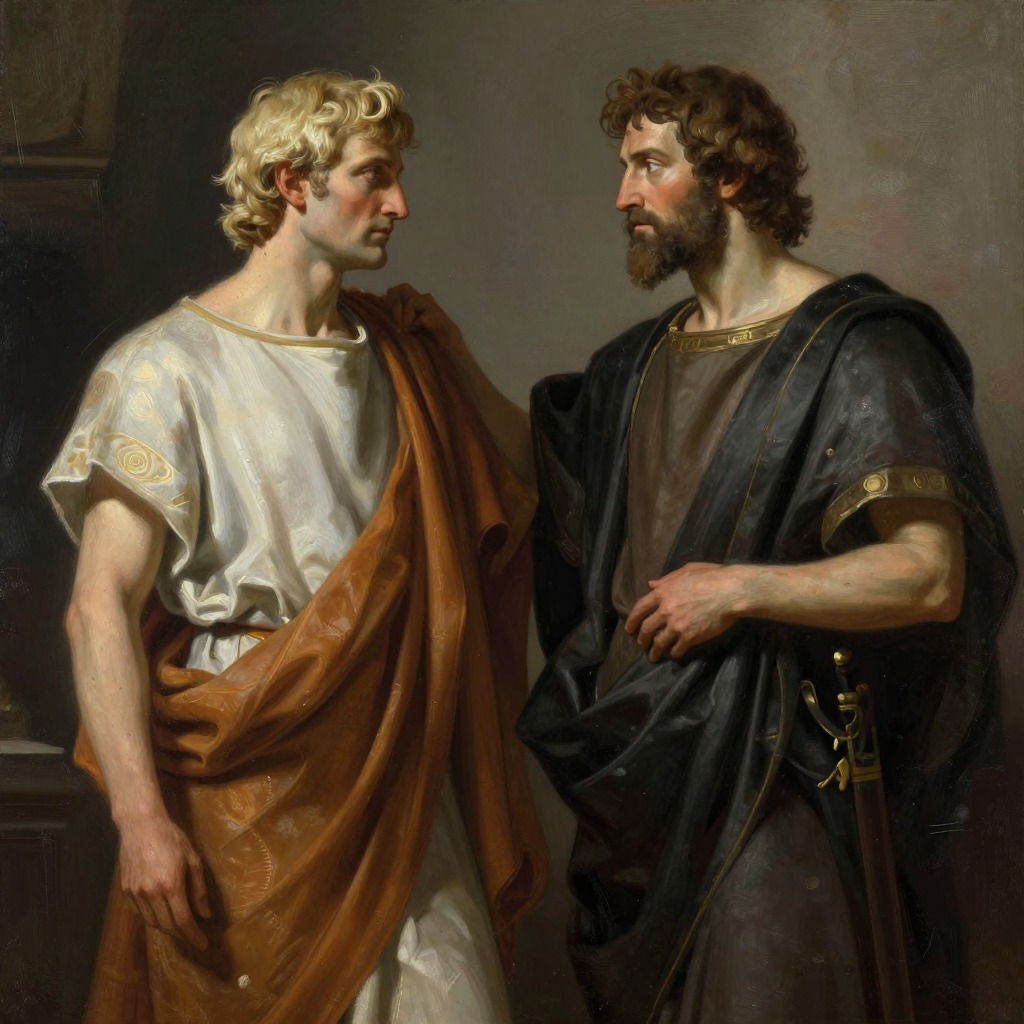
The approach to the City of Dis precipitates the most serious crisis of the Inferno. As the poets arrive at the gates, they are confronted by "More than a thousand" fallen angels "Out of the Heavens rained down" who angrily demand to know "Who is this that without death / Goes through the kingdom of the people dead?" (E01249-E01252). The demons refuse to allow Dante to enter, commanding Virgil to come alone and ordering Dante to "return alone by his mad road" (E01256-E01258). Virgil attempts to negotiate but is rebuffed; the demons close the gates against him, and he returns to Dante with his "forehead shorn" of all boldness, confessing, "Who has denied to me the dolesome houses?" (E01282-E01287). This moment represents the only time in the Inferno that Virgil's authority is insufficient to secure passage, and he must await heavenly aid.
Divine Intervention and Entry
The crisis is resolved by the arrival of a messenger sent from Heaven. Before his appearance, the Furies—Megaera, Alecto, and Tisiphone—appear on the tower, rending their breasts and crying out for Medusa to come and turn Dante to stone (E01336-E01351). Virgil shields Dante's eyes from the Gorgon's gaze. The heavenly messenger walks across the Styx with soles unwet, fanning the foul air with his left hand, and opens the gate with a little rod, rebuking the fallen angels: "Whence is this arrogance within you couched? / Wherefore recalcitrate against that will, / From which the end can never be cut off?" (E01387-E01394). The messenger departs without further word, and the poets enter the city "without any contest" .
The Sixth Circle: Heretics
Within the walls, Dante beholds an "ample plain" filled with open tombs, from which flames issue and heat the sepulchres intensely (E01408-E01418). Virgil explains that these are the Heresiarchs and their disciples of all sects, buried together with their like, and that the tombs will be closed only at the Last Judgment when the souls return with their bodies from the Valley of Jehoshaphat (E01425-E01429, E01442-E01444). The most notable inhabitants encountered here are Farinata degli Uberti and Cavalcante de' Cavalcanti, who rise from their fiery tombs to engage Dante in dialogue about Florentine politics and the nature of the damned's knowledge of the future (E01460-E01552).
Narrative and Thematic Significance
The City of Dis functions as the threshold between the upper and lower regions of Hell, both geographically and morally. Its iron walls and fiery architecture embody the hardness of heart and intellectual obstinacy of heresy, which Dante treats as a sin of the mind rather than of appetite. The failed negotiation at the gates demonstrates the limits of human reason—represented by Virgil—when confronted with the deepest forms of evil, and the necessity of grace for salvation. The city's name, derived from Dis, another name for Pluto or Satan, signals that this is the realm where the infernal powers are most concentrated and where the journey becomes most perilous. The episode also introduces the theme of divine justice as inscrutable yet ultimately merciful, as the heavenly messenger's intervention affirms that Dante's journey is willed by God and cannot be thwarted by demonic resistance.