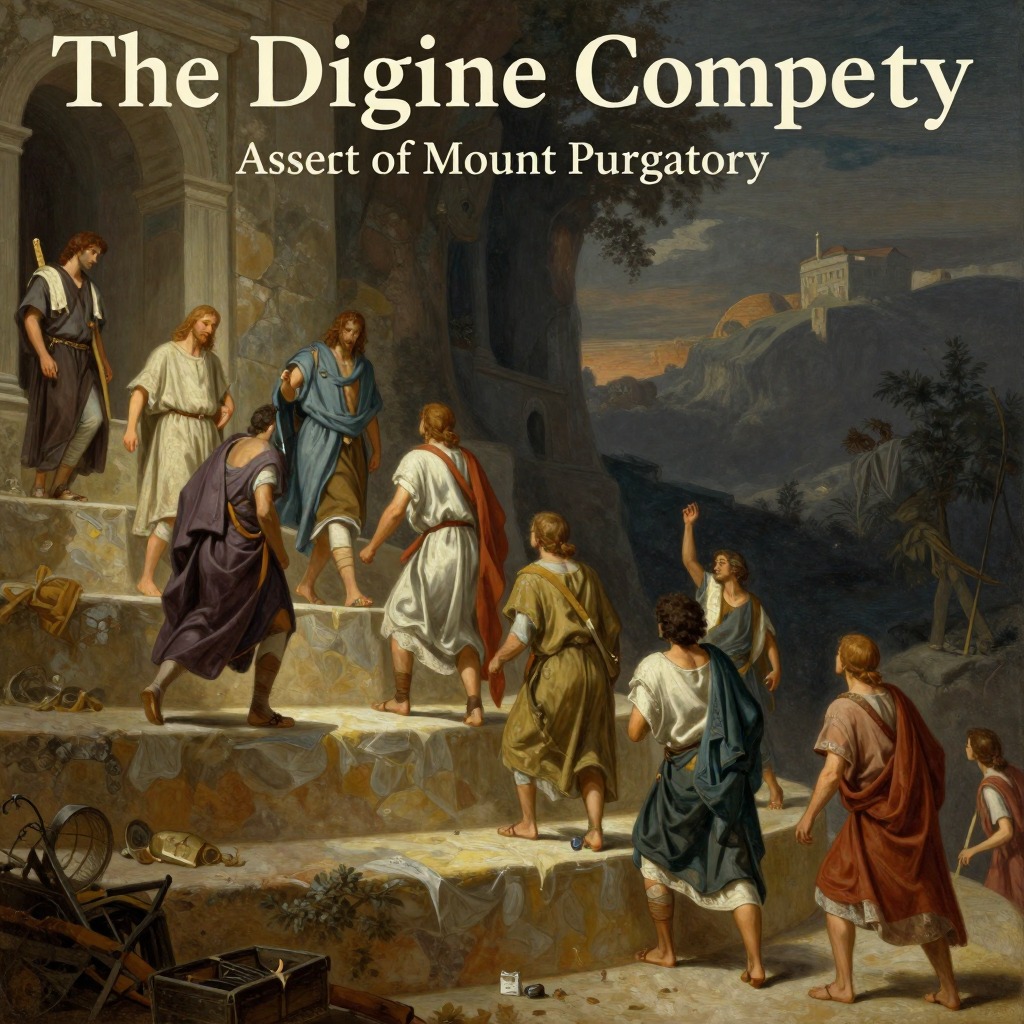
Eunoe
The Divine ComedyEunoe is the second of two rivers that flow through the Earthly Paradise at the summit of Mount Purgatory, a stream whose waters restore the memory of good deeds performed in life. Together with its counterpart Lethe, which washes away the memory of sin, Eunoe completes the final purification of the soul before it is ready to ascend to the celestial spheres. The river is introduced in the closing cantos of the Purgatorio as the last stage of Dante's journey through the afterlife, and its waters are the means by which the pilgrim is made "pure and disposed to mount unto the stars" .
Location and Description
Eunoe rises from the same single fountain as Lethe, located in the Earthly Paradise, and the two streams flow away from each other "like friends" before parting. The fountain is fed directly by divine will, not by rainfall or underground springs, and its waters are described as "most holy" and capable of renewing the soul like a tree that puts forth new foliage. The river's name is given by Matilda, the lady who tends the Earthly Paradise, who explains that it "worketh not if first on either side it be not tasted"—meaning the soul must first drink from Lethe before it can benefit from Eunoe. The stream is bordered by grass and flowers, and its current is so clear that it surpasses all earthly waters in purity.
Function and Purpose
Eunoe's sole function is to restore the memory of good deeds, which the soul has lost through the purgatorial process. This restoration is essential because the soul must carry the recollection of its virtuous acts into Heaven, where they contribute to its eternal joy. The river is the final stage of purification on Mount Purgatory, and drinking from it is the last act the soul performs before ascending to Paradise. Beatrice instructs Matilda to lead Dante to Eunoe and "revive again the half-dead virtue in him," indicating that the river's effect is to strengthen and renew the soul's capacity for goodness. After drinking, Dante emerges "regenerate, in the manner of new trees that are renewed with a new foliage."
Narrative Significance
Eunoe appears only in the final canto of the Purgatorio, and its introduction marks the culmination of Dante's journey through the mountain of purification. The river is the last earthly element the pilgrim encounters before his vision expands into the celestial realms of the Paradiso. Its waters complete the process of purgation that began with the washing of Dante's face in the dew at the mountain's foot and continued through the seven terraces. The restoration of the memory of good deeds is the final gift of the Earthly Paradise, a place that represents the state of original innocence regained. By drinking from Eunoe, Dante is made whole again—his sins forgotten, his virtues remembered—and he is prepared to behold the beatific vision.
Thematic Significance
Eunoe embodies the principle that salvation is not merely the erasure of sin but the active recovery and affirmation of goodness. Where Lethe represents the mercy that removes the stain of transgression, Eunoe represents the grace that restores the soul's positive identity as a creature capable of love and virtue. The two rivers together form a complete system of purification: the soul must first forget its failures before it can remember its achievements without pride. This pairing reflects the medieval theological understanding that repentance involves both contrition for sin and the cultivation of virtue. Eunoe's name, which Dante likely coined from Greek roots meaning "good mind" or "good memory," underscores its function as the river that restores the soul's right relationship to its own history. The river is thus a symbol of the transformative power of grace, which does not merely cancel the past but redeems it, allowing the soul to enter Heaven with a full and joyful recollection of the good it has done.