First Terrace
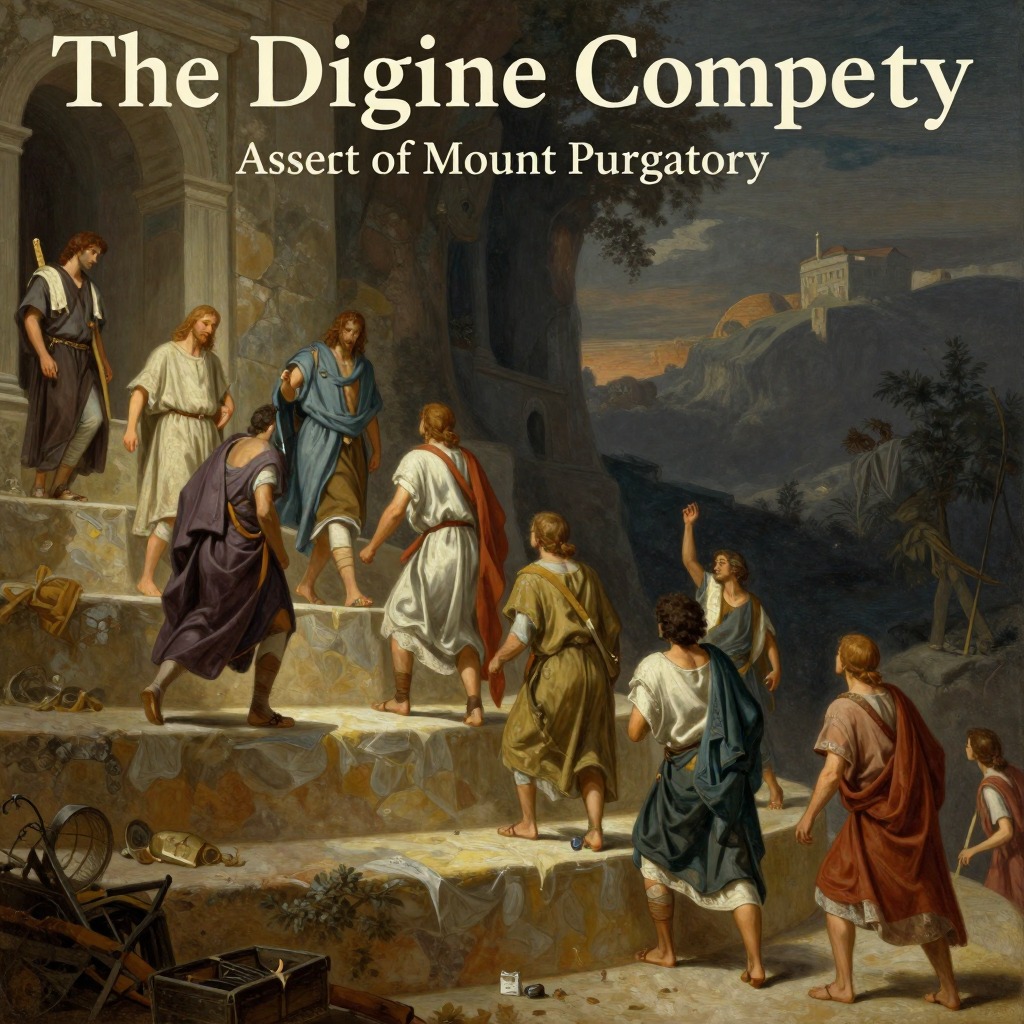
The Divine ComedyThe First Terrace, also known as the Terrace of the Proud, is the first of seven cornices that encircle Mount Purgatory, the realm where souls purge themselves of sin before ascending to Paradise. It is the lowest terrace of Purgatory proper, reached only after passing through the Gate of Purgatory and climbing a narrow, winding passage through the rock. This terrace is the initial stage of the soul's purification from the seven deadly sins, specifically targeting the root sin of Pride, which Dante's poem presents as the most fundamental and dangerous of all vices.
Description and Architecture
The First Terrace is a broad, level pathway carved into the mountainside, its floor made of white marble. The inner wall of the terrace, which rises sheer above the walkway, is adorned with exquisite bas-relief sculptures depicting famous examples of humility, while the pavement beneath the feet of the penitents is carved with scenes of pride punished. The terrace is open to the sky, and the sun's rays, which Dante can see because he is alive, cast his shadow on the ground, a phenomenon that astonishes the souls he meets. The space is defined by its stark, unadorned quality, save for the instructive sculptures, and by the immense weight that the penitent souls must bear.
The Punishment of the Proud
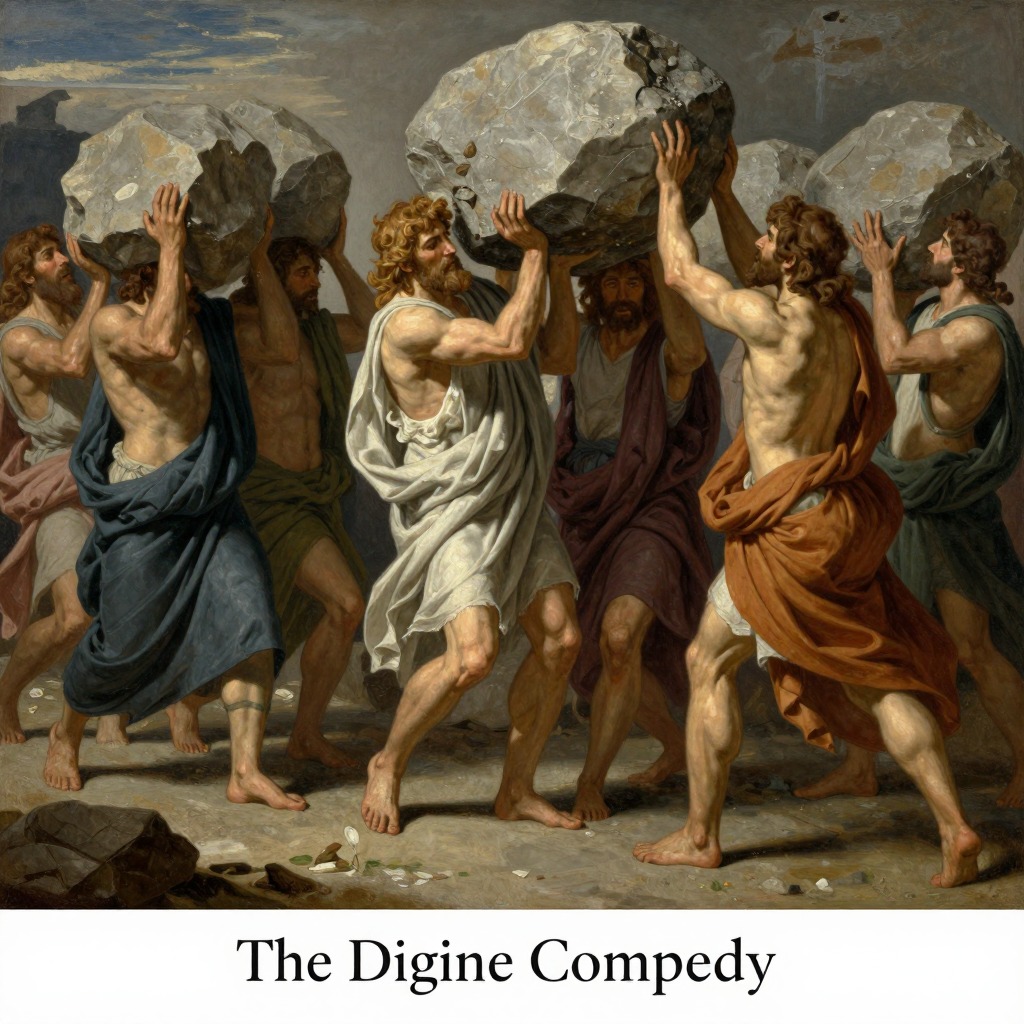
The souls on the First Terrace are punished by being forced to carry enormous stones on their backs, which bend them double under the crushing load. As Dante describes, they are "bent down" like figures used to support a ceiling or a roof, their knees pressed to their chests. The weight is proportionate to their pride in life: those who were more arrogant bear heavier burdens. This punishment is a direct application of the principle of contrapasso, where the sin itself becomes the instrument of its own correction. Just as the proud once lifted their heads and looked down on others, they are now forced to bow low, their gaze fixed on the ground. The pain is not merely physical; it is a profound humiliation, a constant, physical reminder of the spiritual deformity they must overcome.
The Souls and Their Penitential Practice
The penitents on the First Terrace move with agonizing slowness, their progress hampered by the weight they carry. As they inch forward, they recite the Lord's Prayer, adapting its petitions to their own condition. They pray not for themselves, who are already assured of salvation, but for those still living on earth who have need of grace. This prayer, offered in a state of profound humility, is itself an act of purgation. Among the souls Dante encounters here are Omberto di Santafiore, a nobleman whose pride in his lineage led to his downfall, and Oderisi d'Agobbio, a once-famous illuminator who now recognizes the vanity of earthly fame. Oderisi explains to Dante the fleeting nature of reputation, using the examples of Cimabue and Giotto, and of the poets Guido Guinizelli and Guido Cavalcanti, to illustrate how quickly glory fades. He also points out Provenzan Salvani, a proud Sienese leader who, through a single act of self-abasing charity—begging in the public square to ransom a friend—shortened his time in Ante-Purgatory.
The Sculptures: Examples of Humility and Pride
The terrace is a gallery of moral instruction. On the white marble wall, Dante sees carved scenes of humility, including the Annunciation, where the Virgin Mary accepts God's will with the words "Ecce ancilla Dei" (Behold the handmaid of the Lord); King David dancing before the Ark of the Covenant, humbling himself before God; and the Roman Emperor Trajan, who stopped his military campaign to render justice to a poor widow. These are examples meant to inspire the penitents. On the pavement beneath their feet, however, are carved scenes of pride punished, including the fall of Lucifer, the destruction of the Tower of Babel, and the deaths of Niobe, Saul, and Arachne. The souls walk over these images, literally trampling on the consequences of the sin they are purging, a constant reminder of the fate they have escaped through repentance.
Narrative and Thematic Significance
The First Terrace is the first and most foundational stage of Dante's own purgatorial journey. It is here that Virgil, his guide, explains the nature of love as the seed of all virtue and vice, and where Dante himself begins to feel the weight of his own pride lifted. The Angel of Humility, who guards the passage to the next terrace, erases the first "P" (for peccatum, sin) from Dante's forehead, a sign that this sin has been purged. The terrace establishes the central theme of Purgatory: that suffering is not merely punitive but medicinal, a necessary process of re-education and healing that restores the soul to its original, God-given dignity. The encounter with Oderisi, in particular, serves as a direct lesson for Dante, the aspiring poet, warning him against the very pride that could corrupt his art and his soul.