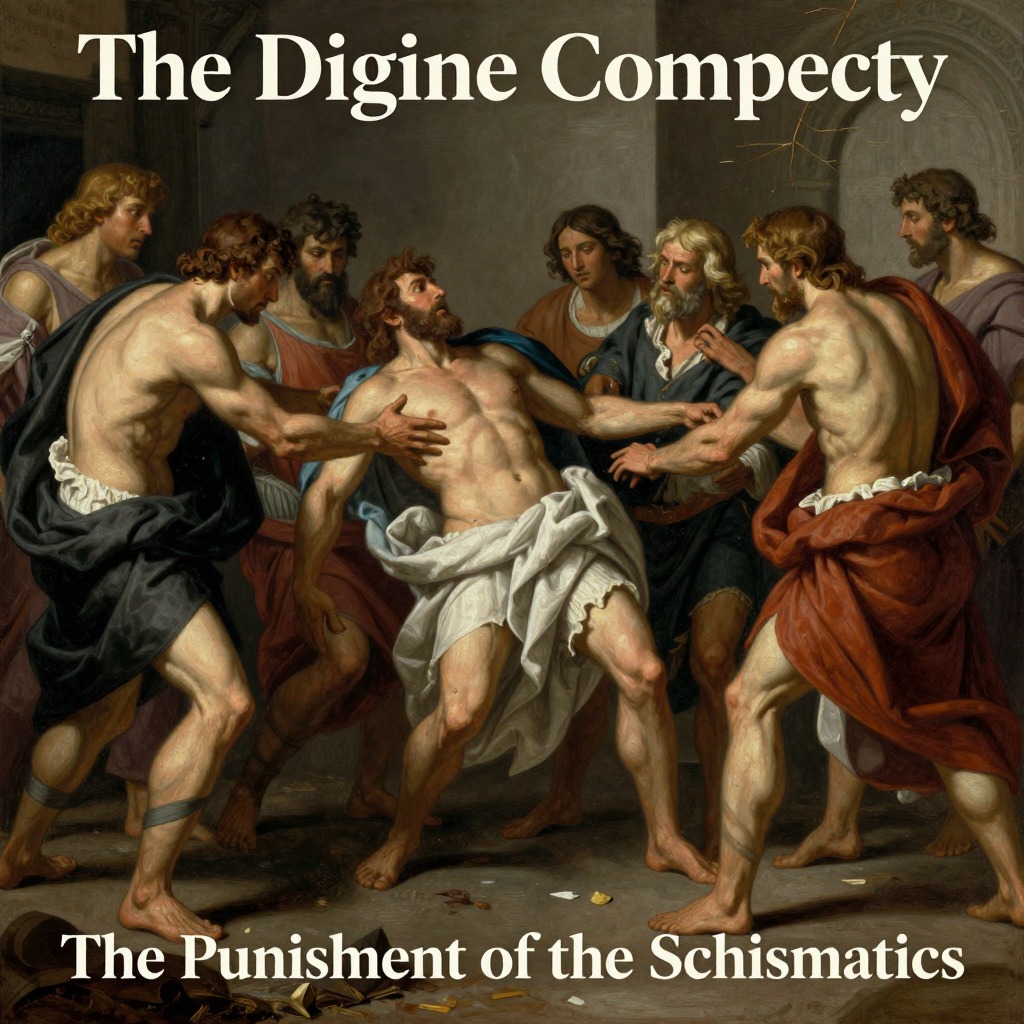
Geri del Bello
The Divine ComedyGeri del Bello is a minor but significant figure in Dante Alighieri's Inferno, appearing in Canto XXIX as a wrathful shade among the Schismatics in the Ninth Bolgia of Malebolge. His presence serves as a poignant reminder of the unavenged familial blood-feud that shadows Dante's own lineage, and his silent, threatening gesture toward the poet underscores the theme of personal vendetta and the corrosive power of unresolved anger within the broader structure of divine justice.
Identity and Background
Geri del Bello was a member of the Alighieri family, a cousin of Dante's father, making him a blood relative of the poet himself. His historical identity is that of a Florentine who was killed in a feud, a violent death that, at the time of Dante's journey, remained unavenged by his kin. This detail is crucial, as it places Geri within the context of the internecine conflicts that plagued Florence and the broader Italian city-states during the late thirteenth century. His presence in Hell is not for the murder he suffered, but for the sin of schism—specifically, for sowing discord, which aligns him with the other damned souls in the Ninth Bolgia who are perpetually mutilated by a demon's sword.
Appearance and Encounter in the Ninth Bolgia
Dante does not see Geri during his initial passage through the Ninth Bolgia, which is filled with the horrifically wounded bodies of schismatics like Mahomet, Ali, Pier da Medicina, and Bertrand de Born. Instead, Geri is pointed out to him later by Virgil, after the poet has moved on. Virgil tells Dante that he saw Geri below the little bridge, pointing at Dante and threatening him fiercely with his finger. This gesture, unaccompanied by words, is a silent but potent accusation, directed not at a stranger but at a member of his own family who has failed in the duty of blood vengeance. The fact that Dante was so absorbed in watching the punishment of Bertrand de Born that he did not notice Geri highlights the poet's initial obliviousness to this personal, familial debt.
The Unavenged Death and Dante's Response
The core of Geri del Bello's narrative significance lies in the unavenged nature of his violent death. When Virgil explains Geri's disdainful departure, Dante immediately understands the cause: "his own violent death, which is not yet avenged for him, by any who is sharer in the shame, made him disdainful." Dante's response is one of pity, acknowledging that Geri's anger is justified by the family's failure to retaliate. This moment forces Dante to confront the harsh code of honor that governed Florentine society, where a blood feud demanded a reciprocal killing. The poet's pity, however, is tempered by the divine justice of Hell, which punishes Geri not for being a victim, but for his own sin of sowing discord during his life. The encounter thus becomes a meditation on the conflict between personal, worldly obligations of vendetta and the eternal, spiritual justice of God.
Thematic Significance
Geri del Bello's brief appearance serves multiple thematic purposes within the Comedy. First, it personalizes the abstract concept of divine justice by linking it directly to Dante's own family history, reminding the reader that the poet himself is not a detached observer but a man with his own sins and social entanglements. Second, it illustrates the tension between the human desire for revenge and the Christian imperative of forgiveness, a tension that Dante explores throughout his journey. Finally, Geri's silent, threatening gesture—a wordless accusation from a damned soul—powerfully conveys the idea that unresolved earthly conflicts and the shame of unfulfilled obligations can persist even into the afterlife, coloring the interactions between the living and the dead. The episode underscores that in Dante's universe, every action, including the failure to act, carries eternal consequences.