Ghibellines
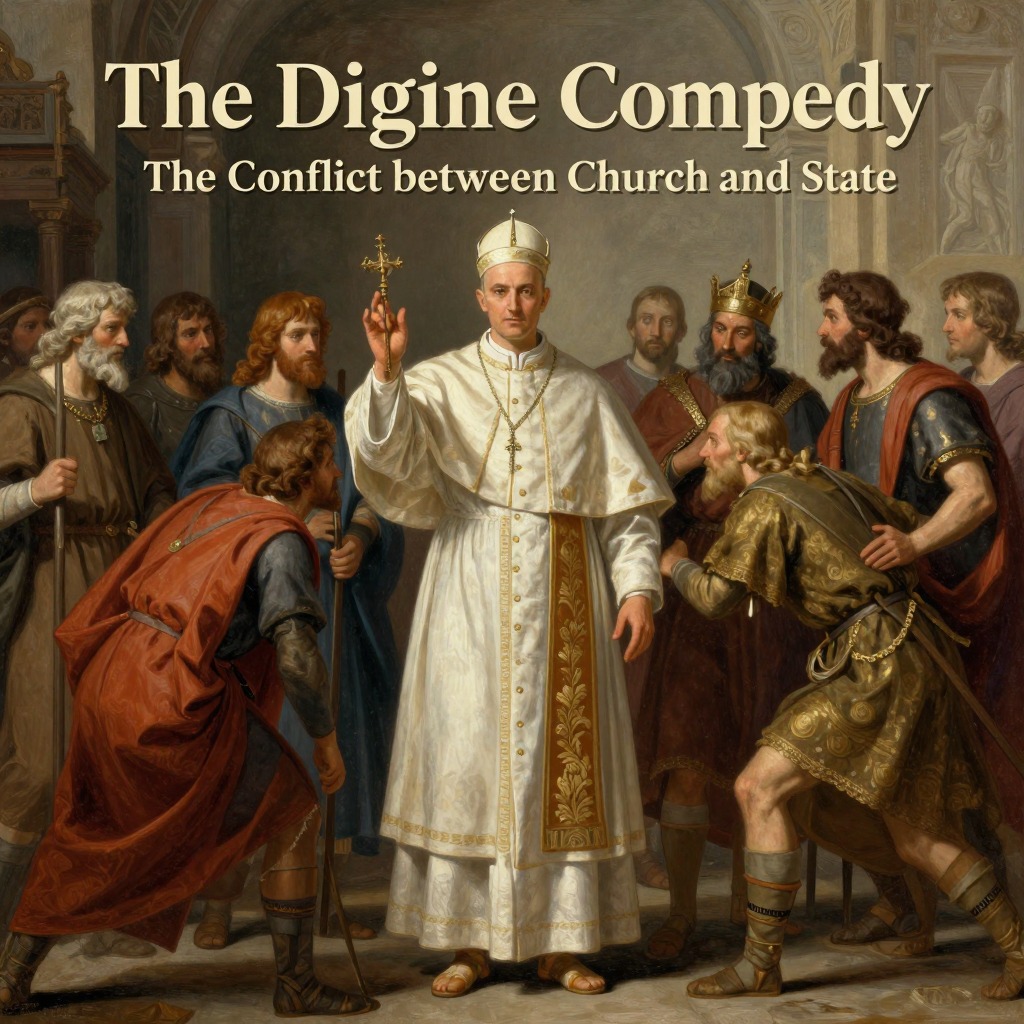
The Divine ComedyThe Ghibellines were the faction in medieval Italy that supported the authority of the Holy Roman Emperor against the claims of the Papacy, standing in opposition to the Guelphs, who championed papal power. In Dante Alighieri's Divine Comedy, the Ghibellines are not merely a historical party but a recurring political and moral reference point, their actions and fate woven into the poem's exploration of justice, governance, and divine order. The poet, himself a Florentine Guelph who later suffered exile, presents the Ghibelline-Guelph conflict as a central symptom of Italy's political fragmentation, a disorder that his journey through the three realms seeks to understand and transcend.
Identity and Historical Background
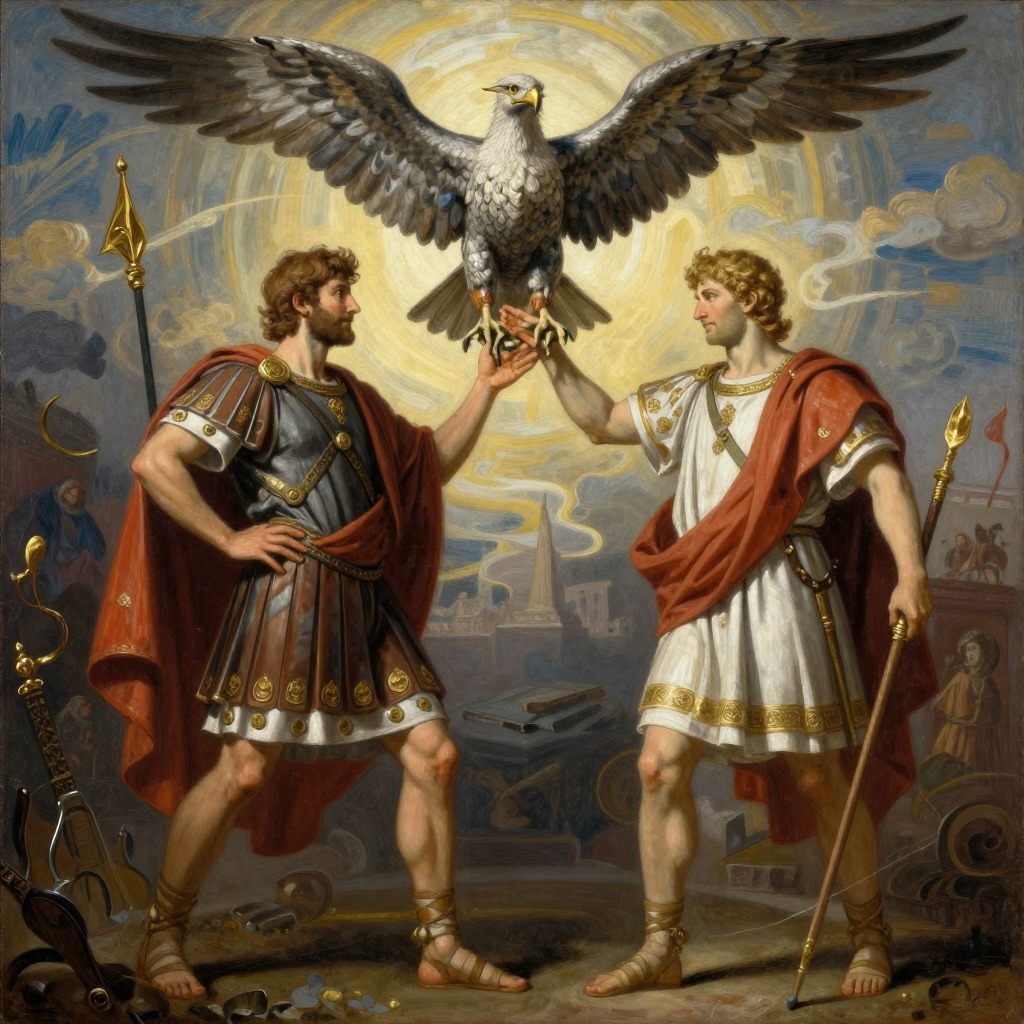
The Ghibellines derived their name from Waiblingen, a Hohenstaufen castle, and their identity was forged in the long struggle between the Empire and the Papacy that convulsed Italy from the 12th century onward. In the Comedy, the Ghibellines are associated with the imperial cause, which Dante, in his political treatise De Monarchia and through the voice of the Emperor Justinian in Paradise, elevates as a divinely ordained institution meant to guide humanity to temporal happiness. The poem's cosmology itself reflects this imperial ideal: the Roman Eagle, a symbol of the Empire, is celebrated in the Heaven of Mercury as an instrument of divine justice. The Ghibellines, by adhering to the Emperor, are thus aligned, at least in principle, with a providential order, even if their historical actions often fell short of this ideal.
Role in the Political Landscape of the Comedy
Dante's Florence, the city of his birth and exile, was a Guelph stronghold, and the Ghibellines were its defeated and exiled rivals. The poem repeatedly references the violent factionalism that tore Florence apart. In the Inferno, the Florentine glutton Ciacco prophesies the city's future bloodshed, foretelling that the "rustic party" (the White Guelphs, with whom Dante was aligned) would drive out the other (the Blacks), only to fall themselves within three suns. This prophecy is set against the backdrop of the deeper Guelph-Ghibelline divide, which Ciacco identifies as the source of Florence's discord. The Ghibellines are thus present as a ghostly political force, their historical defeats and exiles mirroring Dante's own later banishment.
Ghibellines in the Afterlife: Punishment and Perspective
Individual Ghibellines appear throughout the Comedy, their fates determined not by their party affiliation but by their personal sins. Farinata degli Uberti, a great Ghibelline leader, rises from his tomb in the circle of the Heretics, his proud and unbowed spirit still consumed by the political struggle. He questions Dante about his ancestors and boasts of having twice scattered the Guelphs, only to be reminded that the Guelphs always returned, while the Ghibellines never mastered that art. Farinata's political passion is so intense that it overshadows even his damnation, yet he is also shown as a solitary defender of Florence when others counseled its destruction, a complexity that transcends simple factional loyalty. Other Ghibellines appear in Purgatory, where the proud Omberto di Santafiore laments the arrogance of his lineage, and the envious Guido del Duca mourns the decay of Romagna's noble families, many of whom were Ghibelline. In Paradise, the Emperor Justinian's discourse on the Roman Eagle implicitly condemns both Guelphs and Ghibellines for misusing the imperial standard: the Guelphs for appropriating it for a party, the Ghibellines for opposing it with another banner. The poem thus judges both factions, holding up the ideal of a unified Empire above partisan strife.
Thematic Significance: The Failure of Political Unity
The Ghibellines, as a faction, embody the failure of temporal authority to secure peace and justice in Italy. Dante's political vision, articulated most forcefully in the Purgatorio through the voice of Marco Lombardo, blames the world's corruption on the confusion of spiritual and temporal power. The Ghibelline cause, in its purest form, represented the separation of these two spheres, with the Emperor ruling the secular realm. Yet the historical Ghibellines, like their Guelph opponents, were often driven by ambition, greed, and local vendettas, betraying the very ideal they claimed to serve. In the Comedy, the Ghibellines are not heroes or villains but a symptom of a deeper disorder: the absence of a unifying imperial authority that could curb factional violence and allow Italy to live in peace. Dante's own exile, a direct consequence of this factionalism, gives his critique a personal urgency, and his journey toward the Empyrean offers a vision of a unity that transcends all earthly parties.