Griffon
The Divine ComedyThe Griffon is a mythical beast that appears in the Earthly Paradise at the summit of Mount Purgatory in Dante Alighieri's Divine Comedy. It draws the triumphal chariot of the Church in the allegorical procession described in Purgatorio, Cantos XXIX through XXXII. Combining the body of a lion with the head and wings of an eagle, the Griffon embodies the dual nature of Christ—both human and divine—and functions as the poem's most concentrated symbol of the Incarnation and the union of God and man. Its presence marks the climax of Dante's purgatorial journey and the threshold of his ascent to Paradise.
Appearance and Symbolic Form
The Griffon is first seen as part of a magnificent procession that emerges in the Earthly Paradise. It draws a triumphal chariot on two wheels, and its form is described in precise symbolic terms: its limbs are gold as far as it is a bird, and the rest is white mingled with vermilion. This color scheme—gold for divinity, white for purity, and red for Christ's passion—reinforces the creature's identification with Christ. The Griffon's wings extend upward between the middle list and the three-and-three of the seven candlesticks that precede the chariot, so that it injures none by cleaving them. The wings rise so high that they are lost to sight, suggesting the transcendence of the divine nature. The creature is also called a "biform monster" and a "twofold creature," emphasizing its composite nature. When Beatrice appears, she is standing turned toward the Griffon, "that is one person only in two natures," a direct theological statement that the Griffon represents Christ, in whom divine and human natures are united in one person.
Role in the Procession of the Church
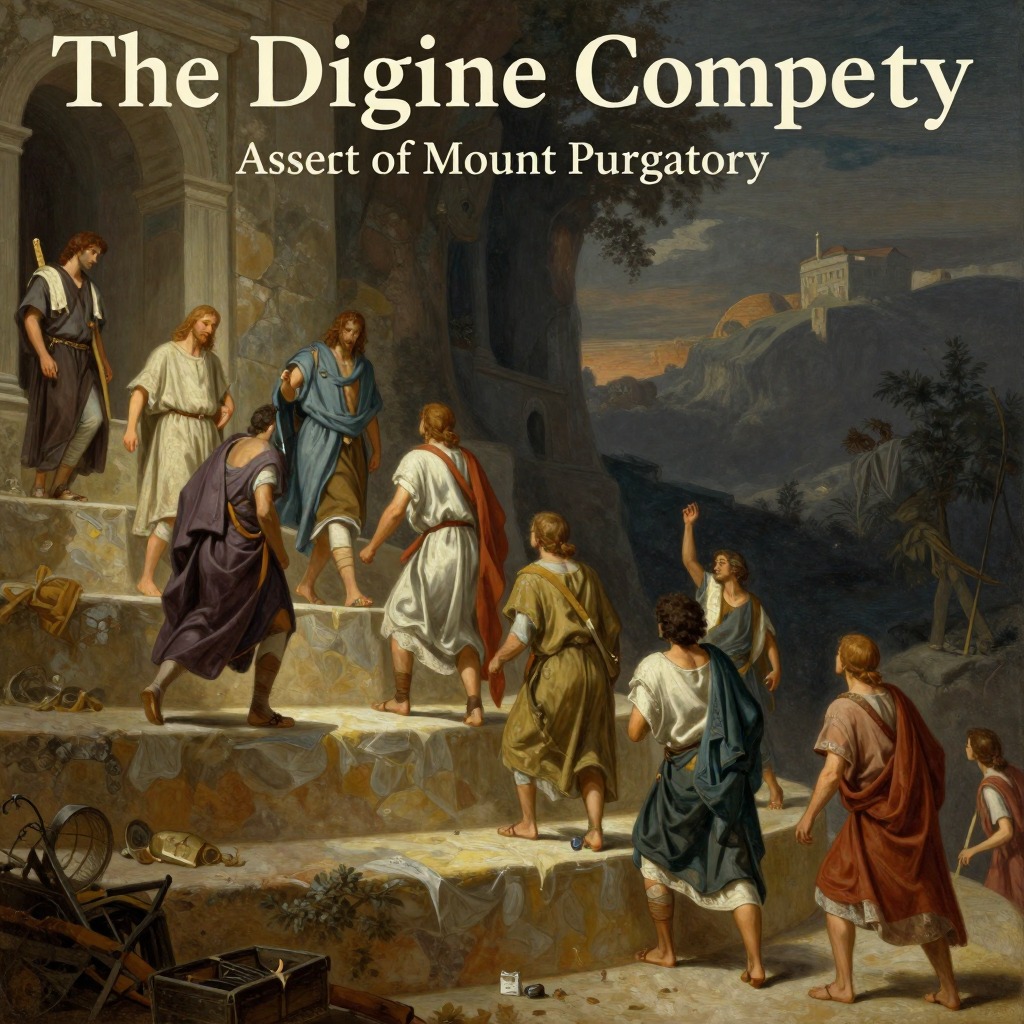
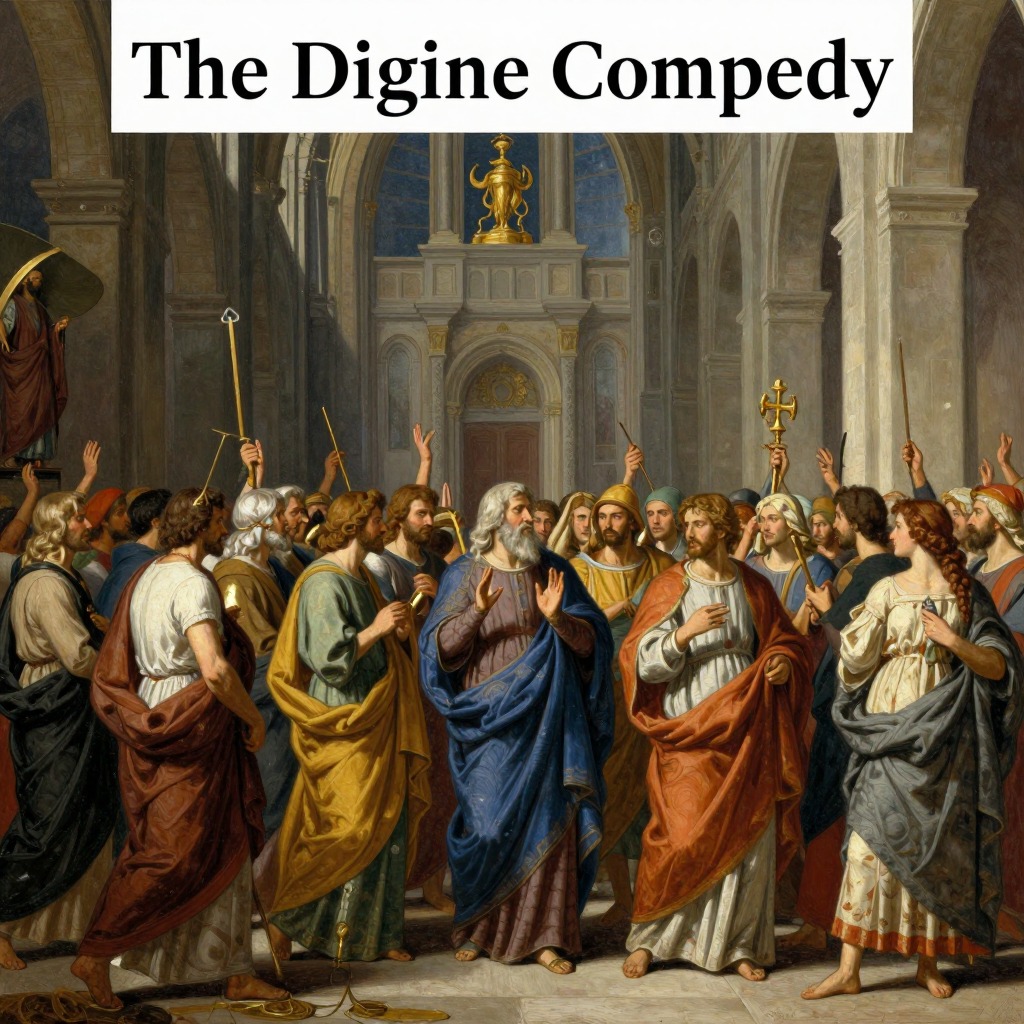
The Griffon draws the chariot through the Earthly Paradise, accompanied by the twenty-four elders, the four living creatures, the three theological and four cardinal virtues, and other figures that together represent the books of the Bible, the Evangelists, and the Church. The procession halts before the Tree of Knowledge, which has been despoiled of its leaves and blossoms. The Griffon does not pluck from the tree with its beak, and the surrounding elders cry out, "Blessed art thou, O Griffin, who dost not pluck with thy beak these branches sweet to taste, since appetite by this was turned to evil." The Griffon then draws the chariot close beneath the widowed bough and binds what was of it to the tree, causing the tree to renew itself with blossoms less than rose and more than violet. This act reverses the sin of Adam and Eve, who ate from the tree in disobedience, and restores the tree to its original vitality. The Griffon thus performs a redemptive action that undoes the Fall and re-establishes the proper relationship between humanity and God.
Relationship with Beatrice and Dante
Beatrice, who appears veiled and crowned with olive on the chariot, is closely associated with the Griffon. When Dante, after his confession and the passage of Lethe, is led to Beatrice, he sees her standing turned toward the Griffon. In her eyes, the Griffon is reflected as a twofold monster, shining now with one nature, now with the other, like the sun in a glass. This reflection allows Dante to perceive the dual nature of Christ—human and divine—through Beatrice's gaze. The Griffon remains still while its image transforms itself in Beatrice's eyes, a moment that encapsulates the poem's theology of vision: the creature itself is unchanging, but the perceiver's understanding of it deepens. The Griffon's presence is thus essential to Dante's preparation for the beatific vision, as it mediates the mystery of the Incarnation that he will later contemplate directly in the Empyrean.
Thematic Significance
The Griffon is the poem's most elaborate allegorical figure for Christ, combining the kingly and prophetic traditions of the Old Testament with the revelation of the New. Its dual nature—eagle and lion—corresponds to the two natures of Christ, a doctrine central to Christian orthodoxy. The Griffon's action at the Tree of Knowledge reenacts the redemption of humanity through Christ's obedience, contrasting with Adam's disobedience. In the broader structure of the Divine Comedy, the Griffon appears at the exact midpoint of the journey, after the purification of Purgatory and before the ascent to Paradise, marking the transition from the realm of preparation to the realm of fulfillment. Its presence in the Earthly Paradise, the garden of innocence lost and restored, signifies that the way to heaven is opened only through the union of divine and human in Christ. The Griffon thus stands as the hinge of the entire poem, the point at which history, theology, and poetry converge in a single, luminous image.