In His will is our peace
The Divine ComedyIn His will is our peace (Italian: E la sua volontade è nostra pace) is a line spoken by Piccarda Donati in Paradiso, Canto III of Dante Alighieri's Divine Comedy. It is one of the most famous and theologically dense utterances in the poem, condensing the entire logic of beatitude in the Empyrean into a single, serene formula. The phrase does not merely describe a state of contentment but defines the very mechanism by which the blessed in Paradise experience joy: the complete and willing surrender of the self to the order of God's providence.
Origin and Context in the Poem
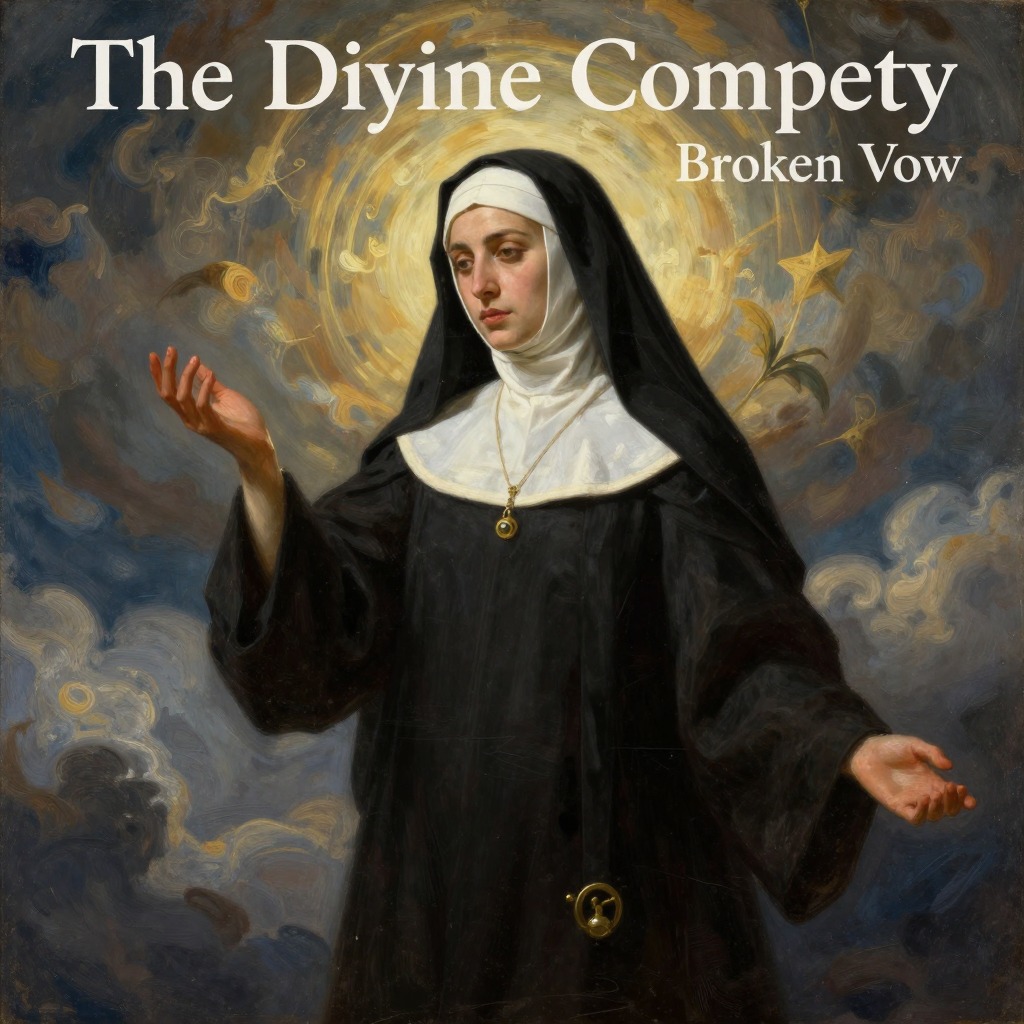
The line appears during Dante's first encounter with souls in the Heaven of the Moon, the lowest sphere of Paradise. There he meets Piccarda Donati, a former nun who was forcibly removed from her convent and married against her will. When Dante asks whether she and the other souls in this slower-moving sphere ever long for a higher, more exalted place in Heaven, Piccarda responds with a smile that seems to burn with the first fire of love. She explains that the very essence of their blessed existence is to keep themselves within the divine will, and that this makes their wishes one with God's. It is in this context that she utters the line: "And his will is our peace; this is the sea / To which is moving onward whatsoever / It doth create, and all that nature makes" . The phrase thus emerges not as an abstract theological proposition but as a living testimony from a soul who has found perfect rest after a life of coercion and loss.
Theological Significance: The Resolution of Inequality
The expression serves as the key to understanding why the unequal distribution of grace among the blessed does not cause envy or discontent. Piccarda explicitly states that if any soul in Paradise aspired to a higher station, its aspiration would be "discordant" with the will of Him who assigns each soul its place. Since charity requires that all desires be unified with the divine will, such discord is impossible. The line therefore resolves what might otherwise appear as an injustice: the fact that some souls enjoy more of God's light than others. Because each soul's will is perfectly aligned with God's, each experiences its own degree of grace as complete fulfillment. The phrase "In His will is our peace" thus becomes the foundation of a radically egalitarian vision of hierarchy, where every position in the celestial Rose is experienced as the fullness of joy.
The Broader Political and Moral Application
While the line is spoken in a celestial context, its implications extend to Dante's political philosophy as expressed elsewhere in the poem. In Purgatorio, Canto XVI, Marco Lombardo laments the corruption of the world and traces its cause to the confusion of spiritual and temporal authority. He argues that Rome once had "two suns"—the papacy and the empire—each illuminating a different path, but that one has quenched the other, joining the sword to the crozier (E07211–E07216). The peace that "In His will is our peace" describes is the peace of a rightly ordered cosmos, where each power fulfills its proper function under God. The line thus echoes through the poem's political invectives, serving as the standard against which the disorder of earthly Italy is measured. The peace of Paradise is the peace of proper subordination and harmonious function, a model for the peace that eludes Florence and the wider world.
The Line as a Structural Principle of Paradise
Beyond its immediate context, the phrase operates as a structural principle for the entire third canticle. Throughout Paradiso, Dante encounters souls in different spheres—from Piccarda in the Moon to St. Bernard in the Empyrean—and each affirms that their joy is complete precisely because it is measured by God's will. The line is echoed in the final vision of the poem, where Dante's own desire and will are turned "by the Love which moves the sun and the other stars." The journey of the poem thus culminates in the very state that Piccarda describes: the soul's complete absorption into the divine motion. "In His will is our peace" is therefore not merely a memorable saying but the theological and emotional destination of the entire Commedia.