Mantua
The Divine ComedyMantua, the city in the Lombardy region of northern Italy, holds a unique and resonant place in Dante Alighieri's Divine Comedy as the birthplace of his guide, the Roman poet Virgil. More than a simple geographical marker, Mantua functions as a defining element of Virgil's identity, a point of connection between souls in the afterlife, and a symbol that fuels Dante's most fervent political commentary on the state of Italy.
Identity and Introduction
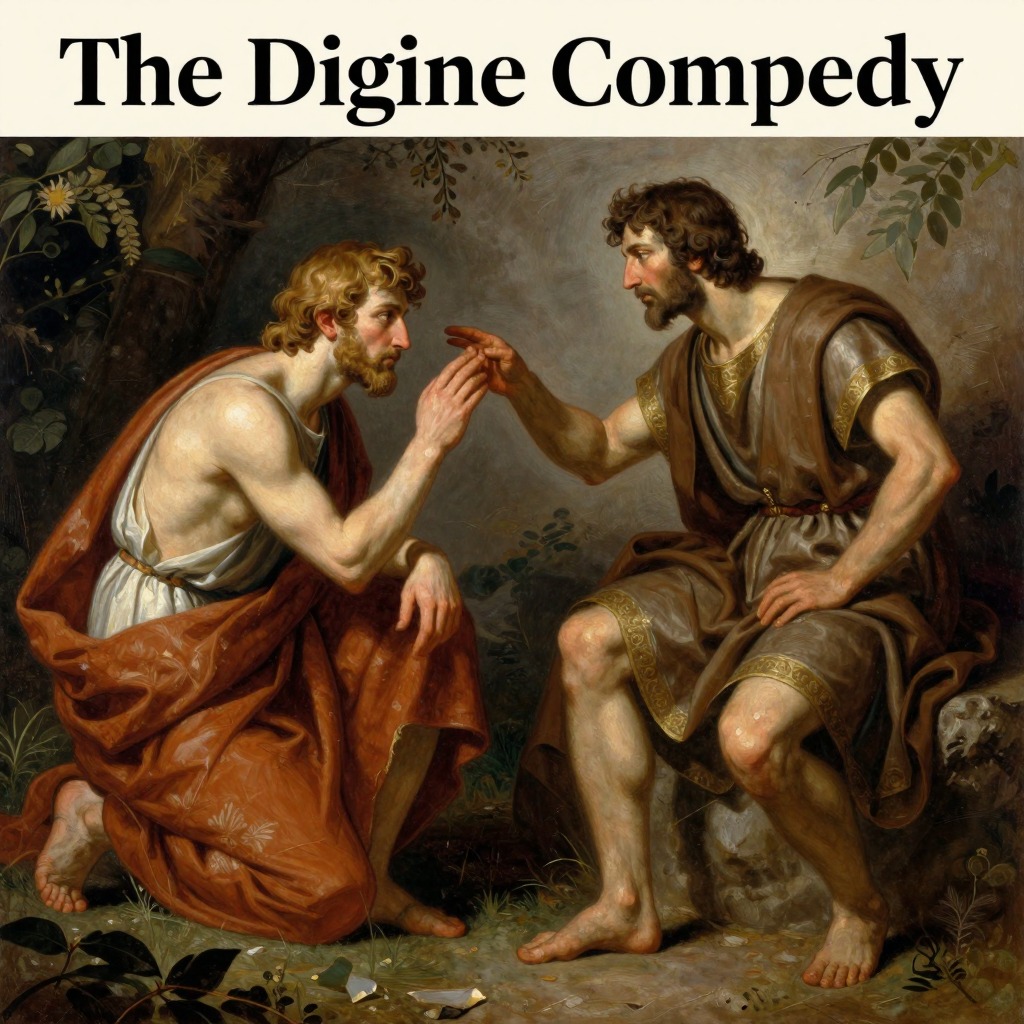
Virgil first introduces himself to Dante in the Dark Forest by stating his origins. He declares, "Not man; man once I was, / And both my parents were of Lombardy, / And Mantuans by country both of them" . This self-identification immediately establishes Mantua as the core of his earthly identity, a fact he presents before even naming himself as a poet. Later, when the two travelers encounter the soul of Sordello on the lower slopes of Mount Purgatory, the city's name again serves as a crucial identifier. Virgil approaches the solitary, disdainful soul and, in response to Sordello's inquiry about his homeland, simply says, "Mantua" . The single word is enough to transform Sordello's demeanor; he rises and embraces Virgil, exclaiming, "O Mantuan, I am Sordello / Of thine own land!" . This moment of recognition, based purely on a shared birthplace, underscores the profound emotional and cultural bond that the city's name carries.
Narrative Role and Thematic Significance
The encounter with Sordello, triggered by the name of Mantua, becomes the immediate catalyst for one of the poem's most powerful political digressions. Witnessing the embrace of two souls united by their love for a single city, Dante breaks into a bitter apostrophe against Italy, which he calls "grief's hostelry! / A ship without a pilot in great tempest! / No Lady thou of Provinces, but brothel!" . He contrasts the noble, instinctive love of Sordello for his fellow Mantuan with the endless internal warfare that plagues Italy, where citizens "one doth gnaw the other / Of those whom one wall and one fosse shut in!" . Mantua, therefore, is not just a birthplace but a symbol of the unity and peace that Italy has lost. The city's name, which brings two souls together in the afterlife, highlights by contrast the political fragmentation and violence that Dante condemns in the living world.
Foundation and History
Dante also uses Mantua as a subject for a learned digression on its legendary foundation. In the Fourth Bolgia of Hell, Virgil recounts the story of the prophetess Manto, who, after her father Tiresias died and Thebes was enslaved, wandered the world until she came to a marshy plain in Italy. There, to escape human society, she settled with her servants and practiced her arts. After her death, the scattered inhabitants of the region gathered at that spot, which was naturally fortified by the lagoon, and built a city over her bones. Virgil states, "They built their city over those dead bones, / And, after her who first the place selected, / Mantua named it, without other omen" . He then cautions Dante against believing any other account of the city's origin, asserting the truth of this version. This narrative establishes Mantua's deep, mythic roots and connects it to the classical world of prophecy and exile, further enriching its significance within the poem's vast historical and literary tapestry.