Moon
The Divine ComedyThe Moon, also called the First Heaven, is the lowest of the nine celestial spheres that constitute Dante's Paradise. It is the first realm Dante and Beatrice enter after their ascent from the Earthly Paradise, and it is populated by the spirits of those who, having taken religious vows, were forced to violate them. This sphere establishes the foundational principle of the entire heavenly order: that every soul is perfectly content with its place, however lowly it may seem, because its will is entirely conformed to the divine will.
Location and Nature
The Moon is the sphere closest to the Earth, and its light is the weakest and most variable of all the heavens. Dante describes it as a "cloud" that is "luminous, dense, consolidate and bright / As adamant on which the sun is striking" (E07363-E07365). The souls appear to him as faint, reflected images, like faces seen through polished glass or clear, still water (E07363-E07368). This dimness is not a punishment but a sign of the lesser degree of beatitude these souls possess, corresponding to their lesser capacity for receiving divine grace. Beatrice explains that the varying brightness of the spheres is not due to differences in the density or rarity of their matter, but to the diverse formal principles—the varying degrees of virtue and vision—that each soul possesses (E07363-E07368).
Inhabitants and Their Condition
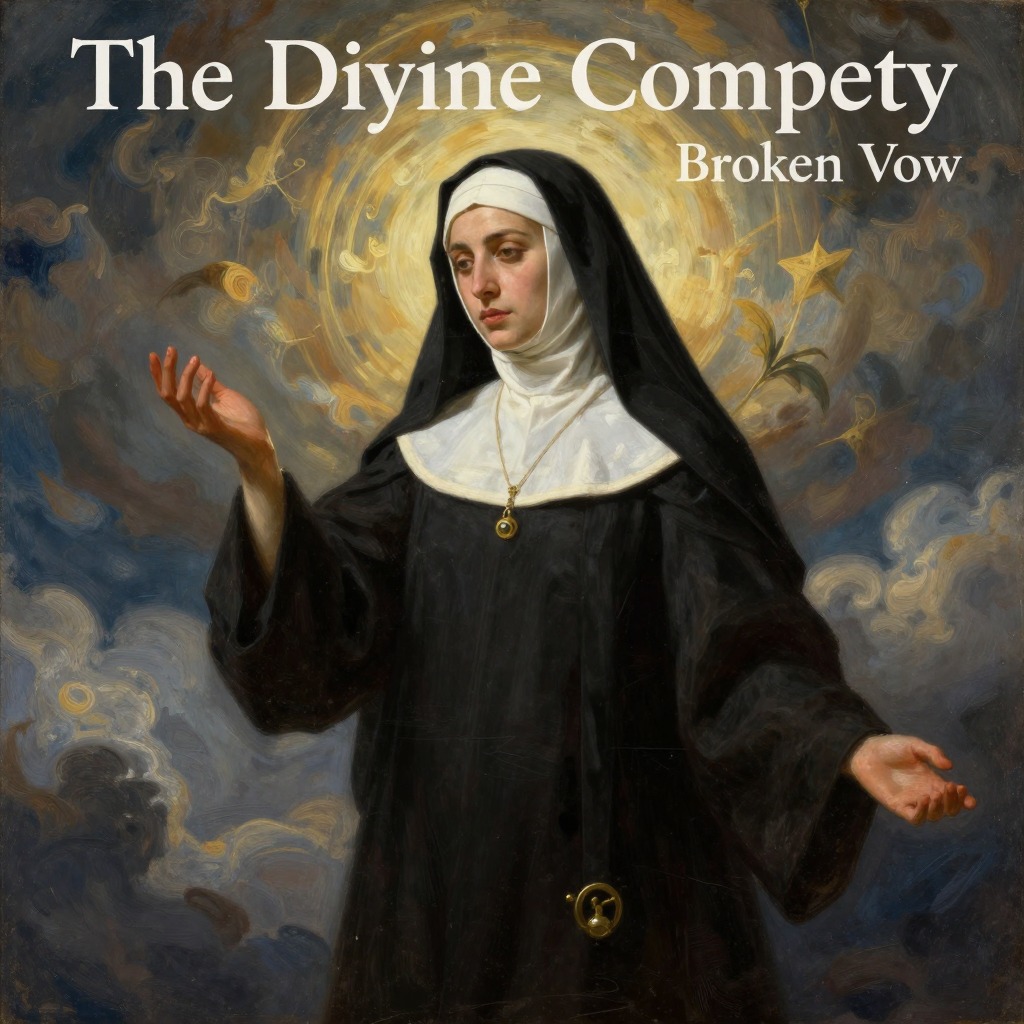
The Moon is the home of souls who were faithful in their hearts but were compelled by violence to break their vows. The first soul Dante meets here is Piccarda Donati, a nun who was torn from her convent by her family and forced into a marriage. She is joined by the Empress Constance, who was similarly taken from a nunnery. Both women are content in their lowly station, for they understand that their will is one with God's. Piccarda articulates the central doctrine of the Moon: "Brother, our will is quieted by virtue / Of charity, that makes us wish alone / For what we have, nor gives us thirst for more" (E07363-E07368). She explains that to desire a higher place would be to be in discord with the will of Him who has placed them there, and that "In His will is our peace" (E07363-E07368). This peace is the sea toward which all creation moves.
Narrative and Thematic Significance
The Moon serves as a crucial pedagogical stage for Dante. It is here that he first confronts the apparent injustice of unequal rewards in Heaven. He asks Piccarda whether the souls here desire a higher place, and her answer—that perfect charity makes them wish only for what they have—resolves the doubt. Beatrice later expands on this, explaining that the souls appear in the Moon not because it is their permanent abode, but to signify the lowest degree of beatitude, adapting the vision to Dante's limited human understanding (E07363-E07368). The Moon thus introduces the theme of the soul's perfect contentment in the divine order, a theme that will be repeated and deepened in every subsequent sphere. It also establishes the principle that the violence of others cannot diminish a soul's merit if the will does not consent, a point Beatrice clarifies by distinguishing between absolute will and conditional will (E07363-E07368). The Moon is the first step in Dante's education in the nature of heavenly justice and the freedom of the will, preparing him for the higher truths he will encounter as he ascends.