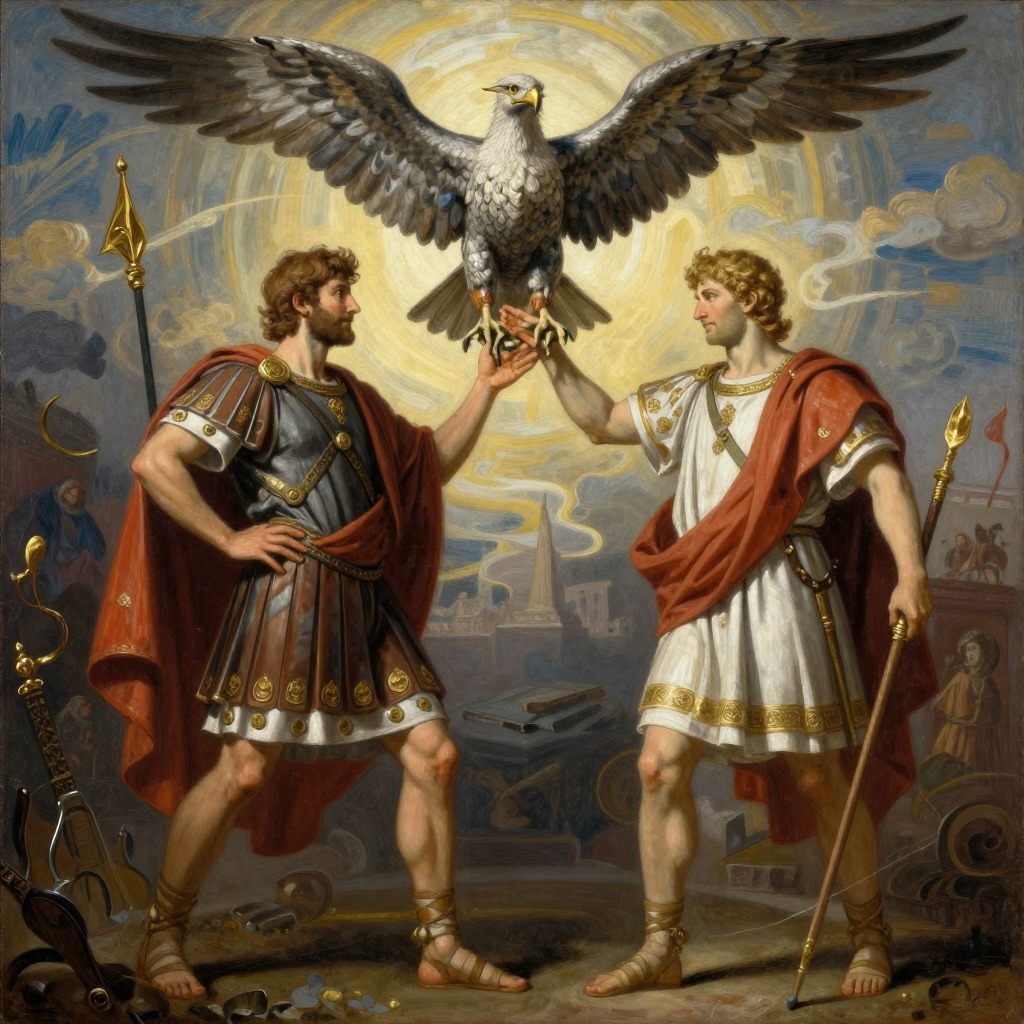
Romeo
The Divine ComedyRomeo, a figure from the 13th century, appears in Dante's Paradiso as a luminous example of virtuous service rewarded by ingratitude on earth but vindicated in heaven. His story is told by the Emperor Justinian in the sphere of Mercury, the heaven of those who acted for earthly fame and honor. Romeo's life encapsulates the themes of justice, the fleeting nature of worldly reward, and the ultimate recognition of true worth in the divine perspective.
Identity and Background
Romeo was a poor pilgrim and a man of humble origins who entered the service of Raymond Berenger IV, Count of Provence. Justinian introduces him as "Romeo, of whom / The grand and beauteous work was ill rewarded." His name, which may derive from "Romeo" meaning "pilgrim" or "one who has been to Rome," underscores his status as a stranger and a sojourner. He was a man of great ability and integrity, a "just man" who served his lord with complete devotion.
Life and Plot Trajectory
Romeo's principal achievement was the brilliant marriage arrangement of Berenger's four daughters, each of whom became a queen. Justinian states that Romeo, "a poor man and a pilgrim," accomplished this for the count. The four daughters were Marguerite, who married Louis IX of France; Eleanor, who married Henry III of England; Sanchia, who married Richard, Earl of Cornwall (later King of the Romans); and Beatrice, who married Charles I of Naples and Sicily. This diplomatic feat brought immense prestige and power to the House of Provence. However, Romeo's success and the favor he enjoyed with the count provoked envy among the Provençal nobles. Malicious words incited Berenger to demand an accounting from his faithful minister. Romeo, who had managed the count's affairs with such skill that he "rendered to him seven and five for ten"—meaning he returned more than he had received—was able to prove his honesty. Yet, despite this vindication, he was dismissed and left the court.
Key Actions and Objectives
Romeo's actions were driven by a commitment to his lord's welfare and a profound sense of duty. He did not seek personal enrichment or power; his objective was the prosperity and honor of his master's house. The "grand and beauteous work" of his life was the elevation of the Count of Provence through the strategic marriages of his daughters. His ability to accomplish this, as a poor outsider, highlights his exceptional diplomatic skill and his selfless dedication. The subsequent demand for a reckoning reveals the corrosive power of envy and the vulnerability of a virtuous servant in a corrupt court.
Relationships and Conflict
The central relationship in Romeo's story is with his lord, Raymond Berenger. Romeo served him with unwavering fidelity, but the count, swayed by malicious counsel, turned against him. The conflict is not between Romeo and a single villain but between his integrity and the collective envy of the Provençal court. The "malicious words" that incited the count represent the archetypal force of slander that destroys the innocent. Romeo's response to this betrayal was not to fight or seek revenge but to depart in poverty, accepting his fate with a dignity that contrasts sharply with the ingratitude he suffered.
Change and Ending
After his dismissal, Romeo left Provence "poor and stricken in years." He was forced to beg for his livelihood, a bitter end for a man who had made queens of his lord's daughters. Justinian emphasizes the pathos of this fate, noting that "if the world could know the heart he had, / In begging bit by bit his livelihood, / Though much it laud him, it would laud him more." Romeo's story does not end in earthly triumph but in a kind of martyrdom of service. His reward is not in this world but in the celestial recognition he receives in the Heaven of Mercury, where his light shines as a testament to his virtue.
Narrative Role and Evaluation
Romeo functions as a counter-example to the other souls in Mercury, who acted for fame and honor. His story illustrates the injustice that often befalls the truly virtuous in a fallen world. Justinian uses Romeo's tale to critique the ingratitude of earthly lords and the fickleness of worldly fortune. Romeo's presence in Paradise, despite his suffering, affirms that divine justice ultimately prevails. His narrative serves as a moral exemplum, reminding the reader that true worth is measured not by earthly reward but by the integrity of one's actions and the grace of God. The story of Romeo is a quiet but powerful indictment of the corruption that Dante saw in the political and social structures of his time.