Sixth Terrace
The Divine ComedyThe Sixth Terrace of Mount Purgatory is the circle where the sin of gluttony is purged, a place of extreme emaciation and thirst where penitent souls are tormented by the scent of a fruit-laden tree and the spray of a waterfall, yet find solace in their suffering as they move toward purification.
Location and Description
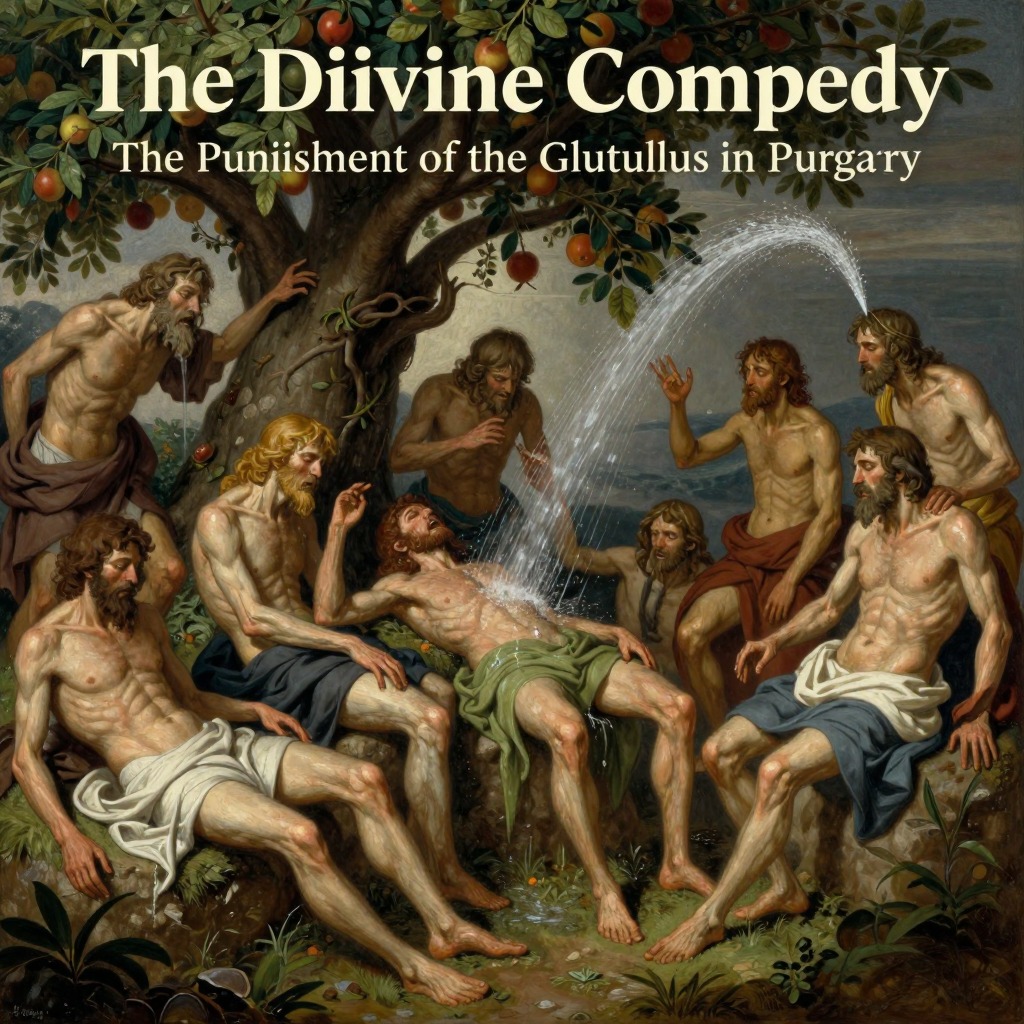
The Sixth Terrace is the penultimate of the seven terraces that encircle Mount Purgatory, reserved for those who sinned through gluttony. It is reached after passing through the Fifth Terrace, where the avaricious and prodigal are purged, and before the Seventh Terrace, where the lustful are purified by fire. The terrace is characterized by a single, remarkable tree that stands in the middle of the path, laden with apples that are sweet and fragrant. The tree tapers downward from bough to bough, unlike a fir tree that tapers upward, a design that prevents anyone from climbing it. A limpid waterfall falls from the lofty rock onto the leaves of the tree, and the scent of the fruit and the spray of the water create an agonizing temptation for the penitent souls, who are consumed by hunger and thirst.
The Punishment of the Gluttonous
The souls on the Sixth Terrace are emaciated to the point of being barely recognizable, their skin stretched tight over their bones. They are so thin that their eye sockets appear as rings without gems, and the word "omo" (man) can be read in the hollows of their faces. They move in a slow, weary procession, singing and lamenting as they go. Their punishment is to be tormented by the scent of the fruit and the water, which they cannot consume, and to be forced to circle the tree repeatedly, their desire for food and drink never satisfied. This is a direct application of the principle of contrapasso: as gluttons indulged excessively in food and drink in life, they are now denied them in death, their craving becoming a source of perpetual torment.
The Tree and the Waterfall
The tree on the Sixth Terrace is a central feature of the punishment. It is described as having apples that are sweet and grateful to the smell, and its branches are laden with fruit. The water that falls from the rock spreads itself abroad upon the leaves, and the scent of the water mingles with the fragrance of the fruit, intensifying the torment of the penitent. The tree is a symbol of the forbidden fruit of the Garden of Eden, and its presence on the terrace serves as a reminder of the original sin of gluttony. The water, which is pure and refreshing, is also a source of temptation, as the souls are parched with thirst but cannot drink.
The Penitent Souls
Among the souls on the Sixth Terrace is Forese Donati, a friend of Dante Alighieri, who recognizes the poet despite his altered appearance. Forese explains that the souls are purged by the scent of the tree and the water, which enkindles in them a desire for food and drink. He tells Dante that the punishment is not merely a torment but also a solace, as the same wish that leads them to the tree also leads them to God. Forese also reveals that his own purification has been accelerated by the prayers of his wife, Nella, who has wept for him and drawn him from the lower circles of Purgatory. Another notable soul is Buonagiunta da Lucca, a poet who recognizes Dante and praises his "sweet new style" of poetry, contrasting it with the older, more artificial styles of the Notary and Guittone d'Arezzo.
Thematic Significance
The Sixth Terrace embodies the theme of purification through suffering, a central concept in Purgatory. The gluttonous are not merely punished but are gradually cleansed of their sin by the very desires that once enslaved them. The torment of hunger and thirst becomes a means of spiritual growth, as the souls learn to redirect their longing from earthly pleasures to divine love. The terrace also serves as a critique of the excesses of the living, particularly the immodest women of Florence, whom Forese condemns for their shameless display of their bodies. The presence of poets like Buonagiunta and the discussion of literary style further underscore the connection between moral and artistic purification, as Dante himself is portrayed as a poet who has found a new, more authentic voice through his journey.