Statius
The Divine ComedyStatius, the Latin poet of the Thebaid and the unfinished Achilleid, is one of the most significant figures Dante encounters on Mount Purgatory. He appears on the fifth terrace, where the avaricious and prodigal are purified, but his presence there is the result of a surprising reversal: Statius was not punished for avarice but for its opposite, prodigality, and his long centuries of penance have just ended with an earthquake that signals his readiness for Paradise. His meeting with Virgil and Dante becomes a profound meditation on literary influence, hidden faith, and the power of poetry to lead souls toward salvation.
Identity and Background
Statius introduces himself as the poet who sang of Thebes and then of the great Achilles, but he confesses that he fell short with his second burden, the Achilleid, which remained unfinished. He was born in Toulouse but drawn to Rome, where he earned the myrtle crown for his poetic skill. His fame on earth was great, yet he lacked the true faith until late in life. The seeds of his conversion were planted by none other than Virgil, whose Aeneid he calls his mother and his nurse in song. Without Virgil's poetry, Statius says, he would not have weighed a drachma's weight. This debt of literary and spiritual gratitude shapes his entire encounter with the two travelers.
Life and Plot Trajectory
Statius reveals that he lived in the time of the good Titus, who avenged the wounds of Christ by destroying Jerusalem, but he himself was not yet a Christian. He remained a pagan poet, professing the old gods, while secretly admiring the Christians whom Domitian persecuted. He wept for their sufferings and befriended them, and their upright customs made him disparage all other sects. Yet fear kept him from openly converting; he was baptized but remained a covert Christian for a long time, a lukewarmness that cost him four centuries of circling the fourth terrace of Purgatory. Only after his death did Francis come for his soul, but a black cherub claimed him because he had given fraudulent advice while alive, and he was assigned to the eighth circle of Hell among the evil counselors. However, his repentance at the last moment, prompted by Virgil's own words against avarice, allowed him to be saved and assigned to Purgatory instead.
Key Actions and Objectives
Statius's primary action in the narrative is to explain the nature of purgatorial suffering and the mechanism of the earthquake that has just occurred. He tells Virgil and Dante that the mountain trembles whenever a soul feels itself pure and ready to ascend, and that the cry of "Gloria in excelsis Deo" accompanies such liberation. He himself has been lying in pain for five hundred years and more, but only now has he felt a free volition for a better seat. This explanation clarifies the entire structure of Purgatory's purification and the role of free will in the process. Statius also engages in a lengthy theological discourse on the generation of the human soul, explaining how the soul takes shape in the embryo and how, after death, it forms an aerial body that retains the senses and the capacity for suffering and joy.
Relationships and Conflict
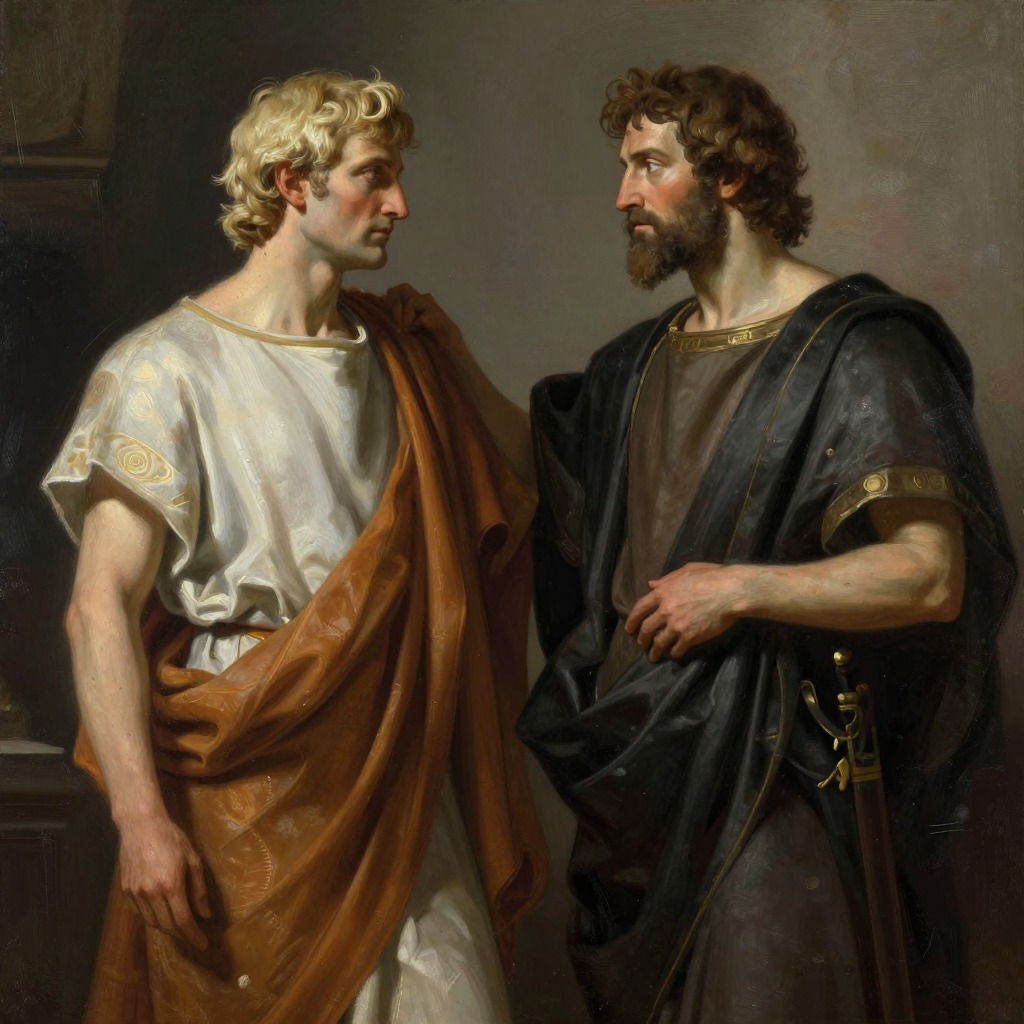
The central relationship in Statius's episode is with Virgil. When Statius learns that the guide before him is Virgil himself, he is overcome with emotion and attempts to embrace Virgil's feet, forgetting that both are shades. Virgil gently rebukes him: "Brother, do not; for shade thou art, and shade beholdest." Statius then rises and declares that he would accept one more sun of earthly life just to have lived when Virgil lived. Virgil, in turn, questions Statius about how avarice could have found a place in so wise a soul, revealing his own misunderstanding. Statius corrects him, explaining that he was punished for prodigality, not avarice, and that Virgil's own poetry—specifically the line "To what impellest thou not, O cursed hunger of gold?"—had turned him from his wasteful ways. This moment of literary influence crossing the boundaries of life and death is one of the most moving in the poem.
Change and Ending
Statius's journey through Purgatory ends with the earthquake that signals his liberation. He joins Virgil and Dante as they ascend through the remaining terraces, and he becomes a companion and fellow traveler. When they reach the wall of fire on the seventh terrace, Virgil encourages Dante to enter by reminding him that Beatrice awaits on the other side, and Statius follows them through the flames. After passing through the fire, the three poets spend the night on the stairs, and Statius is present when Dante dreams of Leah and Rachel. In the Earthly Paradise, Statius walks with Dante and Matilda, and he is among those who witness the triumphal procession of the Church and the appearance of Beatrice. His final role is to accompany Dante to the river Eunoe, where he drinks the water that restores the memory of good deeds, and he is last seen as one of the purified souls ready to ascend to Heaven.
Narrative Role and Evaluation
Statius serves multiple functions in the Purgatorio. He is a historical figure whose life exemplifies the power of poetry to inspire conversion, even across centuries and pagan traditions. His presence also allows Dante to explore the relationship between classical literature and Christian faith, and to dramatize the idea that Virgil's works, though written by a pagan, could lead a soul to salvation. Statius's theological discourse on the soul provides a bridge between Aristotelian philosophy and Christian doctrine, and his explanation of the purgatorial earthquake clarifies the mechanics of the mountain's purification. As a character, Statius is humble, grateful, and eager to learn, embodying the virtues of the penitent soul. His reunion with Virgil is a moment of profound literary and spiritual recognition, and his journey from covert Christianity to open salvation mirrors the larger arc of the poem, in which hidden truths are gradually revealed and embraced.