The Cross of Mars
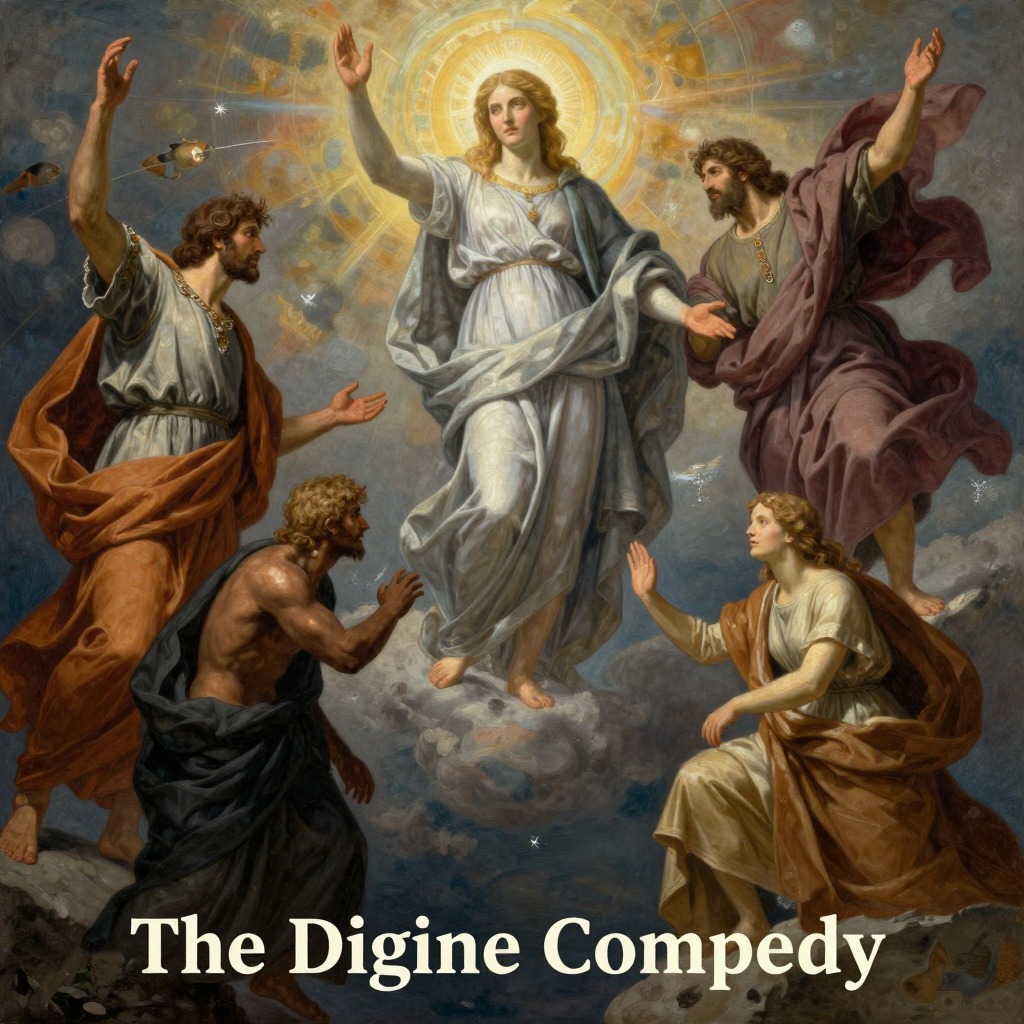
The Divine ComedyIn the fifth heaven of Paradise, the sphere of Mars, Dante Alighieri beholds a vision that transfigures the very substance of the planet into a sacred emblem. The Cross of Mars is not a physical object but a constellation of blessed souls—martyrs and crusaders who died fighting for the true faith—arranged by divine light into the form of a cross. This celestial sign marks the transition from the theological and philosophical discourses of the lower heavens to the heroic and martial glory of the higher spheres, and it serves as the setting for Dante's encounter with his own crusader ancestor, Cacciaguida.
Appearance and Formation
The Cross of Mars is described as a "venerable sign" formed by rays of light that "quadrants joining in a circle make," suggesting a cross inscribed within a circular field, like the astronomical cross of the heavens. Within this cross, the figure of Christ flashes like lightning, so brilliant that Dante cannot find an adequate simile for it. The cross is composed of countless lights—the souls of the blessed—that move along its arms "from horn to horn, and 'twixt the top and base," scintillating as they meet and pass each other, like motes of dust dancing in a sunbeam. The motion is not chaotic but musical: from the lights there arises a melody that ravishes the poet, though he cannot distinguish the individual hymn. The sound is compared to a lute and harp played in concord, producing a dulcet tinkling that blends into a single, overwhelming harmony.
The Souls Within the Cross
The spirits that form the Cross of Mars are those who, while on earth, fought for the true faith and achieved great renown. As Beatrice explains, they are "blessed spirits that below, ere yet / They came to Heaven, were of such great renown / That every Muse therewith would affluent be." Dante sees the souls of Joshua, Judas Maccabeus, Charlemagne, Orlando, William of Orange, Renouard, Godfrey of Bouillon, and Robert Guiscard—each one a warrior for Christ—moving along the cross like flames. The soul that had spoken to Dante earlier, Cacciaguida, also moves among them, showing himself to be a master singer among the heavenly choir. The cross thus becomes a roll call of the Church Militant, a visual catalogue of those who spread or defended the faith by the sword.
The Flashing of Christ
The most striking feature of the Cross of Mars is the appearance of Christ himself within it. Dante writes: "for on that cross as levin gleamed forth Christ, / So that I cannot find ensample worthy." The word "levin" (lightning) emphasizes the sudden, overwhelming, and blinding nature of the vision. This theophany is not a static image but a dynamic flash that both reveals and conceals, overwhelming the poet's capacity for description. The presence of Christ within the cross sanctifies the martial imagery, transforming the sign of earthly warfare into a symbol of divine victory. The cross is not merely a memorial to human heroism but a direct manifestation of the salvific power of Christ's own sacrifice.
The Music of the Cross
The melody that emanates from the Cross of Mars is described as a "lofty laud" that Dante hears as "Arise and conquer!"—a call to spiritual combat. The music is so sweet that it binds the poet more powerfully than anything he has experienced before, even the beauty of Beatrice's eyes. Dante acknowledges that his praise of this music may seem excessive, but he justifies it by noting that the joys of heaven increase as one ascends, and that at this point he had not yet turned to gaze upon Beatrice's face, which would have been an even greater delight. The cross thus produces a foretaste of the celestial harmony that will culminate in the Empyrean.
Narrative and Thematic Significance
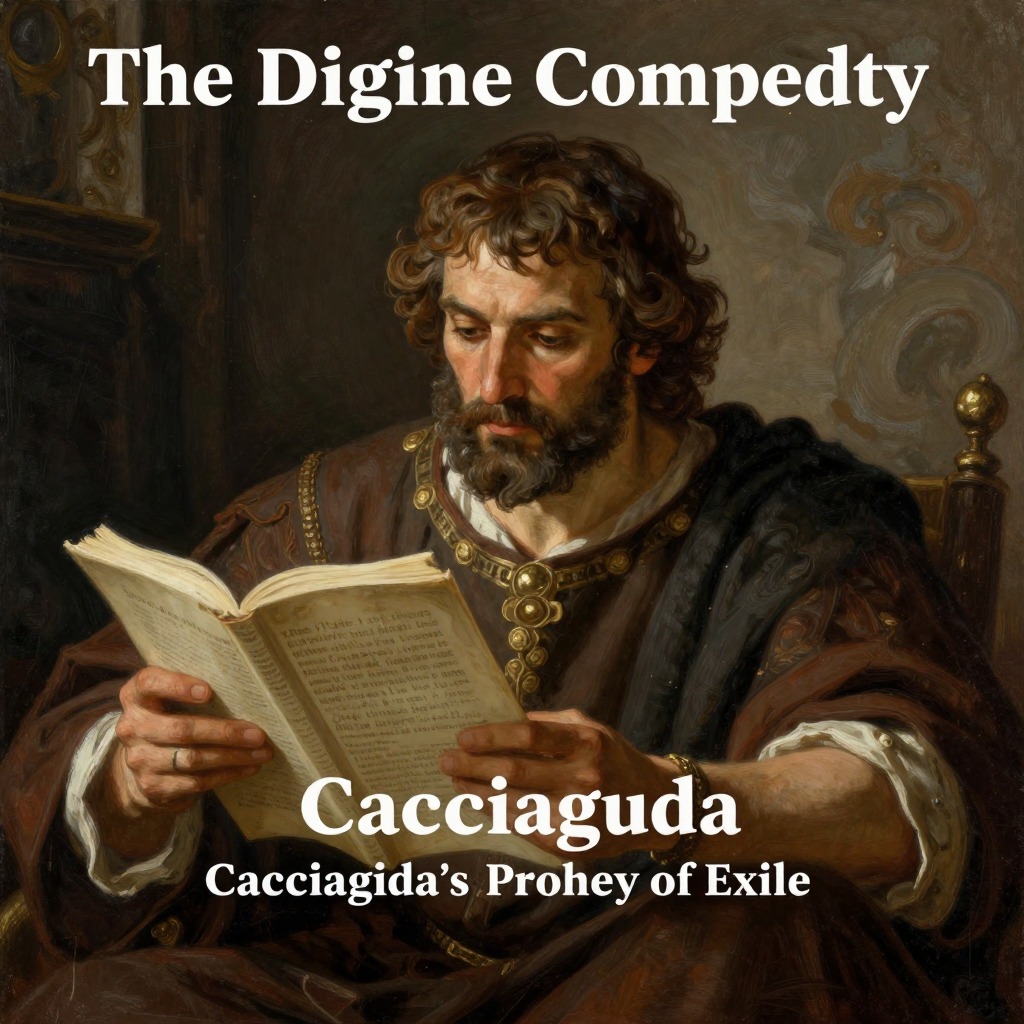
The Cross of Mars serves as the setting for the most personal and politically charged episode of the Paradiso: Dante's encounter with his great-great-grandfather Cacciaguida. It is within this cross that Cacciaguida prophesies Dante's exile and commissions him to write the Commedia. The martial imagery of the cross—its flashing light, its warrior-saints, its call to "Arise and conquer!"—underscores the combative nature of Dante's own mission. Just as the crusaders fought for the earthly Jerusalem, Dante must fight for the true faith with his pen, enduring exile and persecution. The cross thus becomes a symbol not only of Christ's victory but of the poet's own calling as a soldier of truth. The vision also reinforces the medieval concept of the "Church Militant"—the idea that the faithful on earth are engaged in a spiritual warfare that mirrors the battles of the saints in heaven. The Cross of Mars is the heavenly counterpart to the earthly struggles of the crusaders and, by extension, to Dante's own struggle against corruption and injustice.