Venus
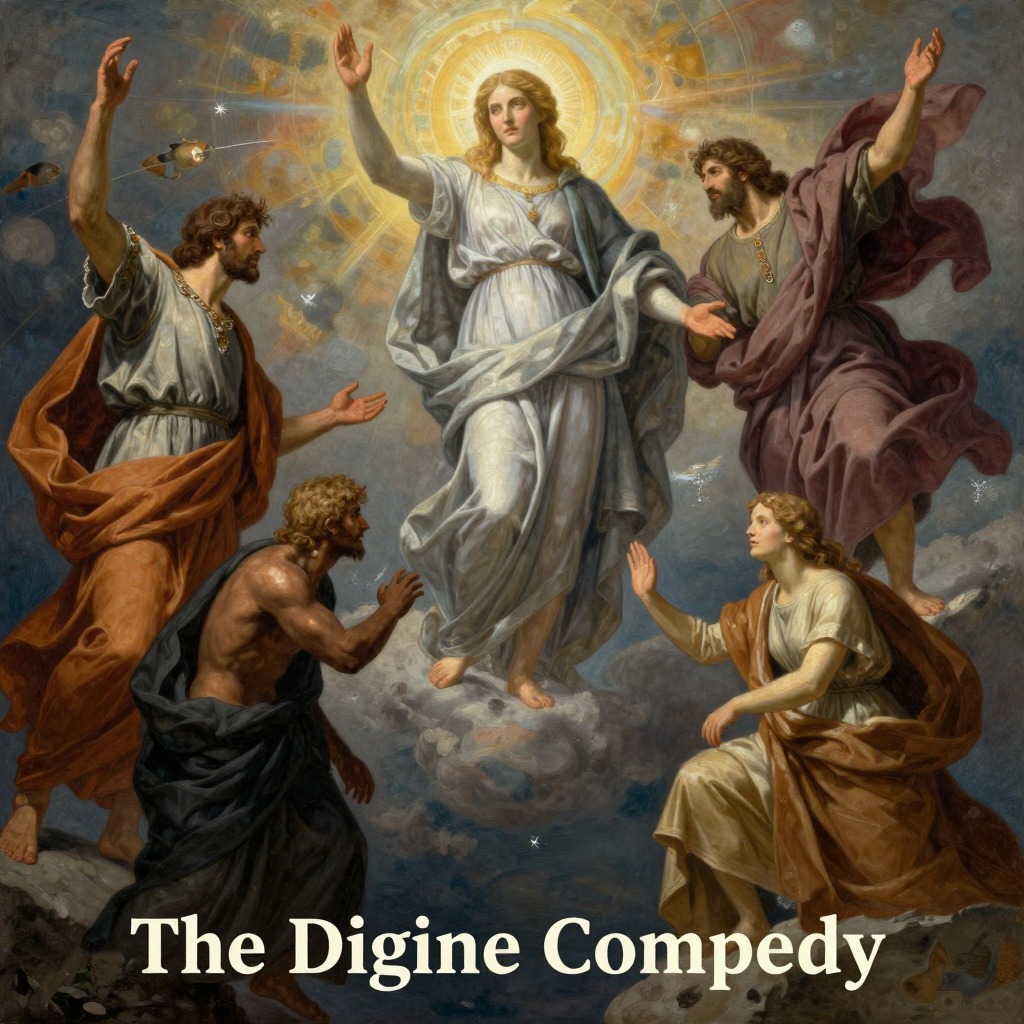
The Divine ComedyVenus, the third heaven of Paradise, is the sphere of lovers, where souls who were influenced by the planet's amorous power in life dwell in blessedness. It is the first heaven Dante and Beatrice visit after leaving the Earthly Paradise, and it serves as a realm of instruction on the nature of divine love, the compatibility of free will with celestial influence, and the proper ordering of human desires.
Identity and Location
Venus is the third of the nine concentric heavens that constitute the celestial Paradise of Dante's cosmos. It is the first heaven Dante and Beatrice enter after their ascent from the Earthly Paradise, and it is the lowest of the three planetary heavens that are still touched by the shadow of the earth. The planet is described as the one that "woos the sun, now following, now in front," a reference to its status as an inferior planet whose orbit lies between the Earth and the Sun. The souls who appear here are those who in their earthly lives were overcome by the power of love, yet who, through grace and repentance, were saved and now experience the joy of heaven in a degree proportionate to their capacity.
The Souls of Venus: Lovers and the Order of Divine Love
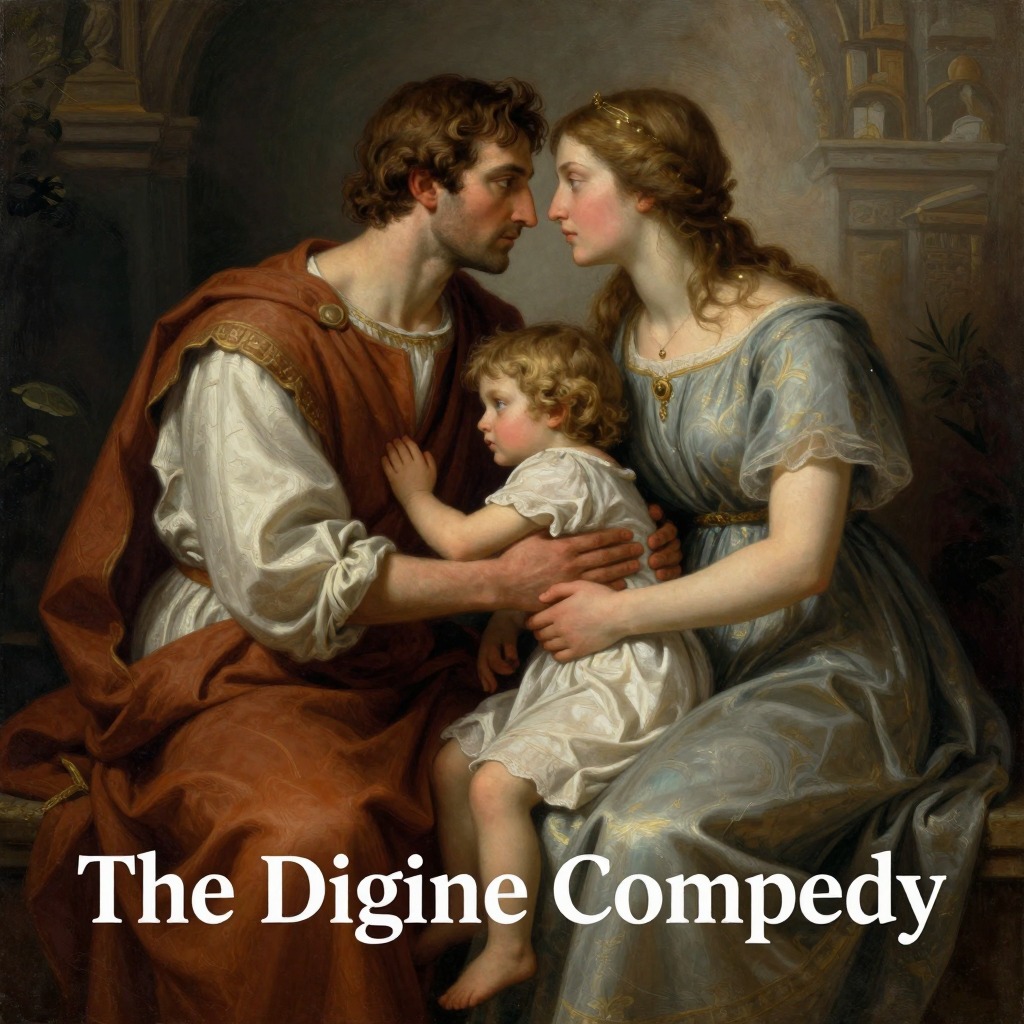
The souls that appear in Venus are not the lustful of the Inferno, but those whose love, though powerful, was ultimately directed toward God. Among them are Charles Martel, the crowned prince of Hungary; Cunizza da Romano, a noblewoman of the March of Treviso known for her amorous adventures; Folco of Marseilles, a troubadour who became a bishop; and Rahab, the harlot of Jericho who aided Joshua and was saved. Each of these souls shines with a light that reflects the intensity of their love, and they move in a circle, "speeding more and less, methinks in measure of their inward vision." Their joy is not diminished by their lower station in heaven, for, as Piccarda taught in the Moon, the will of the blessed is entirely conformed to God's will, and "in His will is our peace." The souls here do not regret their lower rank, but rather rejoice in the order that God has established.
The Encounter with Charles Martel: Nature, Nurture, and the Diversity of Human Gifts
The first soul to speak with Dante is Charles Martel, who had been a friend of the poet on earth. He explains that he died young, and that if he had lived longer, he would have shown Dante "somewhat beyond the foliage of my love." Charles then addresses a profound theological question: how can sweet seed produce bitter fruit? He explains that the diversity of human talents and dispositions is not the result of chance or of the stars alone, but of a divine providence that works through nature. Nature, he says, is like a signet that impresses itself on wax, but it cannot distinguish one inn from another; hence, the same natural inclination may produce a king or a beggar, a soldier or a scholar, depending on the individual's circumstances and choices. The fault lies not in the stars, but in the misuse of free will, and in the failure of human society to allow each person to follow the path for which nature has fitted them. This discourse is a key part of Dante's education on the relationship between divine predestination and human freedom.
The Encounter with Cunizza and Folco: The Redemption of Earthly Love
Cunizza da Romano, who was known for her passionate and scandalous life, appears next. She declares that she gladly pardons herself for her past, because the splendor of the star (Venus) overcame her, and she now sees the divine order that permitted her to be saved. She prophesies the downfall of the tyrants of the March of Treviso, and she urges Dante to remember her among her kin. Folco of Marseilles, a former troubadour who burned with love for a woman, now burns with love for God. He compares his former passion to that of Dido, of the woman who was deceived by Demophoon, and of Hercules for Iole, but he insists that there is no repentance in heaven, only a smile at the power that ordered and foresaw all things. He then identifies the next light as Rahab, who was the first soul to be taken up into this heaven after Christ's triumph, because she aided Joshua in the conquest of the Holy Land. Folco concludes with a fierce denunciation of the corruption of the Church, which has abandoned the Gospel and the Doctors for the study of the Decretals, and which has turned the shepherd into a wolf.
Thematic Significance: The Ordering of Love and the Critique of Ecclesiastical Corruption
The heaven of Venus serves as a crucial stage in Dante's education. It demonstrates that earthly love, when properly ordered and ultimately directed toward God, is not a hindrance to salvation but can be a path to it. The souls here are not ashamed of their past, but they see it as part of a divine plan that has led them to their present joy. At the same time, the canto contains some of the most bitter political and ecclesiastical invective in the Paradiso, as Folco denounces the Pope and the Cardinals for their avarice and their neglect of the true mission of the Church. This juxtaposition of the redeemed lovers with the corrupt shepherds of Christendom underscores the central theme of the entire Comedy: that the love of God, and not the love of worldly power or wealth, is the only true source of happiness and peace.