Climate warming and drought
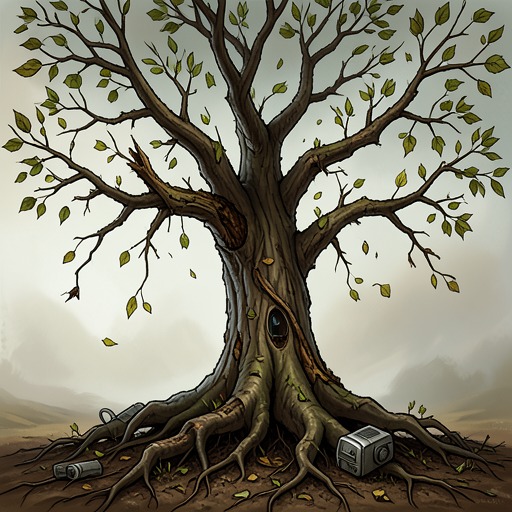
The Dog StarsClimate warming and drought are not a single catastrophe in Hig’s world but an accumulating change in the conditions that sustain life. Warmer streams, dry mountain winters, falling creeks, and dying forests register the damage over time, while the disappearance of familiar species makes that gradual process personal. The few green woods and returning animals matter, but they do not amount to a restoration of what has been lost.
A Changing Climate, Felt Season by Season
The expected sequence was warming followed by severe cold, but the colder turn has not arrived. In the mountains, some snow fell during one winter, yet the peaks had held almost none for two consecutive years. By mid-April, a warm wind coming down from the mountains carried the smell of earth and cedar rather than the cold Hig associated with the season. The old seasonal benchmarks had become mostly nostalgia. He regards the prospect of losing the creek as more frightening than attacks or disease: where he lives, climate change threatens the continuing presence of water, not just a less comfortable season.
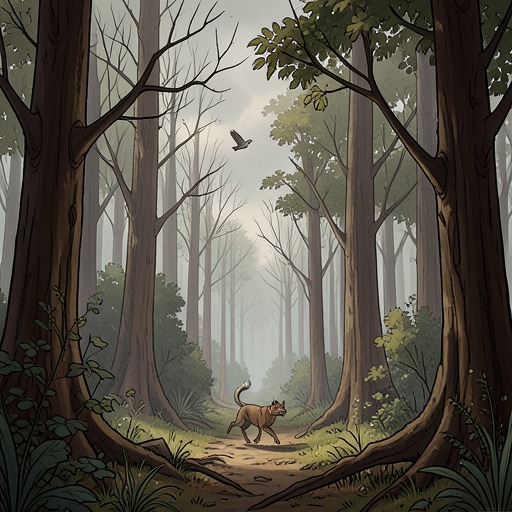
The change is also visible in the forests. Beetle-killed ponderosa and lodgepole pines stand without needles, and the dead forest began dying in broad swaths two decades earlier. Drought has left much of the timber brown and exposed, but patches of green remain and are spreading year by year. Hig follows that recovery with unusual hope, cheering the green woods when he flies low over them and treating their persistence as evidence that life can respond when conditions allow. The contrast is important: regrowth is real, but it occupies patches amid extensive dead forest.
The Disappearance of Trout
For Hig, the most intimate measure of ecological loss is the disappearance of Trout. He had once loved fishing for them above almost anything else; their absence is severe enough that he connects it with waking in tears, though he does not affirm that he does. The loss extends across brook, rainbow, brown, cutthroat, and hybrid trout. He also mourns other vanished animals, but the fish are tied directly to a place and practice that had given him pleasure and a reason to return to the mountains.
The streams have become too warm to support trout. Hig continues to fish, but now catches suckers and Carp, adapting an old practice to a changed ecosystem. Carp gradually occupy the niche left by the trout and begin feeding closer to the surface, so he sometimes fishes with dry flies. The substitution is not a recovery: he has to accustom himself to the different taste, bones, and sluggish resistance, and he does not bring the catch back for Bangley, who would not understand why the hours spent fishing matter to him. In this contrast between survival value and personal attachment, fishing remains a source of solace even after its original object has disappeared.
The threat then reaches beyond the trout. During a later visit, Hig catches five Carp, finds them thin, and recognizes that they too are starving, perhaps because the altered water temperature has affected their food. He releases them carefully and stops fishing. His fear shifts from mourning the already-lost trout to anticipating the disappearance of Carp as well. The scene makes clear that adaptation has limits: a species filling an abandoned niche can itself become vulnerable as the surrounding conditions continue to deteriorate.
Drought and the Loss of Water
The effects of drought become especially stark in the canyon. The previous summer, its creek nearly dried up; the people there had to dig into the streambed to collect enough pooled water to drink, and half their cattle died. The stream is not a distant environmental indicator but a basic resource whose decline has already cost lives among the herd and demanded physical effort to secure drinking water. The worsening pattern of heat and drought gives those losses a continuing context rather than presenting them as an isolated bad season.
When Hig returns in summer, he sees the creek dropping early and fast. The exposed streambed and increasingly prominent rocks make the falling water level visible from day to day. The dry season has also advanced into the surrounding growth: within roughly two weeks, most of the flowers are gone, and the speed of spring unsettles him. He expects that the creek will dry, endangering not only Carp but catfish, crayfish, and frogs. Earlier cycles had brought drought-breaking monsoons and snowfall, after which life returned in ways Hig could not explain. He no longer trusts that familiar rhythm to restore what is disappearing.
Ecological Grief and Local Refuge
Hig’s response is not limited to counting losses. He walks into the greener woods to breathe and escape, temporarily, the demands of survival. The dead trees remain part of the route, but he seeks out stretches of forest that have not died or are beginning to recover. The smell of running water, cold stone, fir, and spruce connects the living landscape to memories of the world before its collapse. His fishing rod, a four-piece Sage pack rod his father gave him when he was sixteen, carries its own history into these trips; the creek and the woods are therefore both ecological places and repositories of personal memory.
That attachment also shapes how Hig uses the land. He has seen recent Elk sign, though he has never seen one, and disputes Bangley’s certainty that Elk are gone. He has seen Deer and hunts one with a .308 rifle, hauling it back across open ground in the Green kayak sled. The surviving woods are also dangerous and exposed to travelers, so he checks them by air before going on foot. Their appeal does not erase their risks, just as the practical uses of the forest do not reduce its meaning for him to food or security. Its remaining life is something he values in its own right.
Loss, Persistence, and Uneven Return
The wider record is mixed rather than uniformly bleak. Some geese still appear: Hig recalls five against the sky one October and expects there may be none the following April. Elsewhere, Bison are moving down toward their old range, and Wolves and Bighorn sheep are returning nearby. Hig has seen Osprey along Jasper’s creek and Bald eagles, while mice, hawks, and crows remain plentiful. Spruce, fir, and aspen are coming back in places even as miles of forest remain dead. These observations show that change can include return and renewal, but the returning wildlife and trees coexist with the absence of Trout and Elk and with continuing water stress.
The climate crisis in Hig’s account unfolds through such unequal, local evidence: one creek nearly dries, one herd loses half its cattle, a fish population vanishes, and a green patch of forest expands among dead timber. None of the signs alone captures the whole transformation. Together they make the landscape an active measure of a future that is becoming less predictable. Hig’s grief is directed at environmental losses themselves, while his attention to surviving streams, fish, and trees keeps those losses from becoming abstract. Renewal remains possible in parts of the landscape, but it does not cancel the accumulated damage or guarantee that the next season will bring life back.