Erie Airport
The Dog StarsErie Airport is more than a place to land: nine years after the flu and the subsequent blood disease have devastated the population, it is Hig and Bruce Bangley’s isolated home, supply base, and defensive position. The airfield’s working infrastructure makes their survival possible, while its open surroundings give them a perimeter to watch. Beyond that practical geography lies a damaged landscape Hig continues to visit for reasons that cannot be reduced to security or food.
Setting and isolation
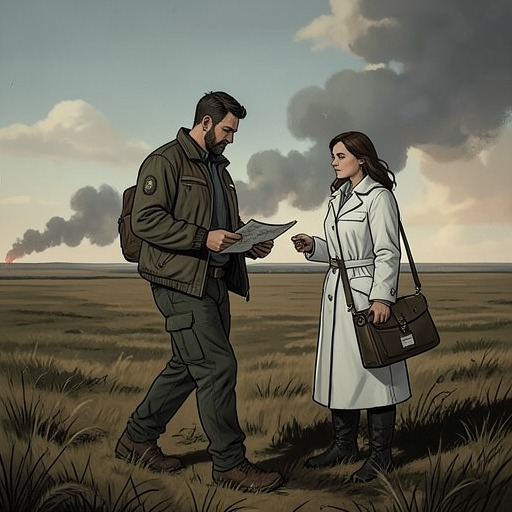
Erie Airport is a small country training field a few miles from the mountains, with houses built for people who wanted to keep small planes close at hand. The wider settlement has emptied out. Hig describes just one neighbor, Bangley, and estimates that they are alone for at least eight miles, across open prairie to the first juniper woods at the mountain’s edge. The airport sits by a large creek, one of the features that would make it attractive to survivors searching for water and supplies.
The surrounding country offers few straightforward boundaries. Beyond the juniper are oak brush and higher timber, much of it brown and dead from beetle damage and drought, though patches of green remain. Old farmsteads, sage, creekside willows, and arroyos could conceal people within the open ground. Hig treats this terrain as a familiar text: he believes that routine patrols and close observation would reveal an unexpected gap or sign of intrusion. The confidence is essential to his work, but it does not erase the danger he associates with leaving the airport and crossing the exposed ground.
Infrastructure and daily operation
The airfield’s usefulness depends on systems that have outlasted the society that built them. Its houses have solar panels, and the fixed-base operator’s facilities run mostly on wind power. Hig has four sixty-watt panels on the house where he does not sleep; they provide enough electricity for one LED light through the night. A delivery truck left at the airport supplies another crucial resource: aviation fuel. Hig hand-pumps low-lead fuel from an old airport tank and keeps the small cream-and-blue Cessna 182, The Beast, in service. With more fuel than the plane could use in Hig’s lifetime if he kept flights local, the remaining stock supports patrols and short supply trips, though his plans depend on conserving it.
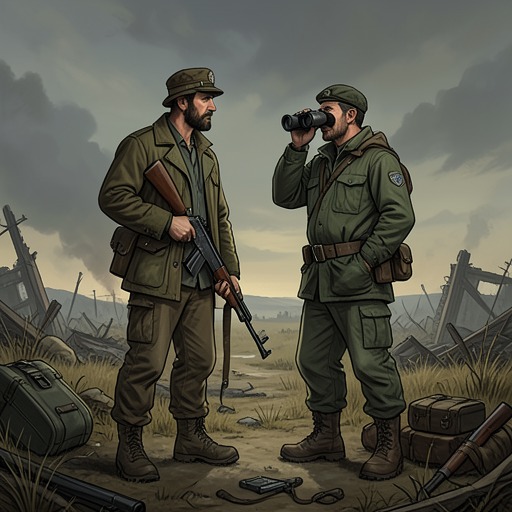
Erie is an uncontrolled field, not an airport with an official control tower. In the old system, pilots would communicate with one another and coordinate according to established procedures. Hig and Bangley build a different kind of tower four miles out on the plain, halfway toward the mountain front. Salvaged lumber, hauled from a nearby house, becomes a structure intended for surveillance and defense. They take two months to build it. Bangley equips the platform for precision shooting, while the tower’s elevated position extends the reach of their watch beyond the immediate airport grounds.
The two men’s different skills are built into the arrangement. Hig flies and observes; Bangley supplies the weapons and defensive force. Their partnership is therefore not simply a shared residence: it relies on the continued operation of the airplane, the fuel supply, the observation post, and the division of labor between pilot and gunman. Even the surviving Garmin GPS on The Beast’s instrument panel remains functional, warning Hig when he approaches high terrain and offering a nearest-airport feature inherited from a world in which other destinations and assistance could still be expected.
Perimeter and threats
The eight miles of open ground between the airport and the first trees form the partners’ stated perimeter. Bangley can concentrate firepower westward, toward the woods, while the other directions extend across high plains for roughly thirty miles. The Mennonite community is about ten miles south and, in Hig’s account, does not threaten them. Its members suffer from a blood disease that appeared after the flu; children are born with it, remain weak and sick, and some die each year. Their presence makes the surrounding region more than empty territory, but does not change the pair’s focus on guarding the airport.
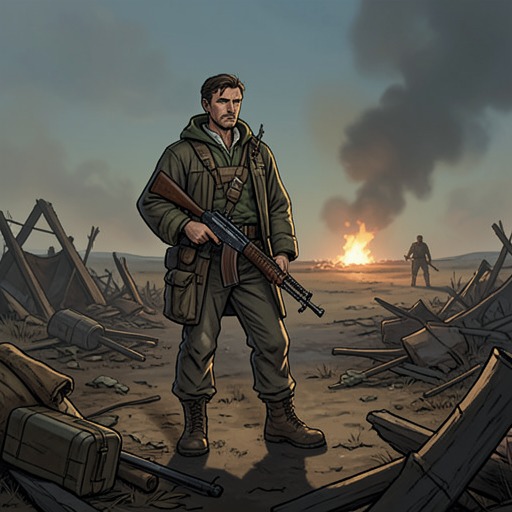
The airfield’s resources also make it a target. Survivors could identify its water, fuel, and power systems as reasons to come there. Intruders usually arrive at night, singly or in groups, carrying rifles or knives and approaching the porch light Hig leaves on. He responds to the attacks by sleeping on the ground rather than in the house. The contrast is telling: the airport’s electricity can keep a light burning, but that same visible sign of habitation can draw people toward the property. Its infrastructure secures daily life and advertises the possibility of taking what remains.
Mountain access and ecological loss
The airport is also Hig’s point of departure for the mountains. He walks into the greener woods and flies patrols over the surrounding country, reading the landscape for both people and changes in wildlife. The mountain front provides a defensive boundary, but it is also a place he seeks out for the creeks, trees, and air. His trips are dangerous, especially when he carries a deer back across the open ground on a modified kayak used as a sled; they are not merely excursions for provisions.
The loss of trout gives those trips a particular weight. Hig once valued fishing for trout above almost anything, but the streams have grown too warm for them, and he mourns their disappearance. He still fishes for suckers and carp, sometimes using the methods he once used for trout, while remembering the remaining green woods and streams as evidence that life persists. The airport’s immediate survival economy tends to favor food, fuel, patrols, and defense. Hig’s attachment to the mountain environment preserves a different measure of value: what is lost from the creeks matters even when it offers no strategic advantage.
Home, refuge, and narrative significance
Erie Airport is the home to which Hig later proposes bringing Pops and Cima. He offers them a place there with himself and Bangley, extending the airport’s meaning from a defended base to a possible refuge for others. Pops declines, preferring to stay with his daughter and live out his years in peace. The offer reveals the limits of the airport’s promise: it can provide a protected place and functioning equipment, but it cannot make every survivor accept the risks and terms of life there.
The location holds together the novel’s competing forms of survival. Its remaining fuel, solar panels, wind-powered facilities, airplane, and man-made tower embody a practical order maintained by skill and vigilance. The prairie perimeter makes that order vulnerable, and the attacks show how readily essential resources become a source of danger. At the same time, the mountain woods and vanishing trout draw Hig beyond the defensive calculations that organize life at the airfield. Erie Airport is both his shelter and the point from which he repeatedly departs to encounter what shelter alone cannot preserve.