Handheld radio
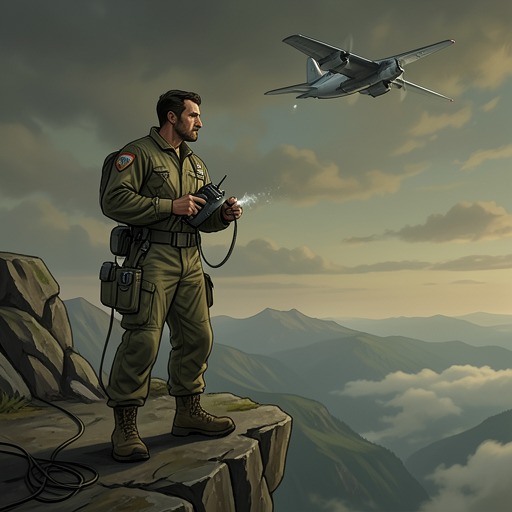
The Dog StarsThe Handheld radio turns distance between Hig and Bangley into something they can manage, though never something they can ignore. In a landscape where armed survivors make even a return from the hills dangerous, its calls coordinate cover, warn of approaching attackers, and keep the two men from mistaking each other for threats. Its power comes from the solar panels that sustain their isolated household; its deeper importance lies in the voices it carries across the exposed ground between them.
Equipment and Survival Infrastructure
The radios are plural in Hig’s account: the two men still have their handsets, which recharge with their panels. He notes that they are Japanese-built and that this has proved fortunate. Their operation depends on a modest but consequential chain of surviving infrastructure: the handsets themselves, the panels that replenish them, and the disciplined use of communication in a place where help cannot be summoned from any larger network. The devices remain useful not because the old society is intact, but because a few of its technologies can still be maintained locally.
That dependence fits the airport’s broader arrangement. Its houses have solar panels, while the airport’s fixed-base operation runs mostly on wind. The radio is part of this practical system of keeping essential equipment usable after social collapse. It does not remove the dangers of the open plain or replace the need for watchfulness; it lets the men act on information while separated. Elsewhere, the survivors at the Jet Center use solar power for water, fuel, radios, and the beacon, an echo of the book’s larger dependence on maintained energy and communications infrastructure. That account concerns the airport’s equipment generally, rather than identifying those radios as the same handheld set.
Routine, Distance, and the Return
Communication is woven into Hig’s recurring trips into the hills. Before one journey he scouts the route by air, including a night flight with night-vision goggles, then tells Bangley his plan. On the ground, Bangley covers him from partway out, using the handset link as part of their arrangement for moving through open country. The radio makes their division of labor workable: Hig travels and hunts, while Bangley watches the approaches and can respond to danger beyond immediate sight.
On the tenth day of another trip, Hig radios early in the morning, before covering the final miles back. He describes the contact as a ritual, not merely a report. It gives Bangley time to readjust to Hig’s return and reduces the risk that Bangley, scanning the perimeter from the tower, will mistake him for an intruder and shoot. The possibility of friendly fire is not abstract: Bangley has previously killed a girl who was chasing Hig across the plain. The handset therefore serves as an identification signal as well as a means of passing plans and warnings. Its brief call helps make a dangerous reunion legible to both men.
The routine is accompanied by tactical caution. On the return walk, Hig waits for Bangley’s protection before crossing exposed ground. Bangley carries his .408 CheyTac sniper rifle and watches from the tower; Hig, meanwhile, pulls two quartered does on his sled. The radio links a moving, vulnerable target to a fixed lookout. That link does not make the crossing safe, but it gives each man a chance to know what the other can see and do.
Alarm and Tactical Coordination
The handset’s importance sharpens when Bangley interrupts the return with a warning that Hig has company. Hig drops the sled’s bridle and turns to look back along the trail, but sees only brush and empty ground. The radio gives him information that his own view cannot: danger is present even when the landscape appears still. Bangley directs him to stay put, estimates that four to seven attackers remain, and explains how they may spread out to flank him. From his tower he can see the men when they move and can call out their direction and distance, using a visible rock as the reference point for Hig’s orientation.
This exchange makes the radio a tool for coordinated defense rather than a simple alarm. Bangley’s instructions depend on his elevated view; Hig must hold position and interpret directions while exposed below. Their different positions become complementary through the handset. Bangley also refers to the tower’s height and the reinforced porch as choices made for precisely this kind of defense. The device carries his tactical knowledge into the encounter, but it cannot act for Hig: the warning and guidance still require Hig to remain attentive and follow them.
After a blast throws Hig to the ground, the radio carries Bangley’s repeated attempts to establish whether he is alive. Hig is dazed, bleeding from the nose, and checks that his head and body are intact before he can respond. The exchange continues the device’s double function: it conveys battlefield information, then becomes a thread of contact during the disorientation that follows violence. Bangley’s urgent checks turn the handset from a means of directing fire into a means of confirming that the person he has been protecting is still there.
Function and Significance
The Handheld radio does not dissolve the tension in Hig and Bangley’s partnership. It gives their dependence a practical form: Bangley can cover Hig, but must distinguish him from a threat; Hig can travel, but must trust a distant watcher whose judgment and firepower shape his chances of returning. The ritual call, the warning on the trail, and the checks after the blast are different uses of the same narrow channel, each answering a particular danger created by separation.
Its significance is therefore both material and relational. Solar power keeps the handsets available, while habitual communication turns availability into a working defense system. The radio does not restore a community or guarantee safety. It lets two isolated survivors coordinate enough to make a perimeter, a hunt, and a return possible—and lets one hear the other’s voice when sight and certainty fail.