Hig Flies Beyond His Return-Fuel Limit in Search of Survivors
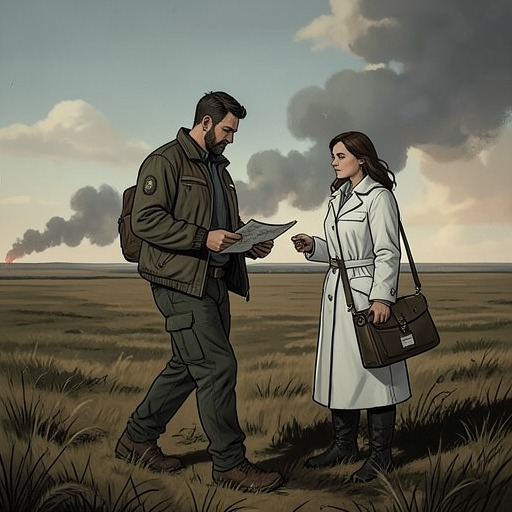
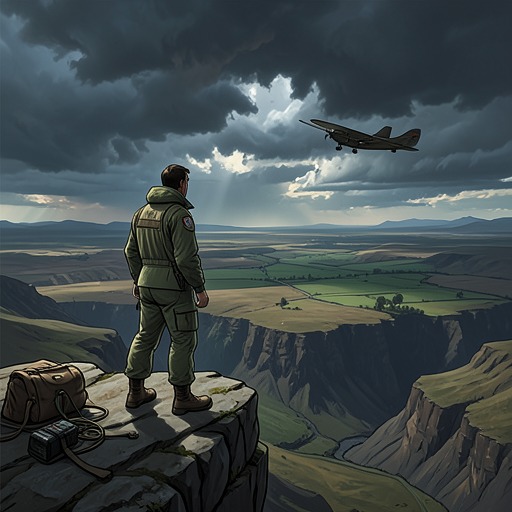
The Dog StarsHig Flies Beyond His Return-Fuel Limit in Search of Survivors marks a decisive movement from guarded survival toward the possibility of connection. Hig risks crossing the aviation threshold beyond which he cannot be sure of enough fuel to get home, looking for someone beyond the people and routines he already knows. The search brings him to a canyon, but its deepest motive remains difficult even for him to explain.
Background and Stakes
Hig’s flight grows out of an existence organized around survival but not satisfied by it. At the airport, his uneasy alliance with Bangley divides their work: Hig watches the perimeter from the air, while Bangley supplies the force Hig is reluctant to use. Hig also makes regular trips into the high country with Jasper, seeking fish and clean air, and helps a nearby Mennonite community. Those acts show that his attention extends beyond immediate defense; he wants contact with other people and a life not reduced to warding off danger. The journey carries a distinct risk because the point of no return is a real fuel limit, not merely a figure of speech. Flying beyond it means that the margin for returning is gone. The flight therefore puts Hig’s own safety against the possibility that he may find someone: the very outcome he hopes for cannot be guaranteed, while the cost of searching is immediate.
The Search and Its Unanswered Motive
Hig flies beyond that limit in search of survivors. The journey brings him to the canyon where Cima’s father asks why he came there and why he crossed the return-fuel threshold. Hig cannot find an answer. The silence does not establish a hidden plan or a single conscious motive; instead, it leaves the act suspended between a search for other people and a longing for connection that Hig himself cannot readily put into words. That uncertainty gives the flight its emotional force. Hig has already shown, through his visits to the Mennonite community and his repeated high-country excursions, that survival alone does not meet his needs. Yet crossing the threshold makes that dissatisfaction consequential: he does not merely wish for a wider human world but exposes himself to danger in the attempt to find one.
Ecological Loss and the Meaning of Risk
The search takes place against a landscape where familiar forms of life are disappearing. Hig mourns the loss of trout as mountain streams warm, and the changing seasons unsettle the old expectations of snow and thaw. His attention to ecological decline is not separate from his loneliness: the loss of species and places is part of the diminished world in which he is trying to find a reason to keep reaching outward. The novel does not make the flight a simple triumph or provide Hig with a neat explanation for his decision. Instead, its unresolved motive connects the practical danger of aviation to a wider question: whether a person can continue to live by self-protection alone. Later, Hig takes Pops up in the Beast and points out the tower, river, cutbank, ford, berm, and the distances around their home. That later flight is a concrete use of aviation to share knowledge and orient another person, in contrast to the earlier journey whose purpose Hig cannot fully name.