Hig–Jasper companionship
The Dog StarsHig–Jasper companionship is the intimate, practical bond between Hig and Jasper, his aging blue heeler mix. In a dangerous and increasingly solitary world, Jasper is at once an alarm, a traveling companion, and a familiar presence in Hig’s daily routines. Their partnership is built from repeated acts of attention rather than grand declarations: flying side by side, sharing fish, sleeping beneath the same sky, and tending to each other as Jasper’s abilities diminish. When Jasper dies, the ordinary pattern of their life together becomes the measure of Hig’s grief.
Identity and Everyday Partnership
Jasper is identified as the son of Daisy and as Hig’s dependable last line of alarm. His role is not abstract: sleeping outdoors behind the airport’s berm, Hig wakes to Jasper’s low growl when intruders approach and alerts Bangley by radio. The danger belongs to their shared environment, but Jasper is the one who first registers it. His keen nose and warning growl make him part of the work that keeps Hig alive.
Their partnership also shapes Hig’s sense of what the work is for. Hig watches the perimeter and flies; Jasper remains close through the routines that divide danger from rest. The relation is practical without being merely instrumental. Hig’s confidence in Jasper’s warning sits beside his attention to Jasper’s comfort, preferences, and limitations, so that care is as much a part of their shared life as vigilance.
Flying and Traveling Together
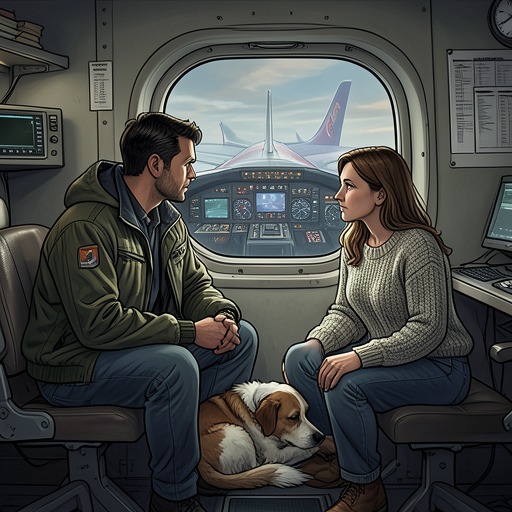
Hig chooses to fly an old, four-seat Cessna rather than a smaller, more agile aircraft because its side-by-side seats let Jasper ride as copilot. That is the real reason for the choice. During flights Hig talks to Jasper, amused that the dog acts as though he is not listening. The joke depends on familiarity: Jasper is not simply cargo in the plane but the companion for whom Hig has arranged the journey around them.
As Jasper ages, flying requires more accommodation. He once jumped into the cockpit by himself, but later Hig has to carry him. After removing the front passenger seat to make room for weight and cargo, Hig lays down a flannel sleeping bag patterned with a hunter and a dog, then places Jasper on it. Jasper likes flying, but the altered seat initially leaves him unable to sit up and look out. Hig tries a small wooden barrier to keep him away from the rudder pedals after a sudden shear sends him skidding toward them; Jasper rejects the change by jumping out and refusing to fly. Hig abandons the barrier. The episode shows both the risks of sharing a cockpit and the degree to which Jasper’s willingness matters to Hig.
Hig also worries about the noise of the engine and propeller. He wears a headset to dampen the sound and attempts to make Jasper a helmet-like hearing protector, but it will not stay on. Jasper is mostly deaf by the time of the account. When Hig later moves supplies, he places the quilt at the top of the stack so Jasper can look out. These small adjustments make the flight a shared activity that must change with Jasper’s body, rather than a routine Hig continues unchanged around him.
Affection, Care, and Shared Rituals
The companionship extends beyond the airport and cockpit into the mountains. While fishing, Hig whistles for Jasper, who may be nearly deaf but responds to something in the familiar signal. Jasper gets up shakily and comes trotting upstream; Hig gives him the first fish, then divides the cleaned fish between them. Their time at the creek ends not with a task alone but with the prospect of making camp nearby and sharing another cooked, salted fish.
At camp, Hig first pitches a tarp against the dew, then pulls it back because he wants to see the sky. After a long day, Jasper hobbles over and licks Hig’s face until Hig laughs and turns away. Jasper then curls against him with the collapse and huff that mark his customary settling. They lie together listening to the wind above and water below. The scene’s calm rests on familiar physical closeness: Jasper’s tired approach, Hig’s laughter, and the shared bed beneath the open sky.
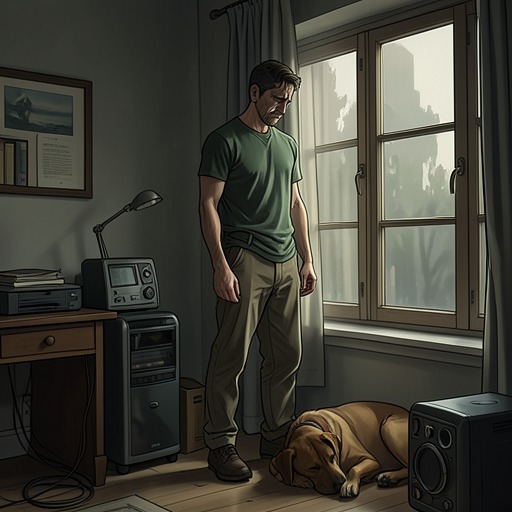
That intimacy makes the following morning’s change unmistakable. Hig wakes stiff, with frost on the sleeping bag, Jasper, and his wool hat. He reaches for Jasper’s quilt, assuming the dog is cold and will move when covered. Jasper does not respond. Hig lays the quilt over him and brushes his ear, still addressing him as if the morning’s ordinary care might bring him around. Only then does the routine give way to recognition that Jasper is dead. Hig later understands that Jasper had been having difficulty on their walk, a sign he wishes he had noticed.
Death and Grief
Hig draws Jasper close and covers him with the quilt. The tears he had not shed the previous day arrive all at once. He tries to continue with the immediate tasks of camp, including making a fire and cooking the last two fish, but the unfinished actions register the absence: the shared meal has become something Hig must face alone. He names Jasper as his little brother and his heart, expressing a kinship that exceeds the practical roles of watchdog and copilot.
On the third day, Hig wakes with Jasper still wrapped in the quilt and briefly expects him to stir. He carries him beneath the trees and digs a grave with a stick, a flat rock, and his hands. The site is one of their favorite camps, visited year after year, and Hig imagines the place as the setting Jasper’s spirit might continue to look out on. He lays Jasper in the quilt and says goodbye, insisting that they are never apart, there or elsewhere.
Hig gathers smooth stones from the stream and builds a mound as high as his chest. For its top he uses an old wool sweater that carries both his smell and Jasper’s, then covers it with more stones. The burial joins a particular place, a shared history, and a material trace of their closeness. It is not a quick disposal after death: Hig spends the rest of the day making a marker from the creek stones, as if the labor of building it could shelter what has been lost.
Memory and the Meaning of the Bond
Afterward, grief alters Hig’s movement through the mountains. He walks for three days, barely eating or sleeping, hauling the kayak sled instead of leaving it at a base camp as he normally would. The noise of his passage carries through the woods; animals react to the careless, burdened hunter he has become. The contrast with the attentive traveling pair of earlier scenes makes Jasper’s absence tangible in Hig’s changed habits as well as in his thoughts.
Hig describes the loss as something that cannot be reasoned or talked away, but his grief is not presented as a single declaration. It recurs in the physical fact of continuing to walk, in the imagined space beside him where Jasper used to curl, and in the difficulty of lying down without another presence. When Hig later tells Bangley that he is laughing because Jasper died in his sleep, the blunt explanation holds humor and bereavement together; Bangley’s serious concern prompts Hig to pull himself together, but it does not undo the loss.
The bond also belongs to a wider pattern of ecological mourning. Hig’s distress over vanished trout and changing mountain streams precedes Jasper’s death, and later he fears that even the carp may disappear. Those losses are not interchangeable: Jasper is a particular companion, while disappearing fish and warming waters mark damage to the world they traveled through. Yet the two kinds of grief meet in Hig’s remembered fishing places, where the creek, the old routines, and the companion who shared them belong to the same life. Jasper’s absence makes that life’s dependence on companionship unmistakable, while Hig’s attention to the remaining streams and camps preserves their shared history without pretending to restore what is gone.