Hig–Melissa marriage
The Dog StarsThe Hig–Melissa marriage is remembered as a partnership of mutual care, ordinary rituals, and an unusually deep sense of belonging, severed when Melissa died during the flu pandemic. Their shared life included an unexpected pregnancy, fishing trips, birthday customs, and a durable intimacy that Hig later carried as both comfort and grief. In his recollections, the marriage is not only a lost relationship: it is part of how he understood himself, the natural world, and what it means to be entrusted with another person’s life.
Identity and Shared Life
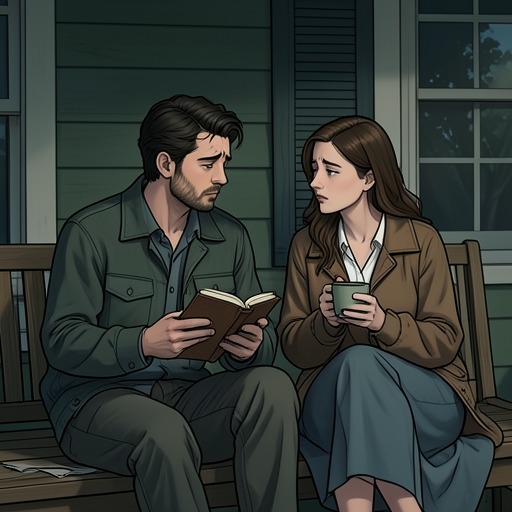
Melissa was Hig’s wife and, in his account, an independent presence within a bond he struggled to describe. He compared her to Eve only to reject the corresponding role for himself: he felt closer to Cain, an outsider to that familiar pairing. The comparison suggests how singularly he experienced their marriage, rather than presenting it as a conventional story of two complementary halves. Their shared life had its own affectionate habits and disagreements. In autumn, walking around the lake before dinner, they watched and identified geese; Melissa often disagreed with Hig, and he remembered that she could become half-mad when he thought she was wrong. Her confidence and intelligence were part of the companionship, not just background to his own account. On fishing trips, she usually caught more than he did, except on large rivers where a long cast helped him. The marriage also appeared in small acts of celebration. Melissa disliked parties, so their birthdays were marked with quiet dinners, often sushi, which she considered an extravagant kind of food but loved. Hig gave her an old hardback from the used-bookstore shelves where he found worn copies of children’s books and Hobbits. He remembered the cloth covers, sometimes marked with a horse or tree, as objects that could be recognized by touch. These annual choices gave their intimacy a repeated, tactile form: attention expressed through selecting and remembering.
Parenthood and Mutual Dependence
Hig and Melissa had believed they would not have children. After consulting a doctor, they declined the treatments offered and settled into the expectation that they would remain a family of two. Melissa’s pregnancy therefore came as a surprise. Hig recalled watching her sleep and realizing that he loved her more than anything, while also wondering whether he could love someone else as much. The pregnancy enlarged their shared future before it was taken away. In the second trimester, they decided to learn the baby’s sex. They had chosen Spencer for a boy and Sophie for a girl; Spencer was Melissa’s father’s name. Hig also preserved details of her family history: she came from a Scottish family and moved from Melrose to the United States at seven, then lost her accent within a couple of months of starting school in West Denver. Such recollections give Melissa a history and adaptability beyond her role as Hig’s wife, even as they reach the reader through his remembering. Hig understood their bond through an image of careful custody. He felt able to hold Melissa as something entrusted to him, while recognizing that she might all along have been the one holding him. That reversal is central to his account of the marriage: care was not simply his responsibility toward a vulnerable partner, but a mutual support whose full extent became clearest in retrospect.
Shared Places and Ecological Loss
Fishing joined the couple’s private life to places that Hig experienced as sustaining. He remembered fishing with Jasper on the Sulphur, where the stream, stones, cliffs, spruce, and cutthroat trout made him feel fitted to the world rather than separate from it. Melissa belonged within that same circle of attachment. His description makes the landscape more than a setting for their time together: it was part of the life they shared and a language through which he understood connection. That world was already changing. Hig mourned the disappearance of trout, naming brookies, rainbows, browns, cutthroats, and their hybrids among the fish that had vanished. The streams had grown too warm for them, and, in years when mountain peaks held little or no snow, he feared the loss of the creeks themselves. He continued fishing for other species, including carp, but the substitution did not restore what was gone. His grief for Melissa and his grief for ecological loss remain distinct, yet his memories bring them into contact: the familiar places of their life together were also becoming unfamiliar.
Illness and the End of the Marriage
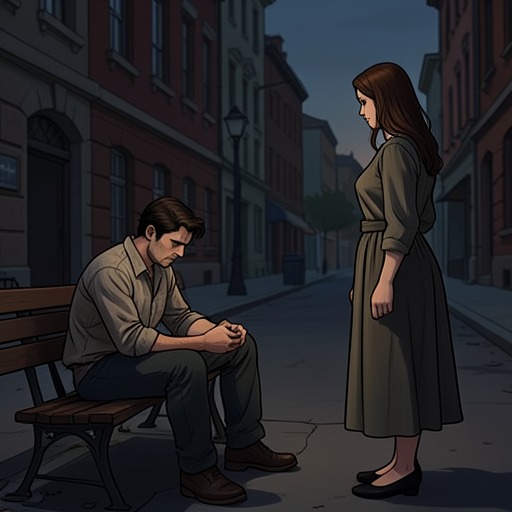
When Melissa contracted the flu, Hig clung to the belief that she would recover. He later acknowledged that he had never lied to her about anything else; she knew this assurance was untrue, but was too ill to be concerned with whether she would survive and did not hold the lie against him. As her condition worsened, they went to St. Vincent’s Hospital across the lake. They had discussed flying west, but by the time the decision became urgent, it was too late, and they went to the hospital instead. They were placed in a building taken over for the sick, amid a growing number of dead. Melissa eventually wanted her suffering to end. Hig recalled that she was gravely ill and that he first misunderstood what she was asking him to do. He then assisted her death, telling her of his love as he did so. The account identifies this as an act within their marriage and in response to her request, while retaining the unbearable weight it carried for him. The crowded hall continued in its sickness around them; the event did not resolve into a private or peaceful world set apart from the pandemic. Hig states plainly that he loved her and that this was what he lived with. The marriage’s ending thus remains inseparable from both love and responsibility: his final act was shaped by Melissa’s request, but his grief continued to return to it. The remembered scene does not present loss as something he overcame; it establishes the event that his later life must carry.
Memory and Continuing Significance
After Melissa’s death, recollection repeatedly brought their life back into Hig’s present. He remembered their birthdays, fishing, their arguments about geese, and the pregnancy they had begun to imagine. He also framed love as inseparable from awareness that it must end. That knowledge does not diminish the relationship; it makes its tenderness and its anticipated loss part of the same experience. The marriage therefore persists in the narrative through particular acts of attention rather than through an imagined continuation. Hig remembers what Melissa loved, what she disagreed about, what she caught, and the child they named before birth. Alongside these personal memories, the disappearance of trout and the warming streams register a broader world of losses. Neither kind of grief simply stands for the other. Together, however, they show how Hig’s attachment to Melissa was bound to a shared life in particular places, and how memory became one way of keeping that life present after both the relationship and much of its landscape had changed.