Home and belonging
The Dog StarsHome and belonging in Hig’s story are neither secure nor reducible to a building: they are attachments to a living landscape, to repeated acts of care, and to people whose importance becomes clear through separation. The losses of trout and familiar seasons unsettle the idea of home, while Hig’s return to Erie reveals that belonging can reside in an imperfect human bond. The final poem leaves that homecoming unresolved, held instead as something still hoped for.
A Home Altered by Ecological Loss
Hig’s grief for the vanished trout is among the clearest signs of how closely his sense of home is bound to the natural world. He recalls having loved fishing for trout, and describes all the kinds he knew as gone. His account connects their disappearance to a larger roll call of lost animals, but the trout’s absence has a particular force: the thought of the last one swimming upriver in search of cooler water is what he associates with waking in tears. This is not simply a measure of hardship. It is grief for the destruction of a familiar living presence and for the loss of the place and practice through which Hig knew it.
The environmental change also threatens the conditions that made those places recognizable. In mid-April, he finds the old seasonal expectations increasingly unreliable: some recent winters have left the mountain peaks almost bare, and the warming streams have driven trout away. He fears this change more than attacks or disease. The distinction matters. Human danger shapes daily survival, but the weakening of the seasons and waterways damages the world in which survival might still feel like a life. Later, even the carp he catches are thin and starving; he lets them go with care, and their condition deepens his sense that the losses are continuing. Home is therefore not a fixed refuge untouched by catastrophe. It is a threatened ecosystem whose deterioration changes what Hig can remember, eat, and hope to find.
Repeated Practices and Places of Refuge
Fishing remains a way for Hig to enter places that are still alive, even when the trout themselves are gone. He passes through standing dead trees and beetle-killed forest toward woods that have survived or begun to recover. There he pauses beside a creek, sets down his pack and gear, and attends to the continuing water and trees. The scene joins present refuge to personal memory: the smell of the place recalls the sachets his mother kept, while the surviving forest lets him imagine, briefly, the earlier world in which many things still lived. His gratitude is directed toward something he does not quite identify as God. The place offers neither a return to the past nor proof that the damage can be undone; it gives him a reason to attend to what remains.
This attachment sometimes conflicts with Bangley’s practical account of what matters. Hunting deer can be justified as food, while fishing for its own sake is liable to be dismissed as recreation. Hig nevertheless continues to go into the mountains, because being there matters to him beyond the amount of food it provides. The distinction reveals two competing understandings of home: a defended perimeter organized around immediate safety, and a landscape Hig needs to encounter directly. His fishing is dangerous because streams also draw animals and wanderers, but he continues the practice. Its risk and its solace coexist; the act keeps a relationship with place alive without pretending that the old abundance has returned.
Return and Chosen Belonging
The meaning of home shifts when Hig approaches Erie again after an absence of just over six weeks. Crossing the Continental Divide, he is nervous about seeing Bangley. The familiar route does not make the return emotionally simple: Hig remembers earlier homecomings and fears that the place he is returning to may not be as he expects. As he comes over the prairie, he recognizes the perimeter, the tower they built together, Bangley’s sniper deck, and the place from which Bangley fired mortars. Those landmarks belong to a shared life of defense, not to an untouched domestic refuge.
The sight of the damaged airstrip and burned structures makes the return more uncertain still. Hig avoids looking closely at the scattered remains around the stronghold, but the thought of Bangley rises into that moment of fear and recognition. He understands that Bangley has become his family. This recognition is striking because Hig measures it against the people usually associated with home: his mother, his wife, and his child. He does not describe the return as a restoration of those earlier relationships. Instead, the bond forged through their division of labor and mutual reliance has made the defended airfield a place to which he can return. Bangley’s stubbornness remains part of that bond; belonging does not require the other person to become gentle or agreeable.
Memory, Separation, and an Unfinished Homecoming
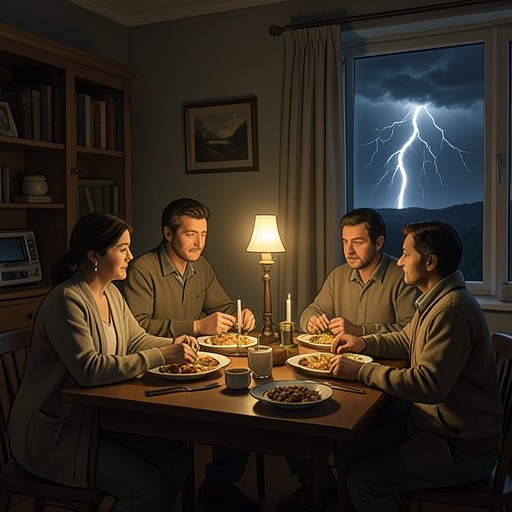
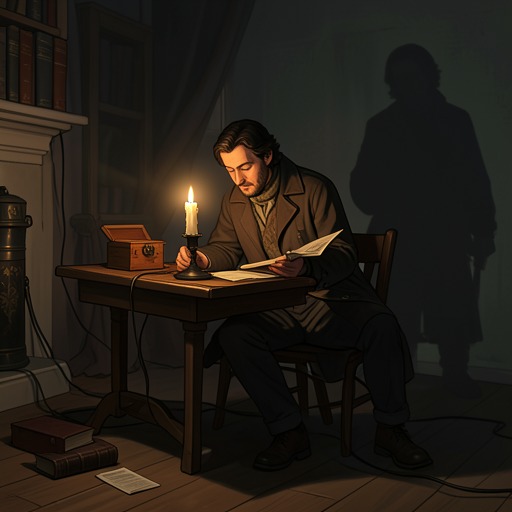
The closing poem gives the idea of home a different shape: not a location Hig can simply reach, but a reunion imagined across distance and time. Its question of when the speaker will return is left unanswered, and its mountain setting echoes the terrain that has carried Hig’s memories throughout the story. The poem imagines a future meeting by candlelight, followed by the telling of how one person remembered another during a stormy night in the mountains. That imagined act of remembering makes fidelity itself part of home: those who are absent remain present in the account carried forward about them.
The poem’s hope does not erase the losses that precede it. Hig still dreams that Jasper is alive, and says his heart will not move on before that dream. The poem’s promise of being together again therefore sits alongside grief rather than resolving it. Across the story, home is first wounded by ecological disappearance, then sustained through attention to surviving places, and finally recognized in a human bond that has become family. At the end, belonging is neither secured by a building nor completed by return. It persists as memory and as the possibility of telling someone, someday, how they were remembered.