Melissa's Death at the Makeshift Hospital
The Dog StarsMelissa's Death at the Makeshift Hospital is the event in which Hig, unable to obtain medical help for his gravely ill wife, complied with her request to end her suffering. It turns a marriage built on intimacy and trust into an enduring burden of grief: Melissa’s death is not merely part of the pandemic’s mounting toll, but an act Hig remembers as his own responsibility.
Background and Setting
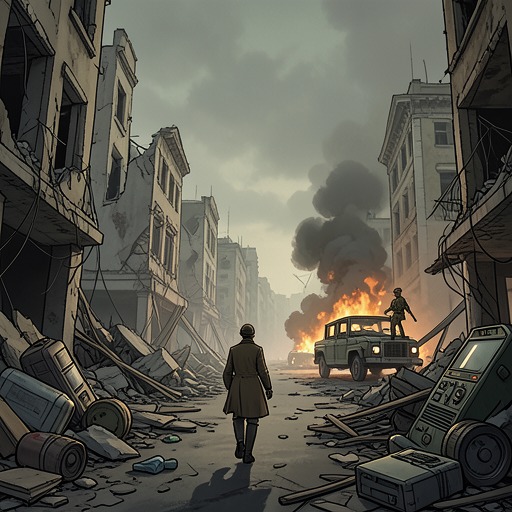
The crisis unfolded during the influenza pandemic, after the disease had spread beyond the capacity of ordinary care. St. Vincent’s Hospital stood across the lake, and orange helicopters had been landing there. Hig and Melissa had considered flying west, but by the time they faced the decision it was too late; they went to the hospital instead. The institution was already operating in emergency conditions, with patients housed in a building taken over for the purpose.
The wider collapse gives the hospital scene its terrible context. Nine years later, Hig describes the flu as having killed almost everybody, with a blood disease taking still more lives afterward. But at the time of Melissa’s illness, the breakdown was not yet a distant history. It was present in the ward: people were sick, staff were absent or becoming ill themselves, and the usual expectation that medical care could intervene had largely disappeared. Melissa’s death thus occurs inside a failing system, but the immediate decision falls to Hig.
Melissa’s Illness and Request
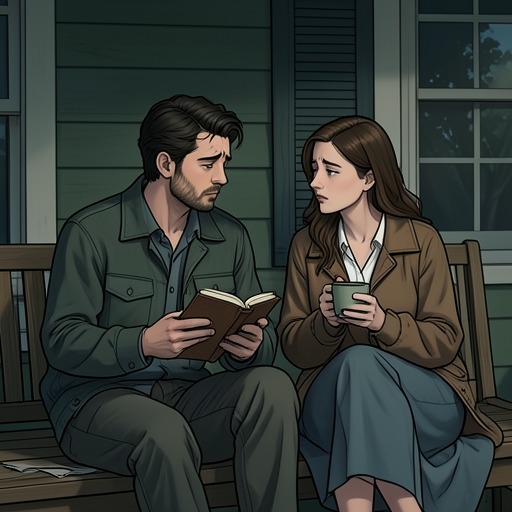
Melissa and Hig had been, in his recollection, like a married couple who could no longer speak plainly about the most important things. The comparison carries a particular qualification: Hig had lied to her about one thing, his conviction that she would recover from the flu. Melissa knew that reassurance was false, but she did not hold it against him. She was too ill to concern herself with whether she would survive. Their shared recognition of the truth was therefore present before the final request, even when Hig had been unable to say it aloud.
Her condition had become severe. Hig recalls nausea and diarrhea like dysentery, alongside lung complications resembling pneumonia. In the hospital, Melissa asked him to use the pillow to end her suffering. Hig initially failed to understand what she meant. He adjusted the pillow behind her head, as if she had asked him to make her more comfortable, and only then grasped that she was asking him to act. Her repeated appeal leaves little room for Hig to mistake what she wants, while his hesitation shows the distance between understanding a request and being able to carry it out.
Hig’s Decision and Melissa’s Death
Hig looked around the hall for a doctor or orderly, hoping someone might take over or prevent the choice from falling to him. There was no one available. Almost everyone was sick already or beginning to show signs of illness; the ward’s noise and distress continued without an attendant who could relieve him of the decision. The scene makes institutional abandonment concrete: the hospital still has cots and patients, but not enough healthy people to provide the care its name implies.
With no medical help to turn to, Hig lifted Melissa’s head, placed it back on the stained sheet, brought the pillow around, and told her that he loved her. He then complied with her request. Melissa struggled briefly and became still. The ward did not fall silent; the coughing and moaning around them continued. The surrounding crisis therefore offers no ceremonial pause or communal witness to distinguish her death from the many other emergencies in the building. For Hig, however, this death remains intensely particular: it is his wife, and he is the person who carried out her final request.
Aftermath and Significance
Hig’s account does not present the act as a cure, a release from grief, or a decision made with emotional detachment. His love for Melissa remains explicit, while his memory of her death is condensed into the statement that it is what he lives with. The sentence makes the event an ongoing condition rather than a closed episode: the decision ends Melissa’s suffering, but it does not end Hig’s relationship to what happened.
The scene also sharpens the difference between a private promise and a public system collapsing around it. Hig had once assured Melissa that she would pull through, though he knew the assurance was untrue; at the hospital, with no clinician available, he faces a choice that cannot be passed to someone else. His final declaration of love accompanies an act that is both intimate and irreversible. The narrative places tenderness and responsibility together, without making either cancel the other.
In retrospect, the event forms a central wound in Hig’s story. The hospital’s overwhelmed ward explains why he was left alone with the choice, but it does not remove his sense of personal involvement. His later insistence that he continues to live with the memory gives the scene its lasting consequence: the pandemic took Melissa, and Hig’s survival includes remembering the moment when he acted at her request.