Melissa's Euthanasia
The Dog StarsMelissa’s Euthanasia is a remembered act at the center of Hig’s grief: at the end of his wife’s life, he followed through on her request, then continued to question what he had done. The account holds the promise and its fulfillment beside the uncertainty that survives them, making the event both a completed choice and an unresolved memory.
The Request and the Promise
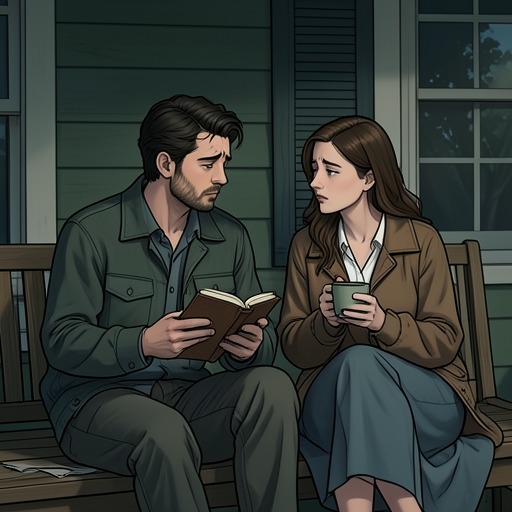
Hig recalls that Melissa asked him to end her life. He had just promised to do so, and he describes holding a pillow in place until she died. The narrative gives no further explanation of her condition or her reasons for making the request; its focus is the promise Hig made and the act by which he kept it.
He remembers that Melissa struggled in the final moments, while wondering whether that response was reflexive. That uncertainty does not alter what he did, but it complicates his memory of having fulfilled her wish: he stayed with the promise even as the physical moment resisted any simple sense of resolution.
A Memory He Cannot Easily Tell
Later, when asked what keeps him awake, Hig thinks of Melissa’s death but cannot say it aloud. His recollection moves from the promise and his wife’s final moments to doubts about whether he made the right decision. The event returns not as a distant fact he has put away, but as something he must repeatedly reckon with and still cannot settle.
The memory sits among other losses and acts that weigh on him. Hig recalls the deaths of a boy and a girl, and identifies solitary fishing with Jasper as one of his sweetest memories. He also says he can no longer reliably distinguish dream from memory. That surrounding uncertainty gives the recollection of Melissa’s death a particular force: even as Hig remembers the act clearly, its moral meaning remains unresolved for him.
Grief Beyond the Human Loss
The book places Hig’s grief for Melissa within a wider landscape of disappearance, without suggesting that ecological change caused her death. He remembers trout vanishing from the streams and says that the loss of the last trout would make him wake crying. In the mountains, warmer water has left the creeks without trout; later, he catches thin carp, recognizes that they too are starving, and releases them carefully before giving up fishing.
This environmental grief has its own material causes and objects: seasonal benchmarks have become nostalgic, and two consecutive winters left the mountain peaks dry. Hig says the prospect of losing the creeks frightens him more than attacks or disease. His return to places where the forest remains green, and to the memory of fishing with Jasper, shows how landscape and companionship persist in memory even as the living world changes. Set beside Melissa’s death, these losses deepen the account’s pattern of mourning, while leaving the decision Hig made for his wife distinct—and still painful to revisit.