Memory as resistance to oblivion
The Dog StarsMemory as resistance to oblivion is the effort to preserve the particular shape of a life against death, loss, and the collapse of the world that once gave its memories context. The idea appears most literally in Uncle Pete’s slide archive, which Hig comes to understand as a defense against extinction, and more fleetingly in the scenes of remembered domestic life Cima recounts with Tomas. In both, remembering is not simply looking backward: it is a way of insisting that ordinary time and its attachments mattered.
Uncle Pete’s archive
Uncle Pete turns to his photographs when he knows that he has only a few months left. Probably suffering from cirrhosis worsened by cancer, he spends his remaining time organizing a vast collection of color slides. He sorts the yellow paper boxes and blue-and-white plastic ones, each holding a roll, then transfers the mounted images into transparent binder pages. On each slide he marks the binder and slide number; on the page he adds the date and a description of no more than three words. A separate, keyed journal holds fuller notes about pictures that bring particular memories back to him.
The care is both practical and intimate. The binders preserve the photographs in an order that can be revisited; the journal records the associations that a photograph alone cannot explain. The archive does not make Uncle Pete’s illness reversible, and Hig knows that the winter firewood he splits will outlast him. During one visit, Hig cuts and stacks three cords of maple, beech, ash, and yellow birch while Uncle Pete works indoors. At first, the division of labor seems to Hig like a missed chance to spend the remaining spring and summer outside. In retrospect, Uncle Pete’s choice to work through the pictures is not a rejection of the living world but another way of inhabiting his life: he is gathering it before he can no longer do so.
Recognition in the present
Hig understands the purpose of the archive only later, lying in his old bunk and listening to an owl. The recognition arrives after he has watched Uncle Pete catalog the slides and wondered why he was not sitting on the porch, watching the season change or playing his guitar. The photographs, Hig realizes, let his uncle relive his life one image at a time. Their arrangement becomes a wall against extinction, with the small boxes and albums serving as its individual pieces.
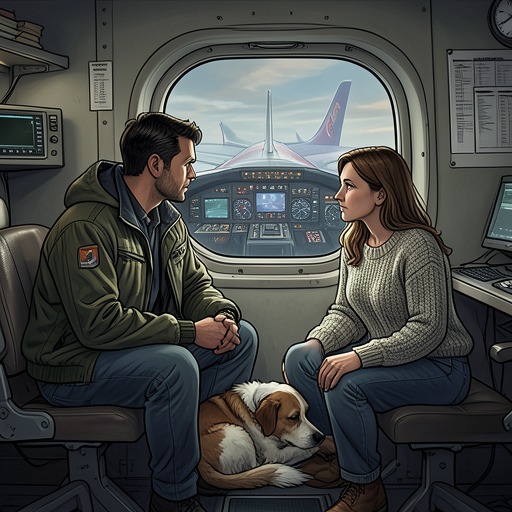
That realization returns when Hig is on a ladder topping off an aircraft’s wing tanks. The fuel registers in gallons; the sun’s position gives him an estimate of the hour, and the old reckoning of time by Greenwich seems to belong to a world whose routines no longer hold. While the fuel gurgles into the tank, he thinks again of Uncle Pete leaning over his albums. Hig is preparing to fly west, but the thought of the archive gives this practical act a second meaning: in a world where the familiar systems of timekeeping and social life have lost their authority, remembered particulars remain a kind of measure. They cannot restore what has vanished, but they resist the idea that it never existed.
The remembered life with Tomas
Cima’s recollections offer a different form of preservation. She remembers life with Tomas in Brooklyn Heights, before the first cases disrupted their plans: the apartment’s view of the skyline and bridge, her routine of buying an egg-and-bacon bagel, and the small decisions about what to bring home for dinner. They were waiting to have children and for Tomas to finish his degree. What had felt stressful and provisional at the time now appears to her, in memory, like a deeply happy life made up of ordinary days.
Other memories gather around their weekends in the Adirondacks. They stayed in a white clapboard cottage near Keene Valley, climbed Noonmark, and rode their single-gear bicycles to a cold swimming hole. Even a bout of poison ivy belongs to this remembered pattern. Cima sees those years as a time of waiting for life to begin in earnest; looking back after Tomas’s death, she finds that the waiting itself held a rare sweetness. Memory changes the weight of the details without replacing them: a bagel, a bicycle ride, and a familiar weekend ritual become evidence of a shared life whose value was not fully visible while it was being lived.
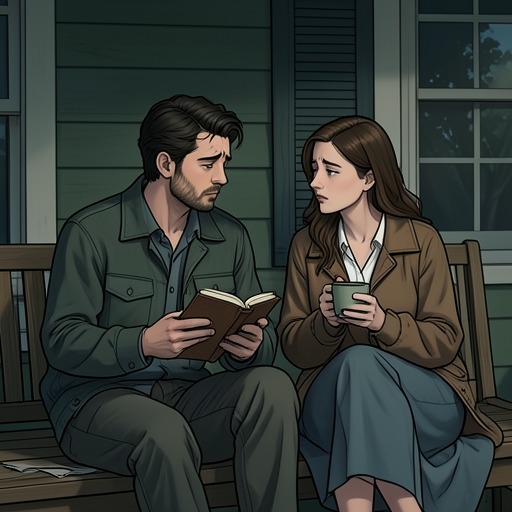
Tomas’s death gives these recollections their painful boundary. He dies in the hospital calling for Cima, while she has stayed with her dying mother rather than return to New York. She expects to retrieve his ashes and scatter them in John’s Brook, a place tied to their weekends together. That intended return links remembrance to specific geography: the brook, the cottage, and the mountain are not interchangeable tokens of the past but places in which their life together took shape. The memory preserves both their attachment and the circumstances that separated them at the end.
What remembering can and cannot preserve
The two acts of memory differ in form. Uncle Pete labels and orders physical images, adding written notes so that future viewing can recover some of what each photograph meant to him. Cima’s recollections unfold as a story told to Hig, shaped by hindsight and by the knowledge of loss. One method is archival and methodical; the other is selective and personal. Both make the past legible through details small enough to be overlooked while life is happening.
Neither practice defeats death or restores the former world. Uncle Pete’s binders do not change his prognosis, and Cima’s memories do not undo Tomas’s final absence. Their force lies instead in refusing erasure. The archive gathers a life into images and annotations; recollection gathers one into meals, journeys, work, and shared routines. Through Hig’s connection between these scenes, memory becomes an active response to loss: not a way out of time, but a means of holding on to what time and catastrophe might otherwise reduce to nothing.