New York City
The Dog StarsNew York City is the remembered home at the center of Cima’s account of the life she and Tomas had before the collapse: a crowded, intimate world of work, meals, city streets, and plans for children. As pandemic cases reached nearby Newark, that ordinary life was already giving way to loss; afterward, the city survives in her memories as both a place she loved and a home she could not reach in time.
Urban home and work
Cima and Tomas lived in a walkup on Cranberry Street in Brooklyn Heights, across the river from the Seaport and the Financial District. Their apartment windows gave them the skyline-and-bridge view familiar from films, but the domestic scale of their life mattered just as much. Each morning Cima bought an egg-and-bacon bagel from a narrow Montague Street deli reached by three steps down from the street. She remembered the queue, commuters waiting for coffee in blue-and-white Greek cups, and the small decisions of breakfast as part of a life that once seemed ordinary. Tomas was a musician and taught as an adjunct at Hunter. He loved his students but disliked the department, and the couple were waiting for him to finish his degree and become full-time faculty before having children. Cima worked in public health for the city and was an internist; outside public-health emergencies, she was rarely on call and usually had weekends. Their plans depended on time and stability—conditions they assumed would continue.
A life of waiting and possibility
As the first cases appeared in Newark, Tomas completed his dissertation and passed his oral examinations. Cima later described their Brooklyn years as a period when both were waiting for their real future to begin: for his degree, for the next stage of his career, and for a child. In retrospect, the life they had during that interval seemed happier than it had felt at the time. The remembered strain of waiting became inseparable from the knowledge that their expected future would never arrive. The city also represented a life Cima wanted to inhabit more fully. She imagined having two lives, one in Brooklyn Heights and another in the East Village. She relished the possibility of Yankees games, Off Off Broadway performances, poetry slams, and getting lost in the Met; she visited artists’ retrospectives and ate Sabrett’s hot dogs. Walking Court Street toward Carroll Gardens and back, she noticed the sellers at folding tables and imagined buying her future children their first books there. These were not grand ambitions so much as small plans embedded in familiar streets, which is why their disappearance carries such weight.
The city in memory
Cima’s recollection of New York City is interwoven with the couple’s weekends beyond it. They went to a cottage near Keene Valley, climbed Noonmark, rode their single-gear bicycles, and swam in cold water at a familiar spot. Those repeated excursions belonged to the same suspended period as their Brooklyn life: a pattern of work, return, and shared rituals that they thought was only a prelude to a fuller future. Looking back, Cima recognizes that the uncertain waiting itself had held a sweetness she could not perceive at the time. The memories are concrete: a call from Tomas while she waited on a subway platform with only one bar of reception, his question about what to bring home for dinner, and the succession of modest meals that made up their days. The remembered city is therefore not only a skyline or a cultural landscape. It is a network of routines and shared expectations through which Cima can still measure what was lost.
Pandemic, separation, and the unreachable home
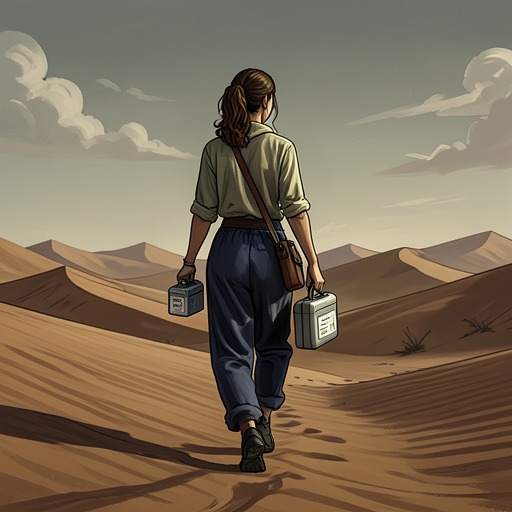
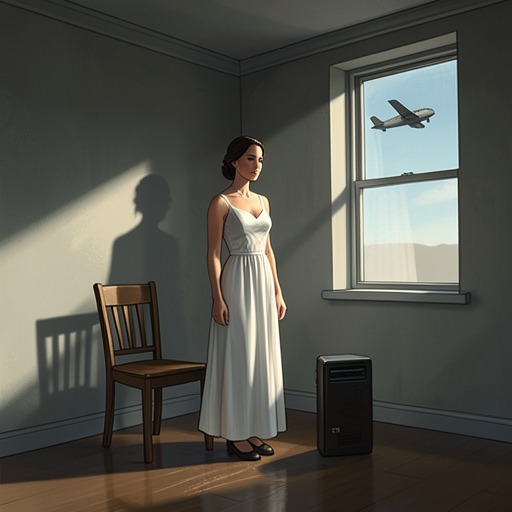
When the first cases hit Newark, Cima was away with her mother and father. Tomas died calling for her in the hospital, confused and searching the ward for her; before communication networks failed, Joel, the doctor who ran the wing, told her what had happened and agreed to have Tomas cremated and hold his ashes. Cima could not fly back to New York City. She expected to return in a week or two, drive upstate, and scatter the ashes in John’s Brook near Keene Valley, where she and Tomas had spent weekends together. That anticipated return remained a plan rather than a completed farewell. In the post-collapse present, New York City persists chiefly through Cima’s telling. Her memories preserve its routines without pretending they can restore them: the meals, errands, walks, and future she and Tomas expected to share. The contrast between that densely inhabited past and her later inability to return makes the city an absent home, carrying both the particular life she loved and the unfinished grief of losing it.