Stories That Could Be True
The Dog StarsStories That Could Be True is the poetry collection by William Stafford that Hig risks his life to recover after the collapse. More than a keepsake, it gives form to the book’s recurring act of calling into silence: a poem’s speaker rings a farm whose family is gone, while Hig’s own radio calls go unanswered until year seven. The volume connects private memory to the larger, uncertain possibility that someone may still be listening.
Recovery and Cost
The book belongs to a collection of poetry Hig says was the only thing he went back for. He retrieves it during a night landing without power or lights in the old King Sooper’s parking lot. The wings pass over low cars with no light poles in the way; from there it is just over a mile to the house. Fires burn to the west and south, and gunshots punctuate the distance. Hig waits in the plane with an AR-15 between his legs, watching for anyone who might interfere with the Beast during the half hour he expects to be gone.
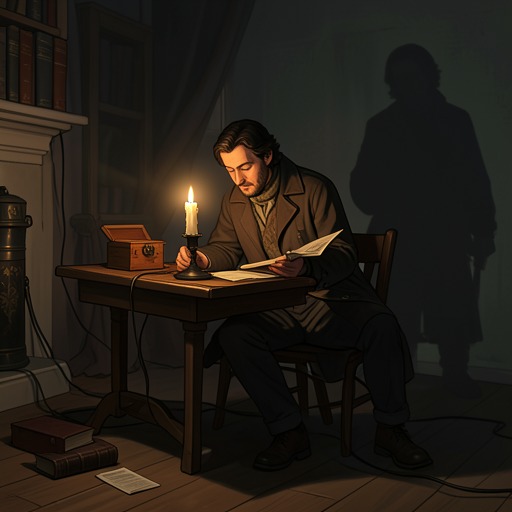
The errand turns the act of preserving books into an immediate physical risk. After taking the rifle, Hig jogs around the lake as he used to in the morning and evening, but he avoids the photographs on the mantel and stairs. He packs an old backpack and a duffel with books consisting only of poems. His attention catches on We Die Alone, the first book Melissa gave him, but he does not read her inscription. He recalls envying its Norwegian commando protagonist, who survives the war to reach a distinguished middle age, and imagines the peaceful life he might have had. Then Hig puts the book back and decides he is done crying.
When he returns to the parking lot, two figures are leaning into the plane’s open doors, one about to climb inside. They take up a hunting rifle and a shotgun. Hig shoots them at twenty yards. The episode makes the collection’s recovery inseparable from violence: the poems are carried out of the old life through an act that belongs to the new one. He gives the attackers’ guns to Bangley and refuses to answer when asked why. The book is not presented as protection from what survival demands; its value is private, and Hig does not explain it.
The Poem of the Unanswered Call
The collection’s named poem, The Farm on the Great Plains, begins with a telephone line gone cold, with birds walking along it and a farm tugging at its distant end. The image turns a familiar piece of infrastructure into a fragile connection between separated places. The line still exists, but its coldness announces that connection alone cannot restore the people who once answered.
The poem’s speaker continues to call the farm every year and listen. The passage then describes calls to a father and mother who have been gone for years, leaving only a hum on the line, yet the calling continues. Whether read as the poem’s elaboration or as a voice that draws close to Hig’s own, the movement makes repetition central: the call cannot undo absence, but it refuses to let absence erase the relationship. The yearly return is both an acknowledgment that the answer may never come and a way of keeping the lost people present in memory.
That pattern resonates with Hig’s handling of the books he recovers. He does not read the inscription in Melissa’s gift, and the poem’s voice does not promise reunion with the dead. Instead, the collection preserves words that can be revisited without resolving grief. Its title offers possibility, but the poem it contains is attentive to what remains when a line goes quiet.
From Telephone Line to Radio
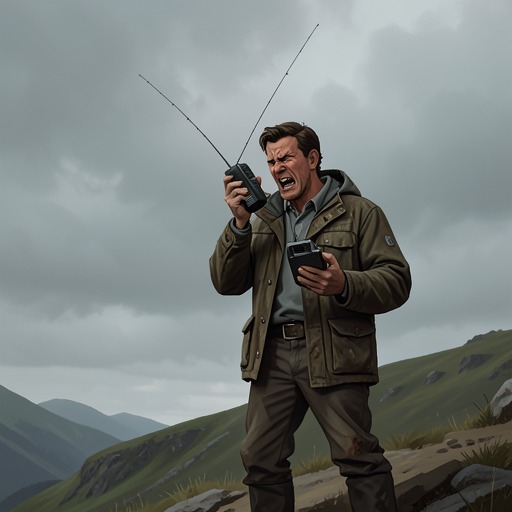
The book’s image of calling into silence acquires a further echo in Hig’s radio routine. When no one responds from an airport he is about to fly over, he switches back to the emergency frequency and makes a formal mayday call, adding that he feels awful lonely. The transmission is practical in form but openly registers isolation: the pilot is not only announcing an emergency but making himself audible in a world that has largely fallen silent.
In year seven, someone answers. Hig takes his hands off the yoke and presses the headset into his ears; the hair rises along his arms as it does in an electric storm. The response does not change what the Stafford poem says about the dead or make every earlier silence reversible. It changes the meaning of calling: an unanswered attempt can still be followed, much later, by a voice from the static. The collection’s significance therefore lies not in a promise that the lost will return, but in its precise connection between remembrance and continued address. Hig keeps the poems, and the book’s image of a line stretched across distance finds an unexpected counterpart in the radio signal that is finally met.