Uncle Pete
The Dog StarsUncle Pete is Hig’s uncle, first hunting companion, and one of the people through whom Hig learns to fish. His influence reaches beyond outdoor skills: his example links practical competence with attention to memory, while the records he assembles near the end of his life give Hig a model for resisting the erasure of what has been lived.
Identity and Background
Uncle Pete is remembered as a man of both letters and action, though Hig judges him not especially successful at either. His enthusiasms were expansive: Hig compares him to Ernest Hemingway and Jack London, and recalls that he also taught ballroom dancing. For about twenty years, Uncle Pete and his wife, Louise, taught on cruise ships. The combination of literary ambition, physical adventure, and dancing makes him an idiosyncratic figure in Hig’s family history rather than a simple model of ruggedness.
After Louise died, Uncle Pete became quieter and more serious, though he remained fun to be around. Hig says he idolized him for a long time, perhaps longer than was necessary. The affection is conveyed alongside a clear-eyed account of Uncle Pete’s limitations: Hig admired him without believing he had mastered either writing or action. That mixture of devotion and adult reassessment shapes the recollections. Uncle Pete matters not because he was flawless, but because Hig’s lasting attachment to him made his habits and lessons worth carrying forward.
Hunting and the Limits of Skill
Hig went on his first elk hunt with Uncle Pete when he was twelve. He proved adept at reading terrain and habitat, moving quietly, minding wind and sound, and helping in camp. The skills came naturally enough that he loved the work and the mountain routine. Yet the moment an animal was killed disturbed him. Hig continued hunting in later years and valued the food it provided, but he never came to enjoy the killing itself; he recalls that even killing a bug was difficult for him.
This early contrast helps explain the adult Hig’s uneasy position between survival and reluctance to harm. He can hunt when food is needed, but the act does not become emotionally neutral simply because it is useful. Uncle Pete introduced him to hunting, while Hig’s memory of the first elk establishes that competence and discomfort coexist from the beginning. The episode is therefore less a story of hardening than an account of a boundary Hig continues to feel even as circumstances require him to act.
Fishing, Inheritance, and Ritual
Uncle Pete also teaches Hig to fish. A Sage pack rod, given to Hig by his father for his sixteenth birthday, becomes part of that inheritance: Hig’s father died the following year, before he could teach him to use it, so Hig taught himself and learned from Uncle Pete. The rod and its Orvis reel remain carefully maintained objects, connecting Hig’s father’s brief gift to the uncle who helped make it usable. The equipment carries family history through repeated practice, not merely through its ownership.
Hig describes fishing as a ritual he has returned to through many kinds of loss. He fished after losing a high-school girlfriend, when he stopped writing in frustration, when he met Melissa, and as the trout disappeared. After Melissa died during the pandemic, he continued to fish, even though he was not allowed to bury her. As conditions worsened, he turned to carp and followed a creek whose bends he knew intimately. Uncle Pete is not presented as the cause of this pattern, but he is among the people from whom Hig learned the practice that becomes one of his most persistent ways of enduring change.
The ritual also carries an inheritance that Hig recognizes as partly imagined. He began fishing after his father died and tried to fish as he thought his father might have, despite never having seen him use a rod. Uncle Pete supplied the practical teaching that this imagined connection could not. In Hig’s account, fishing thus holds together two different forms of paternal memory: a father’s gift and an uncle’s instruction.
Memory and the Slide Archive
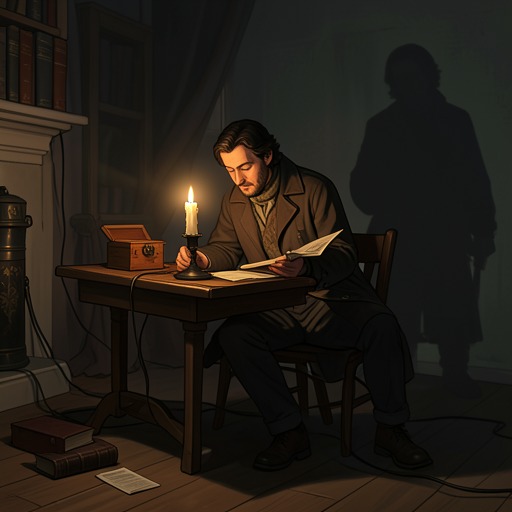
Near the end of his life, Uncle Pete turns to organizing his extensive collection of photographic slides. He sorts the images into binders, marking each slide with its binder and slide number and recording the date and a short description on the page. A separate binder contains a keyed journal with fuller notes about images that bring particular memories back. The arrangement is methodical: each image is indexed so that it can be found again, and the journal preserves context that a label alone could not hold.
Hig visits while this work is underway and splits three cords of firewood for the coming winter, which Uncle Pete will not live to see. At first, Hig cannot understand why his uncle spends so much time indoors among the pictures instead of enjoying the remaining season. Later, lying in his old bunk, he understands the project as a way of reliving a life image by image. The binders become, in Hig’s interpretation, a defense against extinction: a deliberate accumulation of remembered particulars in the face of approaching loss.
That understanding returns to Hig while he fuels his plane for a flight west. The act of measuring and preparing for a journey recalls Uncle Pete bent over the albums, keeping track of things whose practical use has passed but whose preservation still matters. The parallel connects the uncle’s private archive to Hig’s own attempt to retain a sense of a world that is disappearing. Uncle Pete’s photographs do not reverse that disappearance; their value lies in refusing to let a life become wholly unrecorded.
Legacy in Hig’s Recollections
Uncle Pete’s influence persists through objects and habits: the lessons that make Hig a capable hunter, the fishing practice that carries him through grief, and the model of recording memories before they are lost. Hig also remembers his uncle’s stories and way of life, including living with Louise on a yacht and later in a trawler in Alaska. These details enlarge the portrait without making Uncle Pete an uncomplicated hero. His significance rests in the durable, imperfect inheritance he leaves behind.
The recollections make Uncle Pete a quiet counterpoint to a world organized around immediate survival. Hig’s own life demands attention to danger, food, and preparation, yet his uncle’s slide archive insists that preserving memory is also a meaningful act. The lesson is not that records can restore what has vanished, but that care, repetition, and attention can keep loss from becoming total oblivion.