Waiting for life to begin
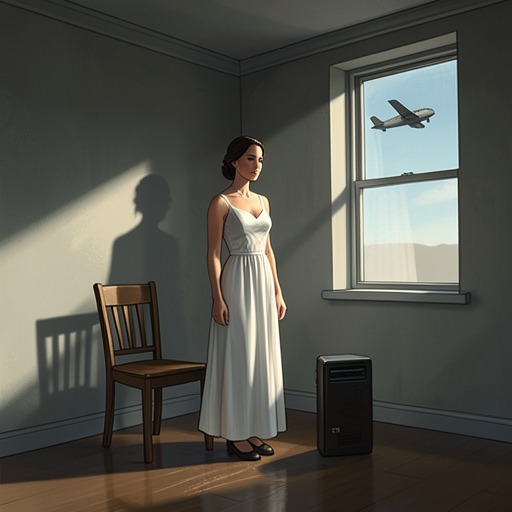
The Dog StarsWaiting for life to begin names both an expectation and a retrospective mistake. Before the pandemic, Cima and Tomas treated children and the completion of his academic career as the threshold of their real life; afterward, she recognizes that the years spent anticipating that threshold had already contained a life of unusual sweetness. Her memories make waiting more than an interval before fulfillment: it is a way of living whose value becomes visible only when the expected future is lost.
The Future They Expected
In Brooklyn Heights, Cima and Tomas lived in a walkup on Cranberry Street, looking across the river toward the Seaport and Financial District. Tomas had finished his dissertation and passed his oral examinations just as the first cases appeared in Newark. He taught as an adjunct at Hunter, was a musician, and hoped to become full-time faculty. They were waiting to have children until that professional step was complete. Their plans gave ordinary time a direction: a degree, a steadier position, then a family and what they imagined as the beginning of their true future.
The remembered details give this expectation its scale. Cima bought an egg-and-bacon bagel in the morning and waited with other commuters for coffee and trains. Tomas called her from a platform where he could get only a weak signal to ask what he should bring home for dinner. Their days were made up of work, small meals, and plans deferred. In retrospect, these routines do not look empty or merely preparatory. Their importance lies in their modest repetition: the couple’s future-facing hope was woven into the life they were already sharing.
Sweetness in Limbo
Cima’s memories extend beyond the apartment to weekends in the Adirondacks near Keene Valley. She and Tomas stayed in a white clapboard cottage with a sleeping porch and a view of Noonmark. They climbed the mountain on Saturdays, then rode their single-gear bicycles along a paved road to a waterfall and walked barefoot to a swimming hole. Even a bout of poison ivy that kept Cima away from work became part of the recollection of those years. These were not grand milestones toward a future; they were habits made precious by their recurrence and their ease.
She comes to understand the paradox in her former outlook: the time she called waiting may have been the most real part of their life together. Uncertainty and incompletion had seemed to postpone fulfillment, but they also left room for hope, tenderness, and attention to small pleasures. The expectation of children and the end of Tomas’s academic waiting gave the period a sense of suspended possibility. Looking back, Cima sees that suspension not as an absence of life but as one of its forms. The future they awaited did not have to arrive for their shared days to matter.
An Interrupted Future
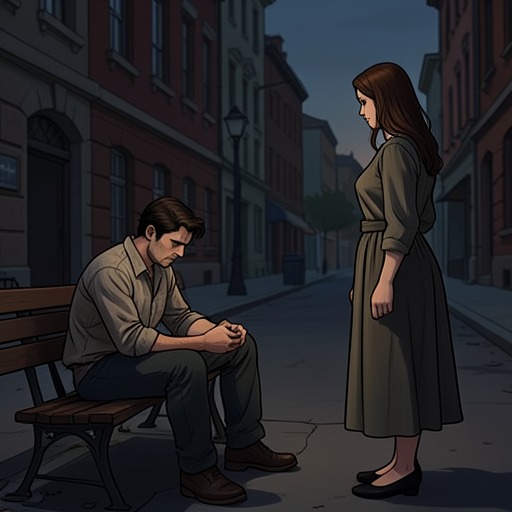
The pandemic changed waiting from chosen anticipation into irreversible loss. Tomas died while Cima remained with her mother and father, whose illness made her feel unable to return to New York City. A doctor and friend, Joel, told her what had happened and offered to have Tomas cremated and keep his ashes. Cima planned to return in a week or two, travel upstate, and scatter them in John’s Brook, where she and Tomas had spent weekends. Her account does not describe that plan being carried out; it preserves instead the future action she hoped still to make possible.
That loss sharpens the difference between what the couple thought they were waiting for and what their life had already given them. They had treated children and professional security as the proper beginning, but neither could protect them from time’s abrupt rupture. Cima’s realization is not that their hopes were foolish in themselves; it is that a person can spend a whole life waiting without recognizing the life contained in the meantime. The future they had organized their expectations around became unavailable, while memories of meals, rides, climbs, and shared routines remained.
Waiting After Loss
In the canyon, Cima speaks about this past while living in a present shaped by illness, bereavement, and practical work. She snaps peas at the table beneath the trees; Hig notices the difficulty in her hands and watches her work until she asks him not to. She has told him that, given what she understands about the fever’s effects on her organs, she does not expect to live beyond fifty or fifty-five. Yet she also says that, in an odd way, she is happier there than she had ever been, even with everything she has lost. The contrast does not erase grief or make the present secure. It shows that her sense of happiness no longer depends on reaching the future she once imagined.
The idea therefore shifts across her story. Before the pandemic, waiting meant postponing children and a settled life until Tomas finished his degree and obtained a full-time faculty position. In memory, it becomes the name for a period whose ordinary pleasures were already complete in themselves. In the canyon, where Cima knows that time may be limited, happiness exists without the assurance of a later reward. Her reflection holds these meanings together: a hoped-for future can be lost, but recognition can recover the value of the days once mistaken for mere preparation.