When Will I Be Home
The Dog StarsWhen Will I Be Home? is the narrator’s favorite poem, introduced as a ninth-century Chinese work by Li Shang-Yin. Its brief journey from not knowing when home will come to imagining a future reunion makes it a compact expression of longing and remembrance. In the novel, the poem is not only recited: its images of a rainy mountain night and a remembered absent person echo the characters’ exposed, uncertain present.
Introduction and Recitation
The narrator introduces the poem while watching clouds with a female companion. He asks whether she wants to hear his favorite poem and identifies its origin before reciting it. The scene is quiet and spare: the clouds tear away without thickening, and any rain remains on the peaks. Against that unsettled mountain weather, the poem begins with a question about when home will be reached.
The companion’s response is conveyed through a small physical change rather than an answer. The narrator first thinks she is absorbed in medical thoughts, then feels her twitch against him—not in the manner of Jasper’s nightmares, but with the motion of someone falling or letting go. The contrast matters: Jasper’s remembered distress supplies one familiar kind of twitch, while the companion’s gesture suggests a different, ambiguous release. The poem’s presence in this moment gives its words about distance and return an intimate setting without explaining away her reaction.
The Poem’s Movement
The poem opens in uncertainty: “When will I be home? I don’t know.” It places that uncertainty in a specific landscape, “in the mountains, in the rainy night,” where “The Autumn lake is flooded.” The mountain setting and excess water make home feel distant and unsettled; the poem offers no immediate route back or assurance about when the separation will end.
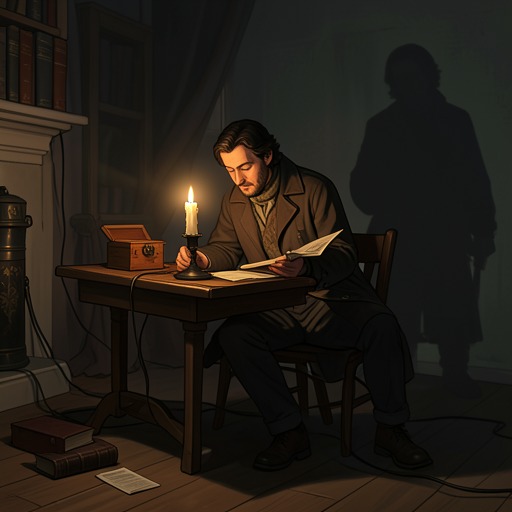
Its turn comes with the possibility of future reunion: “Someday we will be back together again.” The imagined return is domestic and quiet rather than triumphant. The pair sit “in the candlelight by the West window,” and the speaker promises to tell the other person how they were remembered “Tonight on the stormy mountain.” The poem thus moves from not knowing, through a present marked by rain and distance, toward a future act of telling. Memory is not merely private recollection in this ending: it becomes something the speaker expects to share when the separated people meet again.
Home, Distance, and Remembering
The title’s question remains unanswered within the poem. Instead of naming a destination or fixing a time, the verses hold together present separation and anticipated return. That unresolved structure makes home both a place to reach and a relationship to recover: the closing image is not simply arrival, but sitting together and recounting the remembered night.
The poem’s emotional weight is reinforced by the novel’s later image of life outdoors. The narrator and his companion sleep outside into October, as he once did with Jasper, piling on quilts and naming winter constellations when they run out of familiar ones. Their invented stars turn the open sky into a shared imaginative space, but the practice also keeps absence visible: one constellation is named for a scrappy, fish-loving dog, and the narrator continues to dream that Jasper is alive. In that context, the poem’s promise to remember someone on a stormy mountain resonates with the work of carrying the absent into a present that offers no simple return.
Significance in the Novel
When Will I Be Home? joins weather, place, and feeling without resolving the uncertainty among them. The rain remains on distant peaks in the recitation scene; within the poem, the autumn lake is flooded and the night is stormy. These images give longing a landscape, while the movement toward candlelight and shared speech offers a modest imagined counterpoint to exposure and separation.
The poem’s final promise is especially apt to a narrative in which memory repeatedly accompanies loss. Its speaker does not claim that remembering can undo absence. Instead, the hope of telling the remembered story depends on a future meeting that the poem imagines but does not demonstrate. Its comfort therefore remains tender and conditional: home is pictured as reunion, and the remembered night is preserved for the moment when it can be told.