
The Restaurant’s Uncanny Accounting
The DoubleThis flow examines the pie incident as a compressed conflict over identity, perception, and the cost of asserting what happened.
increasing Bearing strength in each event
 decreasing
Bearing strength in each eventdecreasingOne Pie Ordered
A Brief Ordinary Errand
Hunger and Routine
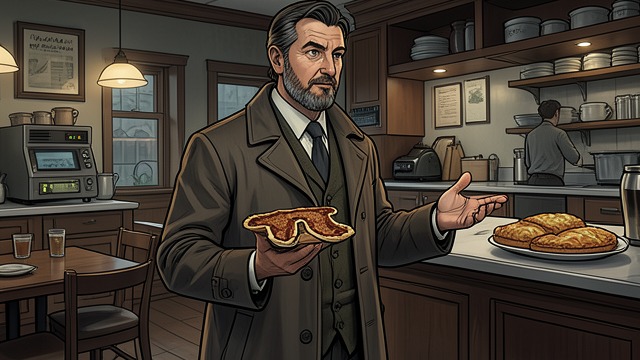
Golyadkin enters a restaurant while hungry and asks for a single pie. The simple transaction offers a moment of ordinary city life outside the office’s more elaborate social pressures.
A Claim Challenged
The waiter insists that eleven pies were eaten and demands payment. Golyadkin begins to doubt his own memory rather than risk a public dispute.
The Mirror Was a Door
The Double Revealed
An Image Steps Forward
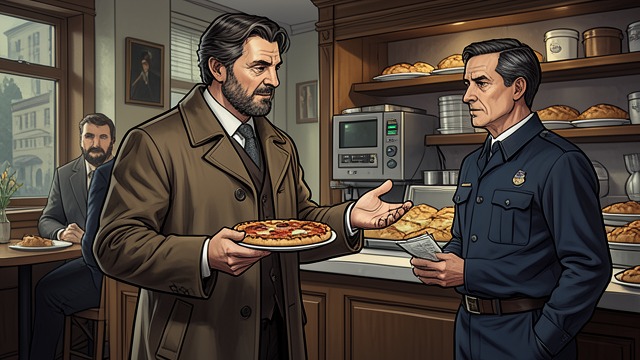
Golyadkin realizes that what he took for a mirror is a doorway. The double stands there eating the last piece of a pie, apparently pleased with the confusion he has caused.
Private Theft Made Public
The incident suggests that the double can act in Golyadkin’s place without attracting anyone else’s notice. Golyadkin’s humiliation rests not only on the bill but on his inability to make the act legible to witnesses.
Payment and Retreat
The Cost of Silence
Paying to End the Scene
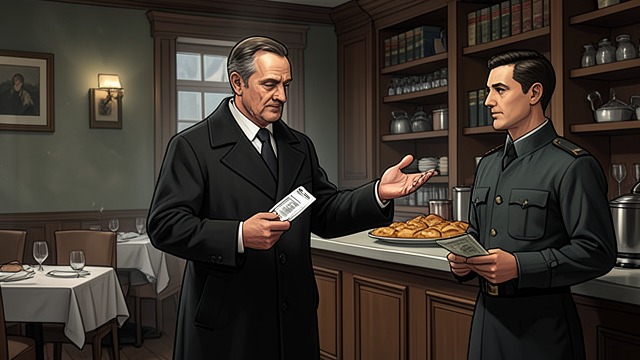
Golyadkin throws down a rouble and leaves rather than persuade the waiter that he ate only one pie. For a moment, he tells himself the waiter was within his rights.
Dignity Rekindled
Outside, he suddenly recognizes the insult to his dignity and hurries home to write again. His retreat does not end the conflict; it turns embarrassment into another attempt at formal resistance.
the day after Golyadkin’s first office encounter
immediately after the disputed bill
moments after the double’s appearance
