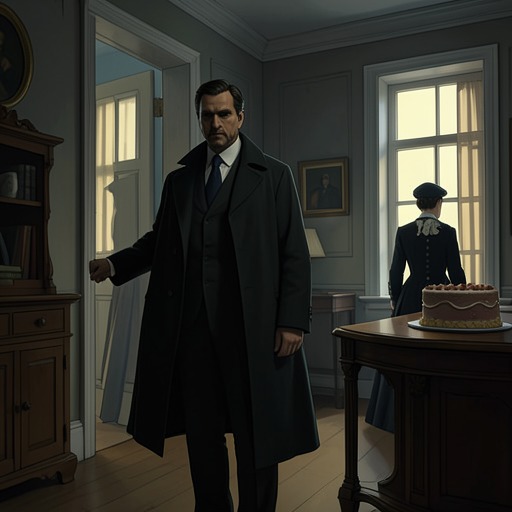
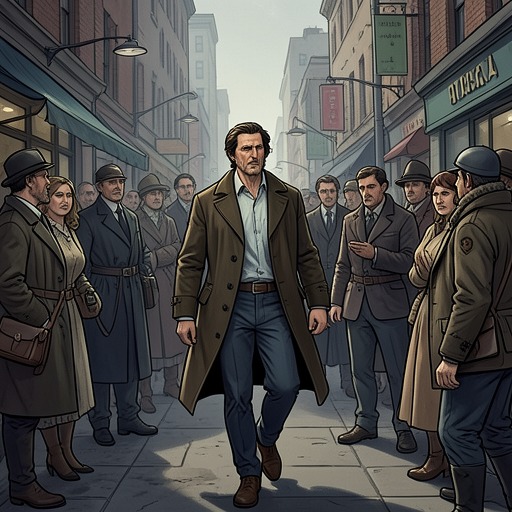
“I am myself by myself”
The Double“I am myself by myself” is Yakov Petrovitch Golyadkin’s insistence that he remains a distinct person from the man he denounces as an impersonation. In an imagined appeal to His Excellency, the repeated declaration becomes both a plea for protection and a precarious effort to hold his identity apart from his double’s.
The imagined appeal
The phrase occurs in a speech Golyadkin rehearses to himself while planning to go to his superiors. He imagines falling on his knees and entrusting his fate to His Excellency, whom he would address as a protector, benefactor, and father. He wants his dignity, honour, name, and reputation saved from a miscreant, and asks that the alleged impersonation be suppressed and its perpetrator changed or dismissed.
The declaration comes at the heart of that petition: Golyadkin insists that the other man is one person and he another, then restates that he is truly himself. The alias “I am really myself by myself” makes the insistence even more explicit. This is not a detached definition of identity; it is a sentence he imagines using to persuade an authority to recognize and defend him.
Repetition and self-assertion
The repeated wording gives the phrase its force. Golyadkin does not merely distinguish himself from the alleged impostor once: he circles back to the same claim, as though repetition could make the separation secure. His appeal moves between naming the threat and asserting his own independence, while the phrase compresses both movements into a verbal refrain.
That insistence carries a tension. Golyadkin presents himself as a separate, authentic person, yet he can formulate that selfhood only by opposing it to the other man and asking a superior to confirm the difference. The imagined petition is therefore also an effort to make his identity legible to the very authority from whom he seeks rescue.
Place in the scene
The speech belongs to Golyadkin’s private rehearsal, not to a completed audience with His Excellency. Immediately beforehand, he has blamed a woman for the danger of a wedding and feared that a man might be ruined or lose control. He then comes to himself on Liteyny Street in thawing weather, with snow and rain falling, and turns toward a possible cab. Against this unsettled scene, his imagined formal appeal offers a plan: submit his fate to his superiors and ask them to protect his name.
The phrase thus stands between alarm and attempted procedure. Golyadkin wants to transform his fear of being displaced by an unlawful double into a case that the authorities can judge. But the repeated self-assertion also exposes how fragile that strategy is: before anyone can answer him, he must keep telling himself that he is himself.