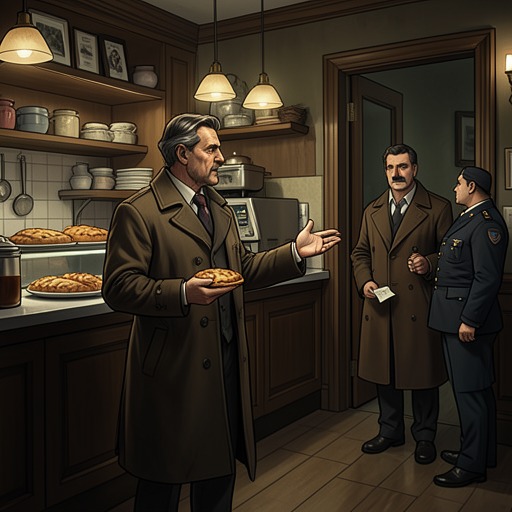
Goliadkin adopted and befriended a twin
The DoubleYakov Petrovitch Golyadkin’s decision to take his newly encountered double home turns an uncanny meeting into an intimate but unstable alliance. He offers the visitor food, shelter, protection, and friendship, then imagines that the two can act together against their enemies; the episode’s generosity is inseparable from his longing for a loyal ally and from his effort to make the double’s presence seem natural.
From the Street to Golyadkin’s Home
After the encounter on Nevsky Prospect, Golyadkin invites his companion to cross to the other side of the avenue and take a back street home. The proposed route is more than a practical direction: Golyadkin is baffled by what is happening, and the visitor’s meek agreement leaves him in charge of where they go. He leads the man into his room and asks him to sit down, beginning the encounter on the terms of host and guest.
The visitor appears shy, humiliated, and acutely conscious of being watched. When Golyadkin lets his hat fall, the man immediately picks it up, dusts it off, and returns it. Golyadkin reads this small act as evidence of the visitor’s straits and relaxes his own efforts to accommodate him, deciding that the guest can manage for himself. The detail establishes a relationship in which deference and embarrassment precede any open declaration of friendship.
Petrushka’s arrival makes the domestic arrangement explicit. He asks whether he should bring dinner for two; after hesitating, Golyadkin says yes. The visitor blushes, and the meal is not simply a courtesy: it gives the two men a shared table, while also exposing Golyadkin’s unease about the modest food he can offer. Both hurry through dinner, each embarrassed in a different way. Golyadkin worries that the meal is too poor to demonstrate his standing, while the visitor is too ashamed to reach for another piece of bread or help himself to the best morsels, repeatedly insisting that he is satisfied.
An Appeal for Protection
When Golyadkin asks what he owes his guest’s visit to, the visitor says that he has come to seek his acquaintance and protection, trusting in Golyadkin’s generosity. He carefully balances the request: he wants help without seeming either servile or presumptuous. His appeal rests on two points of likeness, their shared name and their origin in the same district, which he presents as grounds for making his difficult position known.
Over dinner and afterward, the visitor describes a succession of hardships. His account includes provincial service in a law court, department intrigues, the loss of his position through the schemes of enemies, and a journey to Petersburg on foot. There, he says, he has failed for a long time to find work, spent his money, and come close to living on the street. He recounts subsisting on a crust of bread, sleeping on a bare floor, and finally securing a new position through the intervention of a benefactor. In tears, wiping his eyes with a blue-check handkerchief, he adds that he still lacks money for lodging and decent clothes: he has managed only a pair of poor boots and has had to hire a uniform.
Golyadkin is deeply moved. He takes the account, however trivial its incidents may seem, as a reason to set aside his earlier misgivings. The visitor’s poverty, tears, and apparent lack of guile persuade him that the strange circumstance between them need not be a disgrace or a threat. His relief is not complete: the previous evening’s events at Olsufy Ivanovitch’s still trouble him, and he wishes they had never happened. But he resolves to behave better in future, and the role of benefactor briefly gives him confidence and pleasure.
Hospitality, Gifts, and a Proposed Alliance
After dinner, the men sit facing each other over their pipes, and the visitor’s story lasts three or four hours. Later, tea is brought in. Golyadkin becomes animated, telling his guest about Petersburg, its theatres and clubs, the office, Olsufy Ivanovitch, and Andrey Filippovitch, among other subjects. He is buoyed by the thought that he is no longer afraid of his enemies and can challenge them, yet he also senses that some worry remains beneath this newfound high spirits.
The evening’s exchange turns from hospitality to a performance of attachment. Golyadkin and the visitor drink punch together; the guest appears to share his host’s pleasure and writes a four-line verse for him. Golyadkin embraces him with tears in his eyes and, overcome by emotion, begins disclosing his private affairs, especially those involving Andrey Filippovitch and Klara Olsufyevna. The intimacy is quickly made instrumental: Golyadkin proposes that they work together, be cunning, and arrange an intrigue to pay their enemies back. He also warns his new friend not to trust the people around them, describing the visitor as guileless and urging him to keep apart from the others.
Golyadkin then asks the visitor to stay with him, temporarily or even forever, and calls him brother. He acknowledges the strangeness of their situation but recasts it as a fact of nature rather than a cause for shame or grief. The promise of kinship and the talk of laying a mine against their adversaries sit side by side: Golyadkin’s welcome is affectionate, yet he is already imagining the guest as a partner in his own struggles. The visitor agrees and thanks him, reinforcing the hope that this alliance is mutual.
The Night Together and the Limits of Trust
After their third and fourth glasses of punch, Golyadkin finds himself both extraordinarily happy and unable to stand steadily. He invites the visitor to spend the night, and a bed is improvised from two chairs. The guest says he can sleep anywhere and presents a friend’s roof as a kind of paradise after his troubles. Golyadkin answers with religious reassurance; their conversation wanders through faith, the Turks, and an account of an Algerian barber’s shop. Their digressions extend the evening’s geniality, but do not resolve the unease underlying it.
The practical details of lodging reveal how Golyadkin’s care is mixed with scrutiny. He suspects that the visitor may not even own a decent shirt and goes behind a screen while the guest undresses, partly to spare him embarrassment. At the same time, he intends to sound out and reassure Petrushka, who continues to bother him. The household has received a new guest, but Golyadkin remains preoccupied with how the arrangement looks and with the reactions of those around him.
Later, that same impulse to enlist help surfaces in Golyadkin’s dealings with a servant. When he suspects that Ostafyev may be concealing information or have been bribed by the other side, Golyadkin decides that the moment for money has arrived and offers more. He also clutches Pisarenko by the lapel to keep him from leaving, presses him to take a letter, and promises a reward for delivering it to Golyadkin. These later gestures echo the original welcome: money, food, lodging, and favors become ways of seeking assistance and securing loyalty. The episode of taking in the double therefore establishes both a genuine, emotional generosity and a recurring, anxious attempt to turn exchanges into protection against perceived enemies.