
The Children’s Escape to Kin
The Drover's WifeThis flow follows the Johnson children from a precarious home life through threatened removal and a perilous winter journey toward shelter among their Aboriginal relatives.
increasing Bearing strength in each event
 decreasing
Bearing strength in each eventdecreasingA Childhood in the Shanty
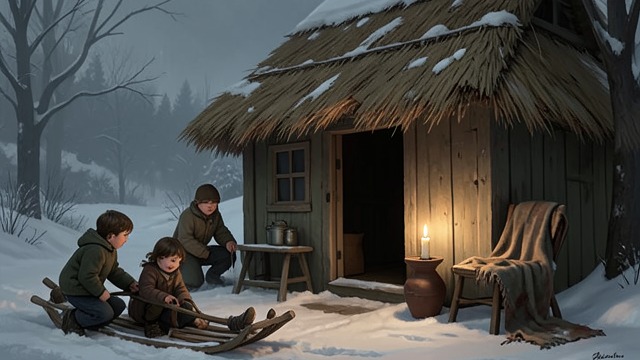
Children Raised by Necessity
Life at the edge of town
Joe Junior, Henry James, Delphi, and their eldest brother Daniel Johnson grow up in an isolated home with little money, irregular food, and few visitors. Molly keeps them fed and educated as best she can, making walks, games, and household routines into forms of care.
Dependence on their eldest brother
Daniel helps with work and watches over the younger children. Molly trusts him with responsibilities because Joe Johnson is often away and she has no dependable support nearby.
The family’s closeness is genuine, but its arrangement places adult burdens on children. Their mother’s care protects them from many dangers without being able to remove the poverty and violence surrounding them.
The Town Visit
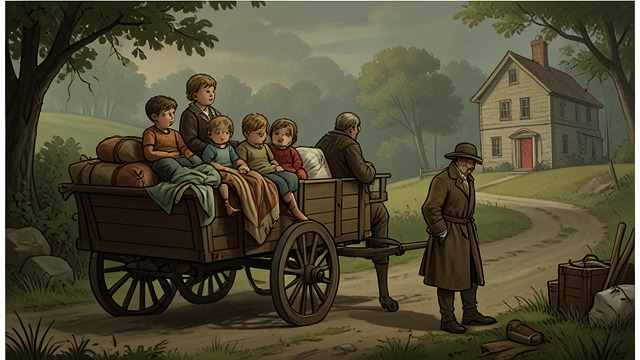
A Short Journey into Everton
A practical separation
After the family’s horse dies and supplies run low, Molly accepts a ride into town for the children with Louisa Clintoff. She sends Daniel with a list, instructing him to obtain food and necessary supplies while the younger children stay with Miss Shirley and Father McGuinness.
A temporary safe haven
The children reach McGuinnesses’ residence, where they sleep and receive care away from the hardship of the shanty. Daniel is meant to return home after completing the errand, but his concern for his mother remains stronger than his sense of safety.
What looks like an ordinary visit becomes the opening through which outside authority enters family life. The children’s location makes them accessible to adults who believe they can decide what is best for them.
The Removal Order
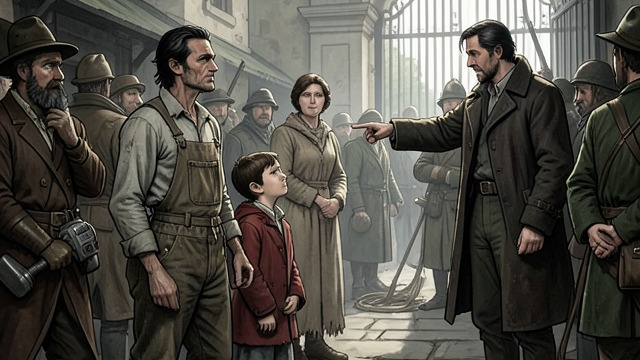
A Family Marked for Removal
A prejudiced classification
At McGuinnesses’ residence, Daniel overhears Miss Shirley describe Molly’s mixed ancestry and call the children octaroons. Judge Eisenmangher signs an order authorizing their removal, treating their heritage as grounds for separating them from their mother.
The eldest boy understands the danger
Daniel recognizes that the adults’ decision could keep the children from returning home. The order turns his private worry into an urgent crisis: their family may be broken apart through official procedure rather than through an immediate act of violence.
The threat is especially powerful because it is framed as protection. The children’s safety is invoked by people who neither ask them what they need nor reckon with the bond they share with Molly.
A Winter Journey Begins
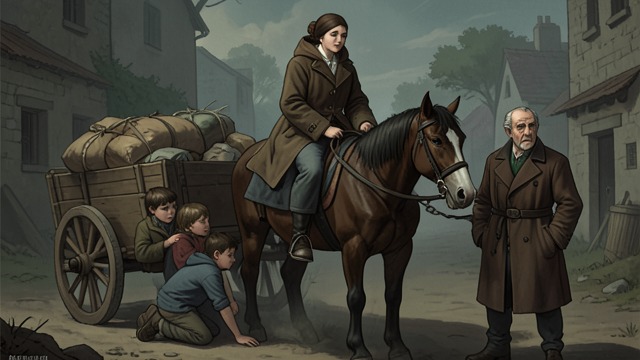
Flight from Official Custody
Molly retrieves the children
After violence at the shanty and Yadaka’s death, Molly rides to town and takes her children from the residence. She restrains the adults who have kept them, destroys the removal papers, and loads the children and provisions into a wagon.
Daniel leads the way
Molly tells Daniel to direct her toward Yadaka’s cave, following the landmarks he has memorized. She gives him responsibility for the younger children and orders him to leave when she stays behind near town.
The escape requires Daniel to become a guide and caretaker under extreme pressure. He is frightened for Molly, but he understands that protecting his siblings now means obeying her plan and carrying them forward.
The Cave Beyond the Snow
Survival Without Their Mother
A dangerous crossing
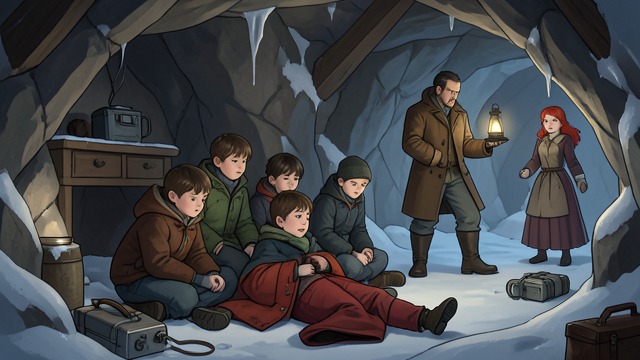
The children travel through deep snow toward the cave with provisions and a route Daniel learned from Yadaka. Delphi becomes frostbitten and may be dead or asleep; Henry James and Joe Junior are exhausted, while Daniel searches desperately for the landmarks.
A refuge found
Daniel glimpses a red-haired woman near the boulders and then locates the cave. He leads his siblings inside, where food and shelter await and people are expected in spring.
The children survive, but survival comes with permanent separation from Molly. Years later, Daniel returns from the mountains with his siblings and carries their family history into a new generation, turning escape into the foundation of cultural and familial continuity.
1893, late autumn, before Molly’s delivery
1893, after the Clintoffs arrive at the shanty
1893, the full-moon night of the confrontation at Molly’s home
1893, before dawn after Molly leaves the shanty
The severe winter following the 1893 escape, during the children’s mountain crossing
