Anti-Aboriginal racism in Everton
The Drover's WifeAnti-Aboriginal racism in Everton operates through both everyday contempt and institutions that present coercion as protection or law. Its consequences reach from the threat of violence against Yadaka to the official classification of Molly Johnson’s children as removable, exposing how racialized authority places Indigenous people and families at risk while discounting their own accounts and ties.
A racial order backed by force
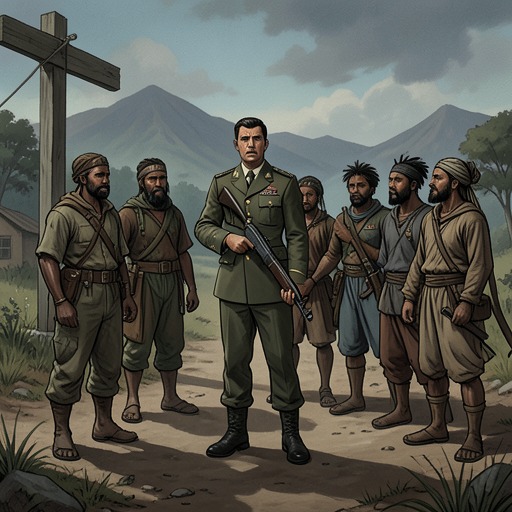
The prejudice encountered in Everton rests on a wider colonial system. Ngarigo elders had taught early settlers, including Charles Edwards, the hidden tracks of the high country, but that exchange took place amid an expanding settler presence. As white arrivals took land, built fences, and drove Aboriginal people from their homelands, Ngarigo people lost the freedom to follow seasonal ways of life. The narrative describes a policy under which white men claimed the right to shoot Aboriginal people on sight, either to eradicate or disperse them. Such permission makes later threats in the story more than personal insults: it gives racial violence an environment of impunity.
That system also shapes the town’s development. Charles Edwards regularly took part in district meetings and proposed developing Cresthill into a town. He argued that the stock route and growing number of settlers made the location suitable, offered to help finance development, and insisted that Aboriginal people needed to be managed. The proposal was sanctioned and rapidly applied. The language of planning and public order thus accompanies the dispossession that makes settler expansion possible.
Yadaka under suspicion
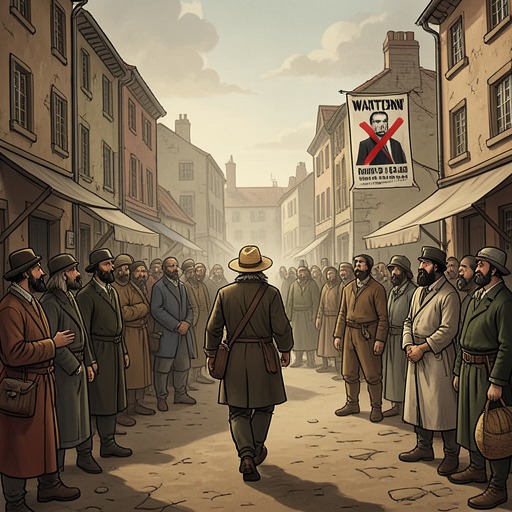
Yadaka’s encounter with Molly Johnson shows the personal stakes of this racial order. A wanted Aboriginal man who has been imprisoned and separated from his homeland, he explains that his only crime is existing while Black. Molly understands the statement because she has seen Aboriginal people blamed, arrested, imprisoned, or driven away, and knows that whites in the area have unofficial permission to shoot them on sight. His words give a name to the danger surrounding his presence at her property: his vulnerability does not depend on proof of a particular offense.
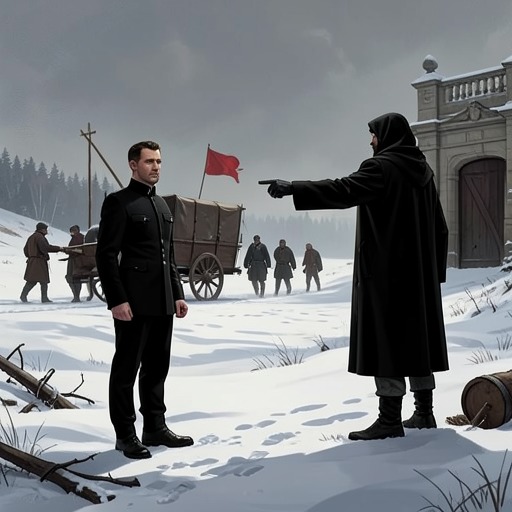
When Robert Parsen arrives at Molly’s shanty, that danger becomes immediate. Parsen threatens Yadaka with a gun, challenges him for meeting a white man’s gaze, and strikes him before recognizing that he is wearing Joe Johnson’s worn boots. The boots become supposed evidence against him, while Molly says she gave them to Yadaka for his work. Parsen then denigrates Molly for defending him. In the scene, racial and gendered contempt reinforce one another: Parsen treats Yadaka as an acceptable target and Molly’s protection of him as a transgression. Danny Johnson, hiding nearby, understands that Aboriginal people can be shot on sight and fears Yadaka may already be dead.
The racism is also embedded in official decisions. When Nate Clintoff plans for troopers to check on Molly, Spencer Leslie makes clear that the visit may be delayed for two days and that the authorities would then consider their responsibility for her welfare finished. The administrative timetable offers little assurance of protection in a region where racial violence is tolerated. The contrast is sharp: a vulnerable woman’s safety can be treated as a limited official obligation, while force against Aboriginal people is allowed to persist beyond effective oversight.
Classification and the removal threat
Racial prejudice reaches into family life through the language of mixed descent. Miss Shirley asserts that Black Mary’s father was Charles Edwards, then labels Molly’s children “Octaroon” and urges Judge Eisenmangher to act. The judge authorizes their removal in the name of safety. A racial category, asserted in a hearing and converted into a signed order, is made sufficient grounds to separate children from their mother.
Danny later tells Molly that Miss Shirley used the term about the children. Molly recognizes its significance from her own childhood: she remembers hearing that a mixed-heritage child could be sent away and that describing her as a quadroon would result in her removal. The recollection connects the present order to a longer threat directed at Molly herself. The children’s classification is not a neutral description in the novel; it recalls a system that treats mixed ancestry as grounds for separation and disguises that coercion as care.
Molly’s response makes the coercive effect of the order concrete. She ties up Miss Shirley and Father McGuinness, takes the removal paper, and throws it into the fire. The document contains the claims that the children are octaroons, that removal is necessary, and that permission has been granted, as well as Judge Eisenmangher’s signature. Destroying it cannot erase the racial regime that produced it, but it rejects the authority of a paper that claims to know what is best for her children while overriding their family bond. Molly prepares blankets and food for the children and leaves with them, turning the threat of administrative separation into the immediate cause of flight.
Court, memory, and the reach of prejudice
The courtroom carries the same racial assumptions into the prosecution of Molly. At her hearing, an all-male jury hears Miss Shirley declare Molly’s mixed-blood heritage. The Crown argues that Molly’s hostility toward white men is generational, attributes it to what Yadaka told her about her ancestry and her mother’s suffering, and characterizes Yadaka as a callous murderer who encouraged revenge. Nate recognizes the bias of the hearing, but the only witness to Molly’s account, Danny, is absent. Racialized interpretation therefore fills the evidentiary gap: her actions are framed through ancestry and alleged outside influence rather than heard on their own terms.
The novel’s account of racism in Everton links these scenes rather than treating them as isolated expressions of bad character. The threat of shooting, the abuse Yadaka faces, and the official authorization to remove Molly’s children are different expressions of a social order that claims power over Aboriginal lives, movement, and kinship. The author’s note connects the story’s concern with cultural loss to family and government policy: the writer describes seeking to understand his Aboriginality and the culture that his mother and grandparents had lost because policy prevented its transmission. Within the novel, that historical concern resonates in the struggle over who may define a family, whose knowledge is credited, and whether Indigenous culture and kinship can continue under colonial authority.