Endangerment of Ngarigo cultural continuity
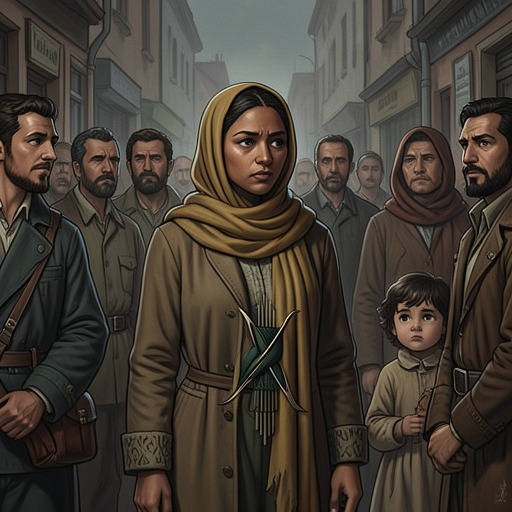
The Drover's WifeEndangerment of Ngarigo cultural continuity is the pressure placed on a people’s relationship to Country, kinship, and inherited practice by dispossession and colonial control. The novel traces that pressure from settlers’ appropriation of land and authority to a signed order threatening the Johnson children, then answers it with cultural transmission: ceremony, dance, story, and family memory keep knowledge in circulation even as the characters recognize that it is under threat.
Land, Authority, and Displacement
The danger begins with the transformation of Ngarigo Country into settler property. The Ngarigo had ancient connections to the high country, and their knowledge of its hidden tracks helped the Edwards party move through it. Yet settlers increasingly took land, fenced it, and drove Aboriginal people from their homelands. Seasonal movement and ordinary life became harder; survival depended on staying out of sight. Colonial claims to govern movement and land thus challenged not only physical access to Country but the conditions under which community life and cultural knowledge could continue.
The novel also shows how dispossession was advanced through organized policy and local development. Charles Edwards regularly attended district meetings and advocated developing the Cresthill outpost into a town, arguing that a stock route and arriving settlers made it viable. He supported the proposal while insisting that Aboriginal people needed to be managed. Once the consensus was sanctioned, its consequences were applied with haste to the clans of the alpine country. The language of development and administration masks a contest over whose authority would shape the land and determine who could remain on it.
Classification and the Threat of Child Removal
That contest enters the Johnson family through racial classification. Miss Shirley calls Molly’s children octaroons and presents their supposed need for urgent help to Judge Eisenmangher. The judge authorizes their removal in the name of their safety. His signature converts a discriminatory label into an official power to separate children from their mother and kin. Danny hears the label without understanding it; for Molly, the order connects the present danger to the earlier threat that she herself might be sent away as a child because of her ancestry.
Molly’s response makes the stakes concrete. After tying up Miss Shirley and Father McGuinness, she burns the signed paper, destroying the document that authorizes her children’s removal. The act interrupts the order’s immediate force, but it does not erase the wider system that made the children vulnerable to classification and state intervention. The episode places bureaucratic authority against family knowledge and care: the officials claim to act for the children, while Molly understands the order as a threat to their belonging and future.
Transmission Through Story and Performance
The novel counters cultural endangerment not by claiming that tradition is untouched, but by showing it taught, adapted, and shared. When Danny tells Yadaka how his mother confronted a wild bullock, Yadaka joins the account by dancing the animal’s movements. His embodied response turns Danny’s recollection into an exchange between storyteller and listener, linking a family memory to a cultural form in which movement carries knowledge.
The Story of the Bullock later enters Ngarigo practice. Danny tells it to the Ngarigo, who add it to their culture of mimicry and dance, developing it through song and movement. The community’s adoption of the story honors Molly’s bravery and acknowledges her plight; it also brings her into the clan’s shared memory. For Danny and his siblings, the performance is a source of pride because a story from their family becomes something the community can carry together.
Continuity Under Pressure
In the novel’s later family scenes, the danger has not disappeared. Danny’s family understands that modern ways are invading and destroying practices the Ngarigo hold dear and regard as necessary to survival. Ceremony is therefore presented as something that needs active transmission: the knowledge passed to Danny and his brothers in the high country is carried onward through a later generation’s men’s-business ceremony. The urgency of the teaching reflects a fear that ancient practices may not survive without people deliberately learning and performing them.
Continuity also takes a smaller, domestic form. Danny and his siblings value their Aboriginal family and take pride in defending their culture and countrymen. The Bullock story is retold by children in play, while Danny’s eldest son prepares for a final stage of ceremony learned from Ngarigo family. In the present-day family performance, the children use an invented gun and their father acts out the bullock; the simplified play differs from the communal version with its painted performers, songs, and instruments, but it keeps the story active across generations. The novel’s account of cultural endangerment therefore holds threat and persistence together: dispossession and child-removal power imperil belonging, while community recognition, embodied storytelling, and family teaching sustain a living connection to culture.