Louisa Clintoff protests at Molly’s execution
The Drover's WifeLouisa Clintoff’s protest at Molly Johnson’s execution makes the condemned woman’s fate a public argument about battered wives’ rights. Standing with two other women in the crowd, Louisa reveals a message demanding that their voices be heard and women’s rights legislated; her intervention is an act of solidarity that she undertakes despite her husband Nate Clintoff’s duty to uphold the law.
The injustice behind the protest
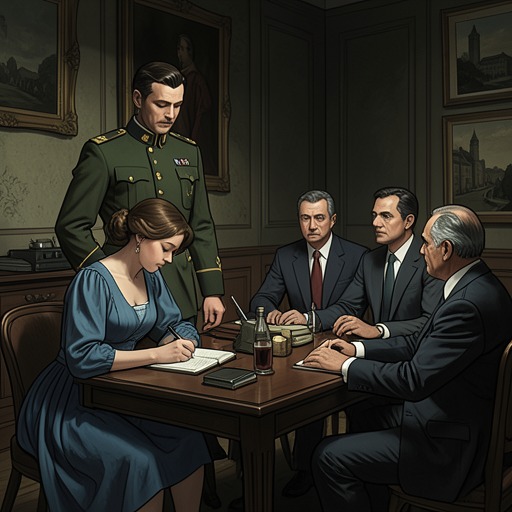
Molly’s execution follows a trial in which the Crown charges her with the murders of John McPharlen, Trooper Spencer Leslie, and her husband, Joe Johnson. Nate recognizes that the hearing is biased, but his position as Everton’s peacekeeper leaves him feeling unable to change its course. Molly’s son Danny, the only witness Nate identifies as able to speak to her account, is absent. The proceeding’s limits are therefore both personal and structural: Molly is judged without the testimony Nate sees as crucial, while the law offers no timely remedy for the abuse that has shaped her choices.
The prosecution also makes Molly’s Aboriginal ancestry part of its case. Its closing statement presents her resistance as the product of inherited hatred, alleging that Yadaka encouraged her to seek revenge. That account turns knowledge of her mother’s suffering and her own heritage into evidence against her, rather than addressing the circumstances of her life as a battered woman. The trial’s racial framing intensifies the gendered injustice Louisa’s protest seeks to expose.
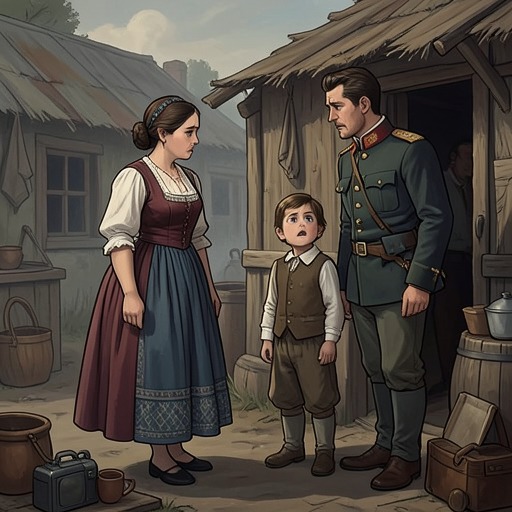
The threat to Molly’s family had already been made explicit when Miss Shirley called her children octaroons and urged Judge Eisenmangher to remove them. The judge signed the authorization. Molly’s struggle thus reaches beyond the sentence imposed on her: her children’s safety and future are also subject to racial classification and official power. Louisa’s demand for women’s rights enters a scene where gender and race have each narrowed the family’s choices.
A quiet, deliberate demonstration
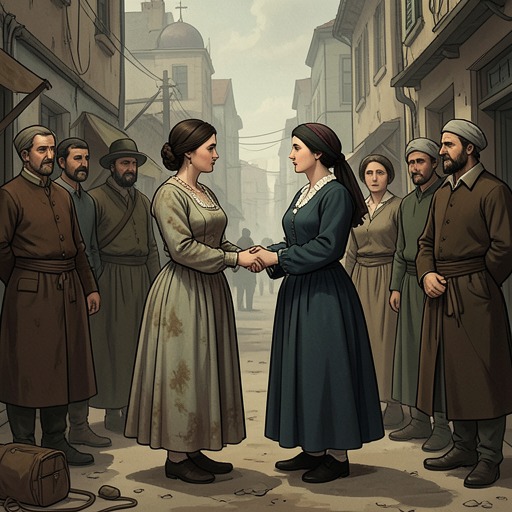
At the execution, Molly searches a crowd of stern male faces and finds Louisa pushing forward in a black cape. Two other women join Louisa; they carry blankets and wear their brightest items of clothing. Their restrained presence contrasts with the public ritual around them, where the judge has just named the three murders for which Molly is condemned.
Louisa and Molly exchange subtle nods, a silent pact. The gesture establishes recognition between the women without interrupting the proceedings or changing the sentence. Molly looks toward the snow-covered mountains, while Louisa and her companions remove their capes to reveal aprons bearing a message written in charcoal: “Hear her! Battered wives are powerless! Legislate women’s rights now!” They join hands and step forward. Some of the men respond with disapproval, making the protest’s public challenge visible even as it remains nonviolent.
The protest is organized around women’s testimony and legislative change. Its wording insists that battered wives be heard and names their powerlessness as a political condition, rather than treating Molly’s case as an isolated tragedy. The aprons make the demand legible in a setting dominated by male authority; the women’s joined hands turn a written appeal into collective action.
Louisa, Nate, and the limits of law
Louisa’s stand sharpens the conflict within her marriage. Nate is moved by his wife’s bravery and proud of her, yet he cannot abandon the position entrusted to him as Everton’s officer of the law. His response does not cancel his sympathy; it shows how formal duty and moral judgment pull against each other. The protest gives visible form to the tension that has already strained their relationship over Molly’s case.
That conflict has a practical urgency. Nate knows Louisa is lobbying for legislation to help battered wives, but he doubts it can pass in time to save Molly. He hopes it may help others, and believes Louisa will continue pressing for change. Her protest at the execution makes that future-facing work present at the moment when legal process is reaching its final outcome: she cannot undo the sentence, but she refuses to let it pass without a demand for reform.
The women’s demonstration also contrasts with the official proceeding’s distribution of power. A male jury has convicted Molly, the judge has pronounced the sentence, and Nate remains bound to his public role. Against these authorities, Louisa and her companions act through a message, their joined hands, and their willingness to step into the crowd’s view. The scene does not claim that protest reverses the verdict; it shows a different kind of agency asserting itself where the law has failed to protect Molly.
Solidarity at the ending
Molly and Louisa’s exchanged nods form the emotional center of the protest. Their pact is understated, but it links Molly’s immediate vulnerability to Louisa’s public campaign. The women beside Louisa extend that connection beyond the two of them: the appeal is collective, and its stated purpose is to change the conditions facing battered wives.
Nate looks toward the mountains for comfort and strength as the trooper prepares to carry out the sentence; one of the protesting women begins to cry. Molly, meanwhile, murmurs her father’s song, whose words express hope for a time when two people might be united. These details place the protest beside grief rather than outside it. Louisa’s courage and the women’s demand do not rescue Molly, but they ensure that her execution is accompanied by an explicit challenge to the laws and social arrangements that have left battered women powerless.