Molly Johnson’s trial and conviction
The Drover's WifeMolly Johnson’s trial and conviction turn the novel’s private history of violence into a public judgment—and show how racial classification and a rigid account of law can eclipse the circumstances of a mother’s actions. The all-male jury, the prosecution’s account of her motives, and Nate Clintoff’s divided testimony frame a case in which abuse and recent bereavement are acknowledged but do not alter the outcome: Molly is sentenced to death for the deaths of John McPharlen, Trooper Spencer Leslie, and Joe Johnson.
Causes and Background
Molly enters the case after a life shaped by intersecting dangers. Late in pregnancy, she had been washing clothes at the river when she was confronted by the risks of an unattended breech birth. The birth ended with her baby girl stillborn, and the trauma left her unwell. When Yadaka helped her, she initially feared the consequences of allowing a Black man to touch her during childbirth, a fear grounded in the racial rules that governed her isolated life. These circumstances do not erase the legal charges, but they clarify the vulnerability and pressure surrounding the events the court later judges.
Her circumstances also include longstanding abuse by Joe Johnson. At the trial, Louisa Clintoff argues that Molly’s battered condition should be considered as evidence of provocation and that her violence against her husband must be understood in the context of cumulative abuse. Nate acknowledges that Joe’s death might have been self-defence, but the case also involves two other killings. His account of the evidence, especially the killing of Trooper Spencer Leslie, becomes decisive in explaining why the court imposes the death penalty.
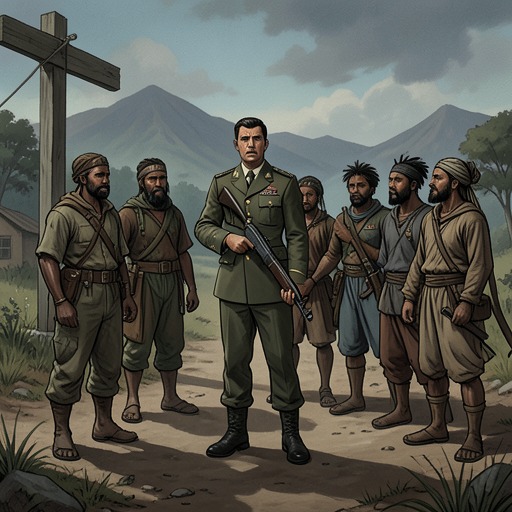
The proceedings arise against a wider system of anti-Aboriginal persecution. Yadaka describes his crime as existing while Black, and Molly knows that Aboriginal people in the district are arrested, imprisoned, or driven away, while white people have unofficial permission to shoot them on sight. Miss Shirley turns Molly’s suspected ancestry into a further threat: she calls the children octaroons and urges Judge Eisenmangher to intervene for their supposed protection. The judge signs the order authorizing their removal. The trial is therefore not only about individual deaths; it unfolds in a setting where racial categories can be used to challenge a family’s right to remain together.
The Court’s Case and Sentence
The Crown’s closing argument portrays Molly’s hostility toward the white men she killed as inherited and racially motivated. It attributes that supposed motive to what she learned from Yadaka about her ancestry and her mother’s suffering, and claims that Yadaka encouraged revenge. The account recasts knowledge of Molly’s heritage as an explanation for violence while placing the court’s attention on a wanted Aboriginal man’s influence, rather than giving equal weight to Molly’s own experience of abuse and loss.
The hearing is conducted before an all-male jury. Nate later recognizes that it was biased, but says there was little he could do. The only witness to Molly’s account of what happened is Danny, who cannot be found. Without his testimony, the court hears no direct account from the child who could have described the family’s circumstances and what he had seen. The absence of that witness leaves Molly’s truth without the support that might have challenged the prosecution’s framing.
Nate’s position is divided between legal duty and moral doubt. He considers whether he should have turned a blind eye to Molly’s crime, which he understands as the desperate act of a woman deeply wronged. Yet he has sworn to uphold the law, and he believes the evidence against her is substantial. He also recalls witnessing the killing of John McPharlen and seeing Molly with the knife. At the same time, he recognizes that he saw her battered face and that the circumstances could be understood as provocation. His conflict is not resolved by the verdict; it remains an explicit burden of the case.
Louisa challenges the judgment on grounds the proceedings have not adequately addressed. She asks whether a doctor has examined Molly’s mind, pointing to her recent childbirth, the death of her baby, and her fear for her other children. She argues that the evidence against Molly must be read alongside the abuse she experienced, and that the lack of witnesses is itself unsurprising in cases of domestic violence. Nate answers that Molly confessed, a fact that weighs heavily against Louisa’s appeal. Their disagreement makes visible the gap between treating confession and physical evidence as sufficient proof, and asking what the violence and danger surrounding the accused mean for her responsibility.
The court ultimately sentences Molly to hang. At the public reading of the sentence, Judge Eisenmangher names the three killings: those of John McPharlen, Trooper Spencer Leslie, and Joe Johnson. The sentence makes the proceedings’ central contradiction stark: Molly’s acts are counted individually as crimes, while the history of abuse, racial hostility, and family peril that shapes her situation fails to change the punishment.
Children, Classification, and Escape
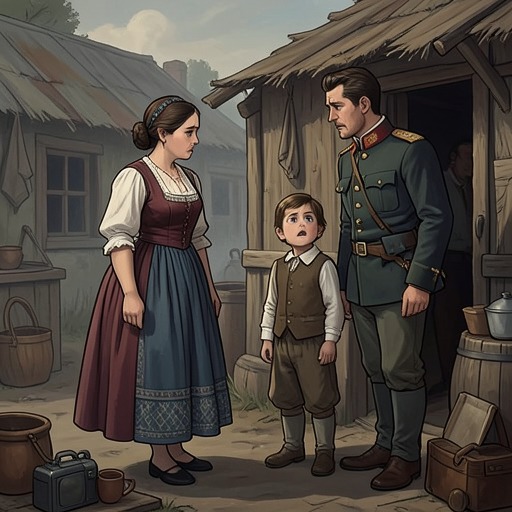
The children’s removal order gives the legal crisis an immediate consequence beyond Molly’s own trial. When Danny returns alone and tells his mother that Miss Shirley called the children octaroons, Molly understands the word through her own childhood. At eight, she had heard Miss Shirley discuss sending a mixed-heritage child away, with a different racial label offered as the means to secure that removal. The old conversation suddenly clarifies the danger now facing Danny and his siblings: Molly recognizes that the label is not a neutral description but a route by which officials can separate them from her.
That recognition changes Molly’s course. She leaves with Danny under the full moon, carrying her shotgun and supplies; Joe’s boots are tied to her bag, and Danny carries the killing spear Yadaka gave him. Molly drives her horse hard, focused on escape. The flight follows directly from the threat of removal: once she understands what the judge’s authorization may mean for her children, the need to protect them becomes more urgent than remaining in town.
The family’s danger sharpens the difference between official language and lived consequence. Miss Shirley presents the children as needing help and urges the judge to act for their safety, while Molly sees the same intervention as the destruction of her family. The court’s power to authorize removal is thus joined to the trial’s power to define Molly: both operate through decisions made by others, while the mother’s knowledge of her children and their attachment to her is pushed to the margins.
Nate and Louisa: Law and Conscience
Nate’s participation in the case also strains his marriage. He has promised Louisa he will ensure the children’s safety, but he cannot reconcile that promise with his oath as a peacekeeper or with what he believes the evidence shows. After Molly’s arrest, he loses sleep over whether he made the right decision and recognizes that the case has intensified the tension between them. His divided position gives the trial a second line of consequence: the law’s outcome unsettles not only the accused family but also those who enforce or contest it.
Louisa’s response is more openly reformist. She is lobbying for legislation to help battered wives and continues to argue that Molly’s circumstances should matter, even though she knows reform will not arrive in time to save her. Nate acknowledges that Louisa’s work may help others in the future. That prospect does not repair the immediate injustice in Molly’s case, but it places the trial within a longer struggle over whether the law will recognize abuse as relevant to women’s survival and legal treatment.
Narrative Significance
The trial brings together the novel’s connected conflicts over gender, race, and state power. Molly is judged as a defendant, but the court’s account is also shaped by the racialized story told about her ancestry and by the prosecution’s claim that her actions were encouraged by Yadaka. Meanwhile, the state’s language of child protection authorizes separation, and the domestic abuse that Louisa identifies struggles to gain legal standing. These are not separate pressures: they converge in the same proceedings and narrow the space in which Molly can be heard.
The court’s outcome is clear, but the narrative does not present it as an uncomplicated measure of justice. Nate’s admission that the hearing was biased, Louisa’s challenge to the treatment of abuse, and Danny’s absence expose what the judgment cannot establish about Molly’s full circumstances. The conviction therefore functions as both a legal resolution and a moral failure: the court names the deaths for which Molly is responsible, yet its procedure cannot accommodate the surrounding history that might make her actions intelligible without excusing them.