Molly gives birth to Daisy, who is stillborn
The Drover's WifeMolly gives birth to Daisy, who is stillborn, in an isolated and dangerous episode that binds loss, dependence, and an uneasy act of trust. Late in pregnancy and without medical care, Molly must confront a breech labour with the help of Yadaka, an injured stranger she has just knocked unconscious. The baby does not survive; Molly and Yadaka bury her, and Danny later gives her a marked grave as Daisy Molly Johnson, born and mourned in 1893.
Background and Isolation
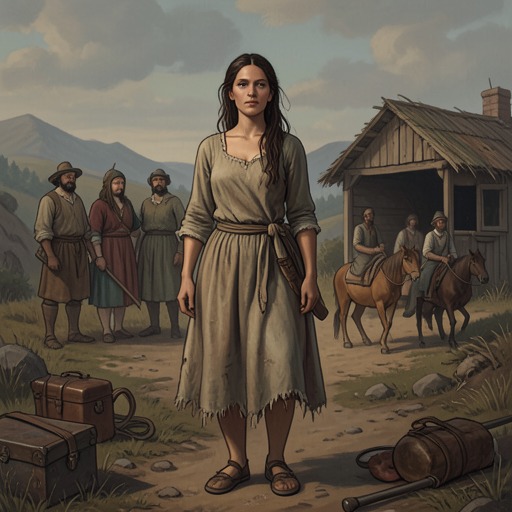
Earlier, Molly’s pregnancy is part of the ordinary demands of caring for her children. At the river, about eight months along, she pauses from washing clothes because of back pain and breaks up an argument between Danny, Joe Junior, and Henry James, who have been cooped up by days of rain. This scene places pregnancy within daily work and family care before it becomes an emergency.
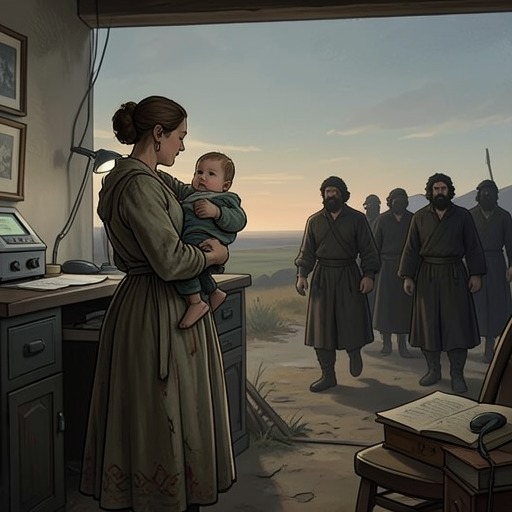
When labour begins, the conditions are starkly different from any setting of supported medical care. Molly is alone with her children and the injured Yadaka, who has been staying nearby. She has reason to fear him: he is a stranger, and she knows he is being sought by the authorities. At the same time, her labour becomes urgent, leaving her to make decisions with no outside assistance.
The Birth and Its Reversal
Molly’s waters break, and she realizes the baby is presenting feet first. Yadaka approaches and offers his hand, but she recoils from the prospect of accepting help from a Black man, fearing the social consequences of such contact for a white woman. In the confusion and pain of the moment, she swings her shotgun like a bat and knocks him unconscious. Her immediate effort to protect herself has the opposite consequence from what she needs: the only available helper is temporarily unable to assist her.
When Yadaka wakes, he understands that Molly is in labour and sees that the baby is still presenting feet first. He picks up and reloads the shotgun while Molly pleads for the safety of her children. The episode turns on a change in their positions: Molly had treated Yadaka as a possible threat, but her own crisis leaves her dependent on the man she struck. The evidence establishes that the birth is difficult and that Daisy is stillborn; it does not describe a successful rescue of the child.
Burial and the Grave
After the loss, Yadaka offers to bury the baby girl, saying it is the least he can do. Molly insists that he owes her nothing, but he regards helping with the burial as the proper thing to do and expresses sympathy for her loss. Their shared act is not presented as erasing Molly’s grief or resolving their distrust. Instead, it gives the dead child a burial and places the two adults in a moment of practical responsibility toward her.
Danny later helps complete the burial. As Yadaka nails down the coffin lid, Danny watches, then claims the job of setting a small homemade wooden cross in the ground. The inscription reads “Daisy Molly Johnson, 1893”. Danny places the cross himself, and he and Yadaka bow their heads together. The name and year turn a private loss into a specific family remembrance, while Danny’s insistence that staking the cross is his job gives him a part in commemorating his sister.
Consequences for Molly and Yadaka
The birth and burial alter Molly’s calculation about Yadaka. She is weak after the difficult labour and knows that Danny cannot do everything she needs. She also recognizes that the iron collar Yadaka wears could expose them both if anyone came to the property. In freeing him, she acknowledges the help he gave with the stillborn baby and that he had effectively saved her life. The loss therefore precedes a consequential change in their relationship: Molly releases the man she had treated as dangerous, while still setting a limit on his stay and insisting that he leave after two nights.
Their association continues beyond the immediate crisis. Danny later sees Yadaka as a figure of intense curiosity, and Yadaka joins in as Danny tells the story of Molly’s encounter with a wild bullock, mimicking the animal through dance. The birth does not itself explain all that follows between the men, but it belongs to the history of Yadaka’s presence in the household and of the trust and cultural exchange that develop around Danny.
Family Memory and Narrative Significance
The loss remains part of the family’s remembered story, even as later generations retell other episodes of Molly’s life. Danny’s children perform the Story of the Bullock, a narrative that he shared with the Ngarigo and that the community incorporated into its practices of mimicry and dance. They honour Molly’s bravery and respect for her plight, and the story becomes a way for the clan to remember her and share in her memory. The later performance does not recount Daisy’s birth, but it shows how the family’s experiences of Molly continue to be carried forward through communal and embodied storytelling.
Daisy’s marked grave is the most direct memorial to this birth: it records her name within the family burial ground, where Danny and Yadaka stand together in respect. The event also makes the material limits around Molly’s pregnancy unmistakable. Her labour unfolds without medical support, and the people available to her are her children and a wanted, injured stranger. The stillbirth is a personal bereavement, but its consequences extend into the relationships formed around care, the choices Molly makes to survive, and the family’s later work of keeping her story alive.