Molly sends her children to Everton
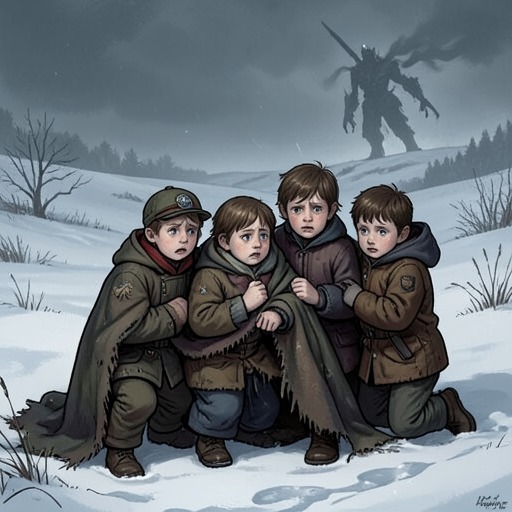
The Drover's WifeMolly sends her children to Everton with Nate and Louisa Clintoff, entrusting them with a practical errand and a temporary home while she remains behind, heavily pregnant. The departure is at once an act of maternal care and a painful separation; the journey also carries the children into reach of authorities who will seek to remove them from her.
Arranging the Journey
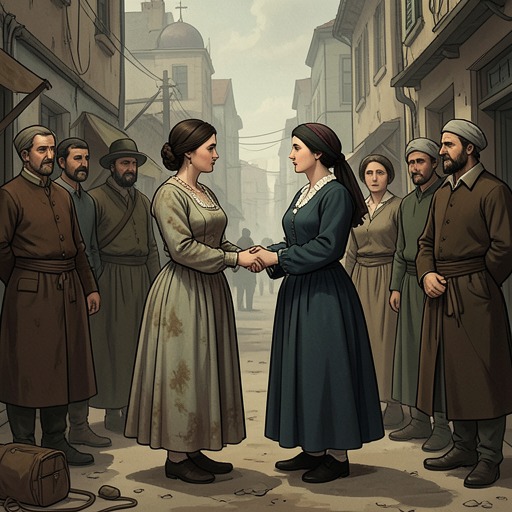
The opportunity comes as Louisa is about to leave Molly’s shanty. Molly sets aside the possibility of friendship and quickly asks for a favour: a ride to Everton for the children. She is delighted that a way to town has finally opened, and notes that luck has lately seemed to turn in her direction. The immediate reason for the trip is practical, but the arrangement depends on the trust developing between the two women and on Nate and Louisa’s willingness to help.
The children wait in the covered wagon with small parcels of clothes and food for the journey. Molly adds meat for them to trade, having first offered some to the Clintoffs for their trouble; she insists when they refuse, because she does not want it to spoil. The supplies show that the children are not being sent away empty-handed: Molly has planned for their needs and for the exchanges they will have to make in town.
A Mother’s Instructions and Farewell
Before the wagon leaves, Molly gathers her children for kisses, embraces, and last-minute tidying. She clears gravy from Joe Junior’s mouth and smooths Henry James’s unruly hair with spit on her fingertips. Delphi clings to her for an especially long moment. It is Delphi’s first time away from her mother. She is upset, but the adventure ahead—and the prospect of returning to a new baby—helps balance her sadness.
Molly tells the children that she loves them and reminds them to mind their manners at the McGuinnesses’ residence. She performs a small parting ritual: a clenched fist to each child’s forehead, a breath released through it, and the words, “Always with you.” Nate and Louisa watch, puzzled. The gesture gives the farewell a meaning beyond the practical journey: Molly makes their physical separation answerable to a promise of continued closeness.
She draws Danny aside and gives him responsibility for his younger siblings and for the trade. He is to exchange the meat for fresh vegetables, obtain a donkey or horse but not an old one, collect other supplies, and remember that ammunition is running low. Molly puts a written list in his shirt pocket. Her instructions make Danny an active caretaker and messenger, not simply another child in the wagon. Nate hears her say that her husband will bring supplies, but lets the matter pass without question.
Molly encourages Danny to get cakes and sweets from Miss Shirley, recalling the comfort her own father used to offer when he left her with Miss Shirley while he went droving. Then she tells him to come straight home because she will need help. Molly’s pregnancy makes that instruction urgent: Danny is apprehensive about the coming birth, which will be his first delivery. When Delphi was born, he had already taken his younger brothers to stay at the McGuinnesses’ and brought them home safely the following week. Molly has told him that, because of her age, she needs him with her at the birth.
As the wagon pulls away, the children wave and call their goodbyes. Louisa looks back with a gracious smile; Molly answers with a nod, then calls out another reminder not to fight. She watches the wagon disappear along the barely visible track. Her emotions rise, then give way to pronounced relief. She needs time alone before the baby comes, and the departure gives her that space, though the narrative also signals that her relief has another, unstated dimension. The mountains remain ahead of the travelling children, while Molly’s home recedes behind them.
The Journey and Its Reversal
On the road, Danny looks back towards home, worried about his mother, even as his siblings talk excitedly with Louisa. She tells them about travelling by ship from London to Melbourne; the younger children are enthralled, and Danny is quietly interested too. His backward glances register the tension built into the trip: the children are curious about a wider world, but their connection to their mother and home remains immediate.
The errand’s temporary separation becomes a much more serious threat when Miss Shirley tells Judge Eisenmangher that Molly is harbouring a wanted Aboriginal man and labels the children “Octaroon.” The judge signs a letter authorizing their removal, supposedly for their safety. Danny hears the decision and is frightened, unable to understand where the children would be taken or why anyone would separate them from their mother. The official language of protection conceals the force of the decision: a label imposed on the children becomes the basis for overriding their family ties.
When Danny returns to Molly, he tells her that Miss Shirley called the children “octaroons” before the judge. The word recalls Molly’s own childhood: at eight, she overheard Miss Shirley discussing the possibility of sending her away because of her mixed ancestry. Molly recognizes that the same racialized classification now threatens her children. What began as a journey to obtain supplies and stay with trusted adults has exposed them to a system capable of turning a family’s identity into grounds for separation.
Consequences and Significance
After learning of the order, Molly leaves with Danny to protect the children and confront the threat. She brings her shotgun, ties Joe’s boots to her duffel bag, and rides a trooper’s horse; Danny carries supplies and the killing spear Yadaka gave him. Later, the two return to the McGuinnesses’ residence, where Molly binds Miss Shirley and Father McGuinness, takes provisions for the journey, and burns the judge’s authorization. She then gathers the children into a wagon and leaves with them. The journey that began with Molly entrusting her children to others ends with her taking them away from the people who were meant to shelter them.
The episode contrasts two kinds of care. Molly’s care is concrete and relational: food for the road, detailed instructions, affection, and a promise that she remains with the children even when apart. The judge’s order calls removal protection, but it proceeds from racial classification and disregards the children’s bond with their mother. The temporary trip to Everton therefore changes the direction of the plot: an ordinary family errand becomes the point at which bureaucratic authority threatens the family’s survival together.