Molly’s Late Pregnancy
The Drover's WifeMolly’s Late Pregnancy is the precarious final stage of Molly’s tenth pregnancy, carried in a remote mountain home while she cares for her children and manages scarcity without dependable medical support. The pregnancy ends in an unattended breech birth and the stillbirth of her daughter; its consequences leave Molly weakened, make assistance urgently necessary, and become part of the conditions under which she later frees Yadaka and flees with her family.
Identity and Background
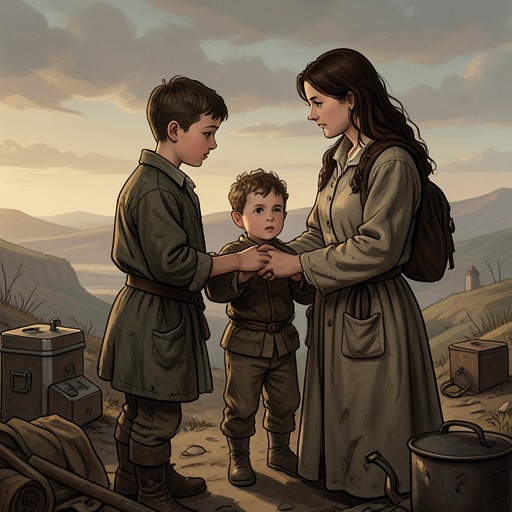
Molly is forty and expects this to be her last pregnancy. She reflects that it has progressed much like her earlier pregnancies that reached this stage, but age, the approaching birth, and the need to prepare weigh on her. With little money and time running out, she tries to use the family’s regular Sunday walks to quiet her mind. Her private worry sits alongside a burdened past: she calls Danny her angel, remembering that he arrived after four miscarriages and that losing him would have made life unbearable. This is her tenth pregnancy and, if the baby survives, her fifth surviving child.
Pregnancy is inseparable from the household economy. A depression has badly damaged the sheep industry, and Molly worries that Danny may have to leave for droving work the following year, even though she wants him to stay home for several more years. Joe’s seasonal work helps provide money and support, but his long absences also leave Molly alone with the children. The family’s circumstances are made tangible by their worn clothes and boots, the need to make scarce resources last, and Molly’s hope that Danny can help her when the birth comes.
Pregnancy in the Mountain Home
The novel sets Molly’s pregnancy against a landscape and home exposed to the weather. After a week of rain, the roof needs repair, gaps in the slat walls must be filled, and the dirt floor has turned to mud. Molly and the children use mud and a copy of a women’s journal to pack the gaps. The scene connects the work of keeping shelter intact with the bodily work of carrying a child: neither can be set aside, and both take place with limited means.
At about eight months pregnant, Molly washes clothes at a river, sitting back on her haunches to ease her aching back. The children’s bickering interrupts her concentration; she sends the boys out of the water after a week cooped up indoors by the rain. The ordinary demands of parenting continue around the physical strain of pregnancy. Later, when food has improved the family’s appearance and the unborn baby kicks and rolls, Molly feels the baby turn and believes it is preparing to engage. For a moment, the movement promises an approaching birth; her smile gives way to concern when a covered wagon appears on the track to her isolated property.
Molly understands that the birth may require help. She asks Danny to return promptly after visiting Miss Shirley, explaining that she needs him with her because of her age and the possibility that it may cause difficulty. He looks frightened at the prospect of his first delivery. He has helped care for his younger siblings before, including taking them to stay with the McGuinnesses when Delphi was born, but this is a different responsibility: his mother wants him present for her own birth.
The Birth and Its Consequences
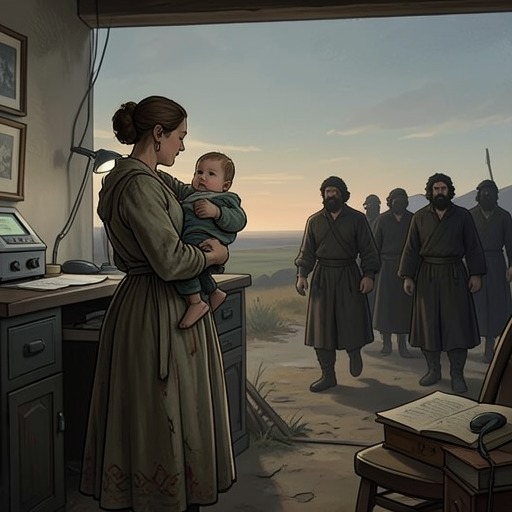
The birth begins unexpectedly and without professional assistance. Molly’s waters break, and she realizes that the baby is presenting by a foot. Already exhausted and frightened, she faces an immediate emergency in the remote home. Yadaka is there, but her alarm at the prospect of a Black man helping a white woman makes her resist the assistance he offers. She strikes him with her shotgun, leaving herself without the help she needs at the moment of birth.
The baby girl is stillborn. The outcome turns the pregnancy’s earlier hopes into grief, while the difficult breech delivery leaves Molly unwell and in need of recovery. The narrative places this loss within the broader history of her pregnancies: she has already suffered four miscarriages, and Danny’s survival after years without a successful pregnancy is bound up with her sense of what she has endured. The stillbirth is not an isolated hardship but a new loss in a life marked by reproductive risk and limited support.
Molly later recognizes that Yadaka helped her through the birth and, in effect, saved her life. Although she is unsure whether freeing him is wise, she removes his iron collar with her axe. Her reasoning is practical as well as indebted: the collar could expose them both, she needs assistance, and Danny cannot manage everything alone while she recovers. She allows Yadaka to remain briefly and tells him he must leave by the time of the full moon. The birth therefore changes their immediate circumstances: Molly’s vulnerability requires help, while her response to that vulnerability becomes a consequential act of mercy and trust.
Meaning in the Wider Plot
Molly’s late pregnancy is shaped by the convergence of reproductive danger, isolation, poverty, and gendered responsibility. The narrative shows the work and risk without providing a medical safety net: Molly continues to wash, maintain the home, feed her children, and plan for the birth while physically burdened and short of resources. When the emergency comes, the people available to help are not medical professionals but Danny and Yadaka, each constrained by age, circumstance, and the racial fears surrounding their contact.
The pregnancy also links intimate family life to the economic and political pressures around it. The sheep trade and droving determine whether Danny may be forced to leave home, while Molly’s pregnancy and care for her children make his presence especially important. Later, the threat that her children will be removed because of their supposed mixed ancestry turns her maternal responsibilities into a reason to flee. Pregnancy does not itself cause that threat, but it belongs to the same period in which Molly must protect a vulnerable family with few resources and no confidence that official authority will protect them.
The pregnancy’s ending is therefore both a personal bereavement and a turning point in Molly’s reliance on others. The stillbirth leaves her physically weakened; Yadaka’s assistance gives her a reason to break his collar and accept his temporary presence. The episode makes care reciprocal without making it easy: fear and racial prejudice initially obstruct help, yet survival depends on recognizing the aid that is actually available.